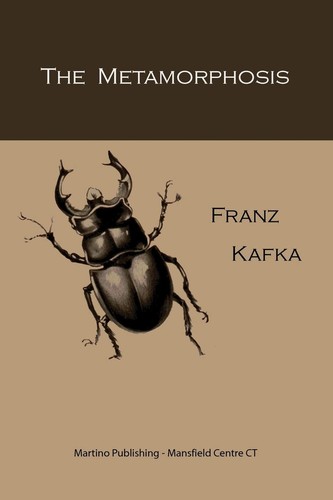
The Metamorphosis
by Franz Kafka · 1915
Gregor Samsa wakes up transformed into a giant insect, and the real horror isn't the transformation -- it's how quickly his family adjusts to treating him as a burden instead of a person.
Worth reading? The Metamorphosis is short enough to read in an hour and unsettling enough to think about for years. Kafka never explains the transformation because the explanation isn't the point -- the point is watching a family's love for a provider curdle into resentment the second he stops being useful. It's the single best entry point into Kafka's whole worldview, and one of the most efficient horror stories ever written, even though it isn't marketed as horror.
| Full Title | The Metamorphosis |
|---|---|
| Author | Franz Kafka |
| Published | 1915 |
| Publisher | Bantam Classics |
| Category | Fiction |
| Favorite quote | “As Gregor Samsa awoke one morning from uneasy dreams he found himself transformed in his bed into a horrible vermin.” |
The Verdict
This is the Kafka to read first. Under 100 pages, and it delivers his entire worldview – bureaucratic dread, absurd premise treated with total deadpan seriousness, family loyalty that turns out to be conditional – in one sitting.
Don’t wait for the transformation to be explained. It never is, and that’s not a flaw, it’s the whole design. Kafka wants your attention on how fast pity turns into disgust once Gregor stops paying the bills.
The ending is the part that stays with you. The family’s relief after Gregor’s death isn’t played as villainous, it’s played as understandable, which is worse. Skip it only if you specifically need closure and explanation; Kafka has none to offer and isn’t apologizing for that.
you want the shortest, purest dose of Kafka's specific dread -- bureaucratic, familial, and absurd all at once -- in a story you can finish in one sitting
you want the transformation explained or resolved -- Kafka never tells you why it happened, and the book has zero interest in answering that question
Book Summary
Gregor Samsa, a traveling salesman supporting his parents and sister through debt, wakes up one morning transformed into a giant insect (Kafka deliberately never specifies exactly what kind). His first thought isn't horror at his own body -- it's panic about missing his train and losing his job.
The novella's real subject is the family's reaction over the following weeks: initial shock and pity curdle steadily into disgust, then resentment, then near-total indifference, as Gregor stops being able to provide income and becomes purely a burden to feed and hide.
Kafka is widely read as dramatizing his own relationship with his overbearing father and his anxiety about being valued only for his economic output -- Gregor's worth to his family evaporates in direct proportion to his usefulness, which is the book's bleakest and most enduring observation.
The ending, where the family feels relief and even hope for the future after Gregor's death, is the novella's final gut-punch: life for the Samsas genuinely improves once the burden is gone, undercutting any reading where love was unconditional all along.
Top 7 Lessons from The Metamorphosis
- The transformation is never explained, and that's deliberate -- Kafka isn't interested in cause, only in consequence, which forces you to focus on how the family responds rather than why it happened.
- Gregor's family's affection is revealed to have been conditional on his usefulness as a wage-earner all along -- the horror is less the insect body than what it exposes about family loyalty.
- The novella can be read as Kafka's own anxiety about only being valued for economic output, shaped by his difficult relationship with his father.
- Gregor's continued concern for his job and his family's finances even after becoming an insect shows how deeply internalized his role as provider was -- identity collapsed into utility.
- The family's slow shift from pity to disgust to indifference maps a believable, unflattering arc for how people actually treat prolonged burdens, not a cartoonish villain turn.
- The sister Grete's arc -- from Gregor's closest ally to the one who insists he must be gotten rid of -- is the novella's sharpest betrayal, showing how even the most sympathetic character adapts to cruelty.
- The ending's relief and hope for the family after Gregor's death is the bleakest line in the book: his death solves their problem rather than creating grief.
Top 2 Quotes from The Metamorphosis
"As Gregor Samsa awoke one morning from uneasy dreams he found himself transformed in his bed into a horrible vermin."
Franz Kafka, The Metamorphosis
"What has happened to me? he thought. It was no dream."
Franz Kafka, The Metamorphosis
Frequently Asked Questions
Is The Metamorphosis worth reading?
Yes -- it's short, unsettling, and the clearest introduction to Kafka's particular brand of bureaucratic, familial dread.
What is The Metamorphosis about?
Gregor Samsa wakes up transformed into a giant insect, and his family's affection for him steadily curdles into resentment once he can no longer support them financially.
Why does Gregor turn into an insect in The Metamorphosis?
Kafka never explains it -- the transformation's cause isn't the point, the family's reaction to it is.
How long does it take to read The Metamorphosis?
At under 100 pages, most readers finish it in a single sitting, well under two hours.
Is The Metamorphosis a good first Kafka book?
Yes -- it's the most commonly recommended entry point into Kafka's work before tackling longer novels like The Trial.
Ready to read it?
Get The Metamorphosis on Amazon