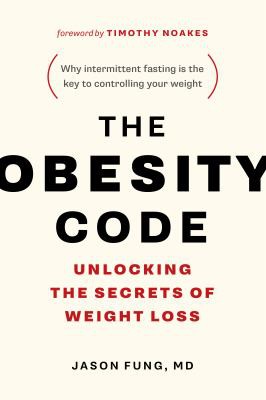
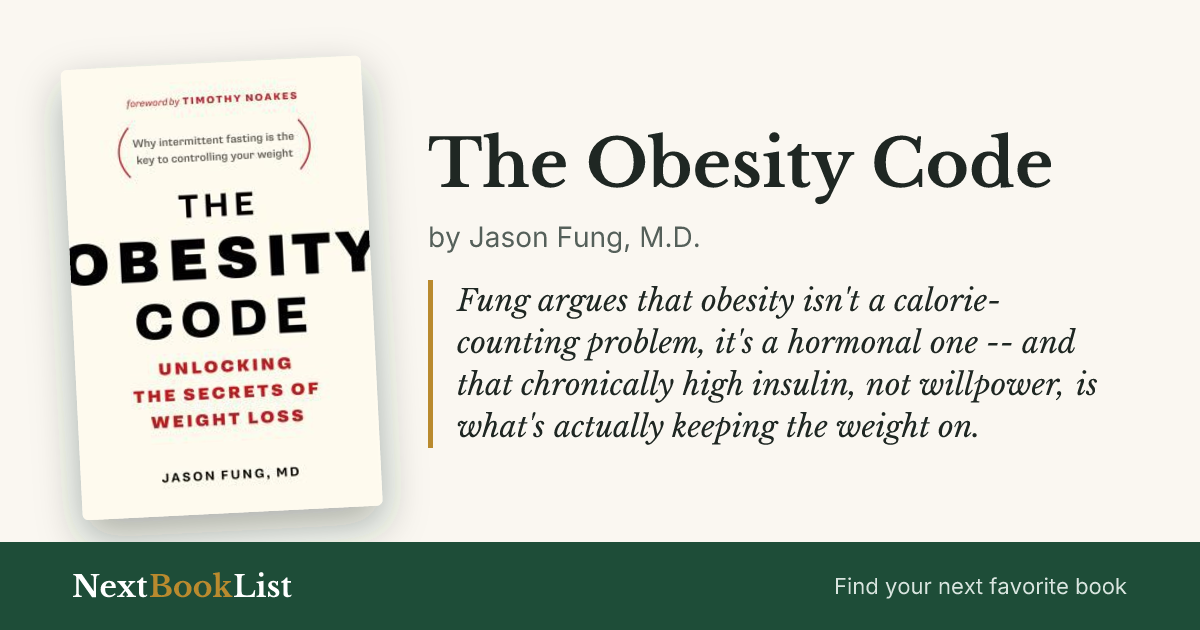
The Obesity Code
by Jason Fung, M.D. · 2016
Fung argues that obesity isn't a calorie-counting problem, it's a hormonal one -- and that chronically high insulin, not willpower, is what's actually keeping the weight on.
Worth reading? Fung's case is simple and genuinely useful: calories-in-calories-out treats every calorie as equal, but insulin doesn't, and a diet that spikes insulin all day is fighting your own hormones instead of working with them. The 'set point' framing does real explanatory work for why willpower-based dieting fails so often. Where it overreaches is treating intermittent fasting as close to a universal fix rather than one useful tool among several, and the confident tone occasionally outruns the certainty of the underlying science.
| Full Title | The Obesity Code: Unlocking the Secrets of Weight Loss |
|---|---|
| Author | Jason Fung, M.D. |
| Published | 2016 |
| Publisher | Greystone Books |
| Category | Health & Fitness |
| Favorite quote | “Diet is Batman and exercise is Robin. Diet does 95 per cent of the work and deserves all the attention.” |
The Verdict
Fung’s insulin argument earns its popularity honestly. If you’ve white-knuckled a calorie-restricted diet, lost weight, then watched it come back despite “sticking to the plan,” the set-weight/insulin model explains that experience better than “you didn’t try hard enough” ever did. That reframe alone is worth the read.
Where to be careful: Fung writes with more certainty than the underlying insulin-obesity research currently supports. It’s a real, actively debated model in the field, not settled science, and the book doesn’t spend much time on the counterarguments or the diets that work fine without touching insulin timing at all.
Read it if you want the clearest popular explanation of why insulin, not just calories, shapes fat storage, and you’re open to intermittent fasting as a tool. Skip it if you want a book that presents competing theories fairly rather than arguing one side hard.
you've tried calorie-restriction diets that worked short-term and failed long-term, and you want the hormonal explanation for why that keeps happening
you're looking for a meal plan with recipes -- this is a case for a model (insulin drives fat storage) and a strategy (fasting), not a day-by-day diet book
Book Summary
Fung's central claim is that obesity is a hormonal disorder of fat storage, not a simple math problem of calories in versus calories out -- the body defends a "set weight" the way a thermostat defends a temperature, which is why willpower-based calorie restriction so often works temporarily and then gets clawed back.
Insulin is positioned as the primary driver: foods and eating patterns that keep insulin chronically elevated (frequent meals, refined carbohydrates, sugar-sweetened drinks) push the body to store fat and resist burning it, regardless of total calories consumed, while lowering insulin through less frequent eating and lower-refined-carb food choices lets the body access stored fat instead of fighting to hold onto it.
The practical answer Fung lands on is intermittent fasting combined with a whole-foods, lower-refined-carbohydrate diet, on the logic that giving the body sustained low-insulin periods (rather than another restrictive eating plan) is what actually lets a person's set weight come down instead of just being suppressed.
Top 9 Lessons from The Obesity Code
- Obesity is framed as a hormonal disorder of fat storage, not simply a failure of willpower or a math error in calories in versus calories out.
- The body defends a 'set weight' much like a thermostat defends a temperature, which is why calorie-restriction diets so often work short-term and fail long-term -- the body compensates.
- Insulin is positioned as the main hormonal driver of fat storage: chronically elevated insulin pushes the body toward storing fat rather than burning it, independent of total calorie count.
- 'All diets work, and all diets fail' -- most named diets succeed short-term through calorie restriction and fail long-term because they don't address the underlying hormonal signal.
- Refined carbohydrates and sugar-sweetened drinks are singled out as particularly strong insulin-spiking culprits, more so than dietary fat.
- Diet is treated as doing the overwhelming majority of the work in weight management, with exercise playing a smaller, supporting role rather than being the primary lever.
- Meal frequency itself matters: constant snacking keeps insulin elevated all day, even if total daily calories stay the same as three larger meals.
- Intermittent fasting is proposed as a direct way to lower insulin for extended periods, which the book argues is more effective than continuous mild calorie restriction.
- Cutting one 'bad' ingredient (like fat) from a food while quietly increasing another (like sugar) can make a product read as healthier while doing nothing for, or worsening, its insulin impact.
Top 5 Quotes from The Obesity Code
"First: all diets work. Second: all diets fail."
Jason Fung, M.D., The Obesity Code
"Insulin is the major hormonal driver of weight gain. Insulin causes adult obesity."
Jason Fung, M.D., The Obesity Code
"Obesity is a hormonal dysregulation of fat mass. The body maintains a body set weight, much like a thermostat in a house."
Jason Fung, M.D., The Obesity Code
"Diet is Batman and exercise is Robin. Diet does 95 per cent of the work and deserves all the attention."
Jason Fung, M.D., The Obesity Code
"Eat whole, unprocessed foods. Avoid sugar. Avoid refined grains. Eat a diet high in natural fats. Balance feeding with fasting."
Jason Fung, M.D., The Obesity Code
Frequently Asked Questions
Is The Obesity Code worth reading?
Yes, if you want the hormonal (insulin-focused) explanation for why calorie-restriction diets stall out -- it's one of the clearer popular explanations of insulin's role in fat storage, even where its confidence outruns the evidence in places.
What is The Obesity Code about?
Jason Fung argues that obesity is driven primarily by chronically high insulin rather than calorie counting, and makes the case for intermittent fasting and lower-refined-carbohydrate eating as the fix.
Does The Obesity Code recommend a specific diet?
Not a rigid meal plan -- it recommends whole, unprocessed foods, avoiding sugar and refined grains, and combining that with intermittent fasting rather than following a fixed macro or calorie target.
Is the insulin theory of obesity in The Obesity Code scientifically settled?
No -- it's a genuinely debated model in obesity research. Fung presents it with more certainty than the field currently has; treat the book as a strong argument for one side of an active debate, not a settled consensus.
How does The Obesity Code compare to Life in the Fasting Lane?
The Obesity Code makes the theoretical case for why insulin and fasting matter; Life in the Fasting Lane (also by Fung) is the more practical, how-to-actually-fast-day-to-day follow-up.
Ready to read it?
Get The Obesity Code on Amazon