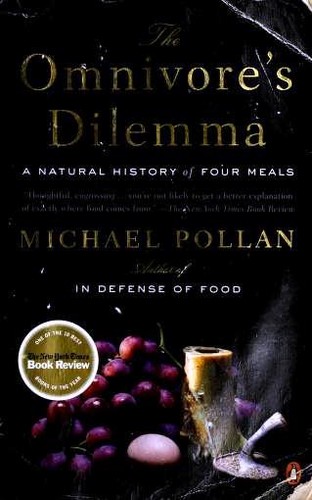
The Omnivore's Dilemma
by Michael Pollan · 2006
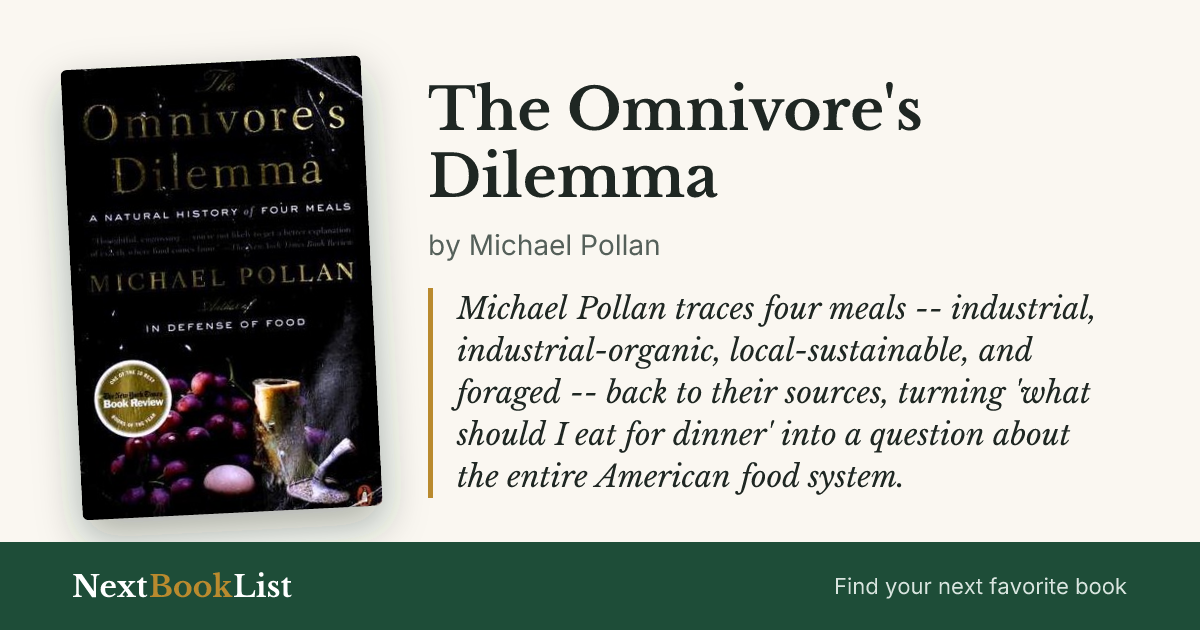
Michael Pollan traces four meals -- industrial, industrial-organic, local-sustainable, and foraged -- back to their sources, turning 'what should I eat for dinner' into a question about the entire American food system.
Worth reading? The Omnivore's Dilemma holds up nearly two decades later because its real subject isn't nutrition, it's the industrial food system -- and that system hasn't fundamentally changed. Pollan's tracing of a fast-food meal back to a specific corn plant in Iowa is still the clearest explanation of how U.S. agricultural policy shaped the modern diet. The book's weakest stretch is the final section on foraging his own meal, which reads more as a personal exercise in food philosophy than reporting.
| Full Title | The Omnivore's Dilemma: A Natural History of Four Meals |
|---|---|
| Author | Michael Pollan |
| Published | 2006 |
| Publisher | Penguin Press |
| Category | Health & Fitness |
| Favorite quote | “You are what you eat, and if this is true, then we are, most of us, corn and oil.” |
The Verdict
Pollan’s tracing of a fast-food meal back to a single corn plant in Iowa is the best chapter in the book, and it’s the reason The Omnivore’s Dilemma is still assigned in food-policy classes. It makes an abstract subsidy program feel like the actual reason your dinner tastes the way it does.
The Polyface Farm section is the closest thing to a hopeful answer, and Pollan is honest enough to admit it doesn’t scale. The final foraged-meal chapter is the weakest stretch – more personal food philosophy than reporting, and the book loses some momentum there.
Read it if you want to understand the actual system behind American food, corn subsidies and all, from a writer who did the reporting. Skip it if you’re looking for nutrition advice or a diet plan – that’s not what this book is for.
you want to understand where your food actually comes from -- corn subsidies, industrial feedlots, organic-label loopholes, and all -- told through Pollan's clear, curious reporting rather than a diet plan
you want specific nutrition or weight-loss advice -- this is food-systems journalism, not a diet book, and it won't tell you what to eat so much as how to think about how food gets made
Book Summary
Pollan structures the book around four meals, each representing a different food chain: an industrial fast-food meal traced back to a specific corn plant, an "industrial organic" meal from a large organic farm, a meal from Polyface Farm's sustainable, rotational-grazing system, and a final meal he hunts and forages himself.
The industrial chain section is the book's strongest argument: U.S. corn subsidies made corn so cheap that it became the hidden base ingredient of most processed food and animal feed, reshaping diets, farming, and the meat industry in ways most consumers never see.
The "industrial organic" section complicates the assumption that "organic" automatically means small-scale or sustainable -- Pollan shows how large organic operations can replicate many of the same scale problems as conventional agriculture while meeting the legal definition of organic.
Polyface Farm, run by Joel Salatin, is presented as the book's closest thing to a positive model: a small, diversified farm using rotational grazing to work with natural systems rather than against them, though Pollan is honest that it doesn't scale to feed the whole country.
Top 8 Lessons from The Omnivore's Dilemma
- U.S. corn subsidies made corn artificially cheap, and that cheap corn became the hidden base ingredient in an enormous share of processed food and livestock feed.
- The industrial food chain optimizes for yield and cost, not nutrition or flavor, which shapes what ends up cheap and abundant in American diets.
- 'Organic' as a legal label doesn't guarantee small-scale or traditional farming -- large industrial-organic operations can meet the letter of the standard while replicating many of conventional agriculture's scale problems.
- Feedlot cattle are fed corn, a diet their digestive systems didn't evolve for, which requires antibiotics to manage the resulting health problems -- a direct consequence of corn's cheapness driving feed choices.
- Rotational grazing systems, like the one at Polyface Farm, can work with an animal's natural behavior instead of against it, producing food with a different set of tradeoffs than industrial agriculture.
- Local and sustainable food systems currently don't scale to feed the entire country the way industrial agriculture does, which is a real limitation Pollan doesn't paper over.
- Understanding the food chain behind a meal -- where the ingredients came from and how they were produced -- changes how you evaluate claims made on food packaging.
- The book's foraged final meal is presented as a thought experiment about food's relationship to work and understanding, not a realistic model for how most people should eat.
Top 1 Quotes from The Omnivore's Dilemma
"You are what you eat, and if this is true, then we are, most of us, corn and oil."
Michael Pollan, The Omnivore's Dilemma
Frequently Asked Questions
Is The Omnivore's Dilemma worth reading?
Yes -- it's still the clearest explanation of how U.S. agricultural policy, particularly corn subsidies, shaped the modern food system, and that system hasn't fundamentally changed since publication.
What is The Omnivore's Dilemma about?
Michael Pollan traces four meals -- industrial fast food, industrial organic, sustainable farm, and foraged -- back to their sources to explain how food actually gets made in America.
Is The Omnivore's Dilemma a diet book?
No -- it's food-systems journalism. It won't tell you what to eat so much as how the food you already eat came to exist.
Does The Omnivore's Dilemma criticize organic food?
It complicates the assumption that 'organic' means small-scale or sustainable, showing that large industrial-organic operations can meet the legal label while sharing some of conventional agriculture's scale problems.
Ready to read it?
Get The Omnivore's Dilemma on Amazon