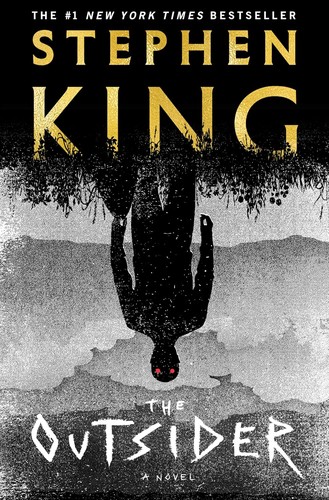
The Outsider
by Stephen King · 2018
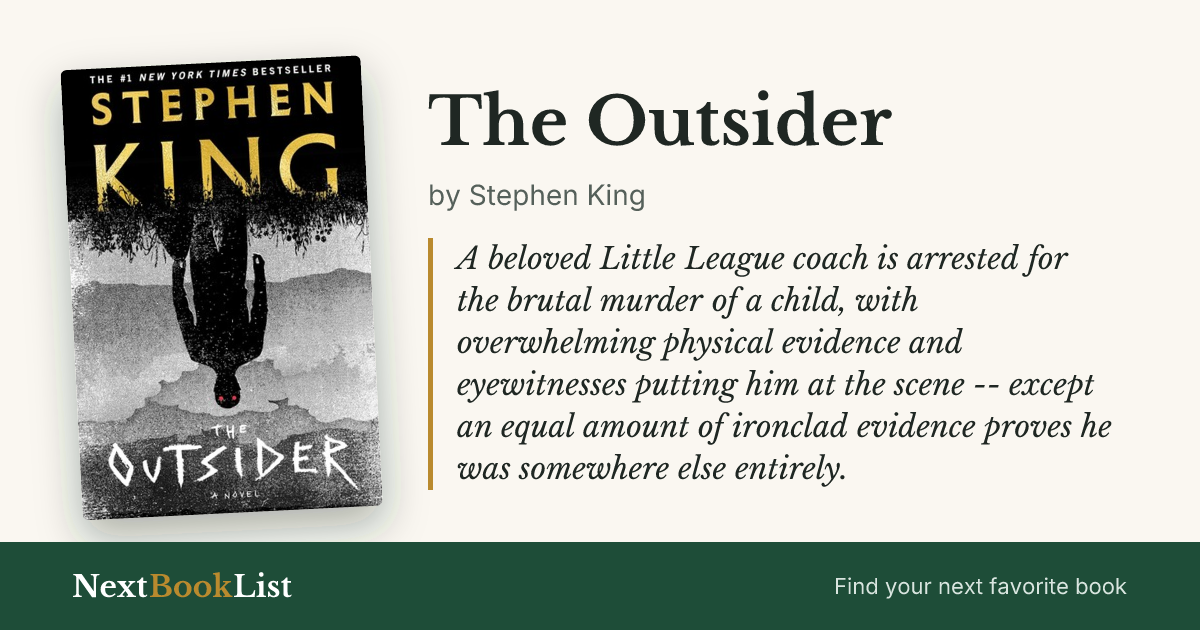
A beloved Little League coach is arrested for the brutal murder of a child, with overwhelming physical evidence and eyewitnesses putting him at the scene -- except an equal amount of ironclad evidence proves he was somewhere else entirely.
Worth reading? The Outsider spends its first half as a genuinely gripping impossible-crime procedural (the evidence is contradictory in a way that shouldn't be possible, not in a way that's obviously a plot hole) before King commits fully to a supernatural explanation. Whether that pivot works for you probably depends on whether you came for King the horror writer or King the crime writer, because the book insists on being both.
| Author | Stephen King |
|---|---|
| Published | 2018 |
| Publisher | Scribner |
| Category | Fiction |
The Verdict
The first half is some of King’s tightest plotting in years, a genuine puzzle where you can’t figure out how both alibis can possibly be true without cheating. That tension alone would carry a good procedural novel.
The pivot into full supernatural territory in the second half is where the book splits readers. If you trust King to earn it, and he mostly does, with the entity’s rules laid out with real internal logic, the payoff works. If you wanted the mystery to stay grounded, the turn will feel like a genre bait-and-switch.
Read it if you want King blending procedural mystery with horror and trust him to stick the landing. Skip it if you specifically want a crime novel that stays a crime novel.
you want King working procedural-mystery muscles before the story turns into something genuinely supernatural, with a detective (Holly Gibney, on loan from the Mr. Mercedes trilogy) as sharp as any character he's written
you want pure crime procedural all the way through and don't want King's supernatural elements to intrude on the mystery -- the second half commits fully to the impossible, and that's a hard pivot for some readers
Book Summary
Terry Maitland, a well-liked high school teacher and Little League coach, is publicly arrested for the rape and murder of an eleven-year-old boy. The case against him is airtight: DNA, fingerprints, multiple eyewitnesses placing him at the scene. The problem is that an equally airtight set of evidence, video, witnesses, a hotel receipt, puts him at a teachers' conference in another city at the same time.
Detective Ralph Anderson, initially certain of Terry's guilt, is forced to reckon with the impossibility of both alibis being true, which eventually brings him into contact with Holly Gibney, the meticulous, socially anxious investigator King introduced in the Bill Hodges trilogy, whose willingness to consider explanations outside normal police logic becomes essential.
The novel's back half commits to a shapeshifting, memory-eating entity as the actual explanation, which reframes the impossible-alibi puzzle as horror rather than crime fiction, and asks the reader (and the skeptical detective) to accept that some crimes don't have rational explanations.
Top 8 Lessons from The Outsider
- The novel's central puzzle (two mutually exclusive, individually airtight sets of evidence) is constructed carefully enough to feel like a genuine impossible crime before any supernatural explanation is introduced.
- Holly Gibney functions as the book's bridge between skeptical procedural thinking and openness to the impossible -- her prior experience (from the Bill Hodges trilogy) makes her willing to entertain what a career detective like Ralph initially can't.
- The book uses a small town's rush to convict Terry publicly, before trial, before real proof, to explore how communities turn on someone the moment accusation looks like certainty.
- King structures the reveal so that accepting the supernatural explanation requires the same detective-work rigor as accepting a mundane one -- the entity's rules and limitations are established with procedural precision, not hand-waved.
- Grief for the murdered child and the wrongly-suspected Terry's family both get real weight in the book, which keeps the human cost present even once the plot turns fantastical.
- The entity feeds on grief and suffering to sustain its shapeshifting, tying the horror mechanism directly to the book's larger interest in communal grief and rushed judgment rather than treating it as a disconnected monster gimmick.
- Ralph Anderson's slow, resisted shift from insisting on a rational explanation to accepting the impossible mirrors the skeptical reader's own likely resistance to the genre pivot, making his arc a stand-in for the audience's.
- King delays the supernatural reveal well past the book's midpoint, a calculated structural risk that commits fully to procedural mystery for so long that the later genre shift can catch even willing readers off guard.
Frequently Asked Questions
Is The Outsider worth reading?
Yes -- the first half is a genuinely tight procedural mystery, and the supernatural turn in the back half is well-earned if you're open to King's horror instincts taking over.
What is The Outsider about?
A detective investigates the murder of a child with contradictory evidence proving the accused was both at the crime scene and at a conference in another city simultaneously.
Is The Outsider a horror book or a crime novel?
Both -- it starts as an impossible-crime procedural and shifts into supernatural horror in the second half.
Does The Outsider feature Holly Gibney from the Mr. Mercedes trilogy?
Yes -- Holly is a key character, brought in for her willingness to consider explanations outside standard police reasoning.
Was The Outsider adapted for TV?
Yes, as an HBO limited series starring Ben Mendelsohn and Cynthia Erivo.
Ready to read it?
Get The Outsider on Amazon