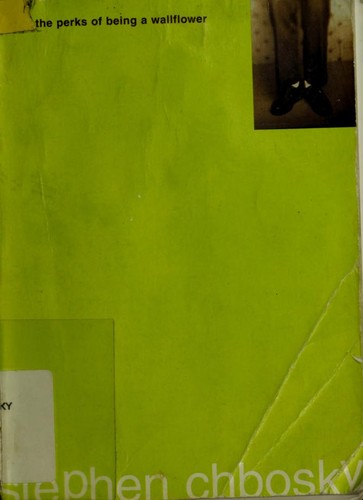
The Perks of Being a Wallflower
by Stephen Chbosky · 1999
A quiet, watchful freshman writes anonymous letters about his first year of high school, slowly revealing why he's so careful about staying on the sidelines of his own life.
Worth reading? The Perks of Being a Wallflower earns its status as a genre staple because Chbosky commits fully to Charlie's voice -- an unreliable, self-effacing narrator who's clearly protecting himself from something he can't yet name. The epistolary format and slow-burn reveal make the ending land harder than a more straightforward telling could manage.
| Author | Stephen Chbosky |
|---|---|
| Published | 1999 |
| Publisher | MTV Books / Pocket Books |
| Category | Fiction |
| Favorite quote | “We accept the love we think we deserve.” |
The Verdict
Chbosky’s real achievement is Charlie’s voice. He narrates his own breakdowns with an almost clinical calm that reads, on a first pass, like emotional maturity, and only in hindsight like a symptom of something he can’t yet name.
The letter format is doing real work here – Charlie can be more honest with a stranger than with anyone who knows him, which lets Chbosky reveal information to the reader that Charlie himself hasn’t fully processed.
The late reveal about his aunt recontextualizes everything before it, and it rewards going back through the book with that knowledge. This isn’t really a nostalgia piece about high school; it’s a study of dissociation wearing a coming-of-age plot.
Read it if you want a coming-of-age novel that takes teenage trauma and mental health seriously. Skip it if you need a plot-forward story rather than a slow, interior reveal.
you want a coming-of-age novel that treats teenage mental health, trauma, and first experiences with real seriousness instead of nostalgia or melodrama
you want a plot-driven story -- this is an interior, letter-format novel, and the slow reveal of Charlie's past requires patience with a narrator who's often deliberately withholding, even from himself
Book Summary
Charlie, an anxious, unusually perceptive high school freshman, writes a series of anonymous letters to an unnamed recipient recounting his first year of high school: making friends with seniors Sam and Patrick, experiencing music, drugs, and first relationships, and processing the recent suicide of his best friend along with an unspecified trauma from his childhood.
Chbosky structures the novel so Charlie repeatedly deflects or minimizes his own pain throughout the letters, describing his own breakdowns almost clinically, which the reader gradually recognizes as a symptom rather than genuine calm -- the gap between how Charlie narrates his life and what's actually happening to him is the book's central technique.
The late-book reveal that Charlie was sexually abused by his aunt as a child, memory he'd suppressed, recontextualizes nearly everything that came before it -- his passivity, his intense loyalty to the people who are kind to him, his repeated collapses -- turning what read as a gentle coming-of-age story into something closer to a study of trauma and dissociation.
Top 11 Lessons from The Perks of Being a Wallflower
- Charlie's flat, minimizing narration of his own pain is a deliberate technique -- the gap between his tone and what's actually happening is the book's central device, not an authorial oversight.
- The novel treats teenage mental health crises (breakdowns, dissociation, suicidal ideation around him) with real seriousness rather than as background color for a nostalgia piece.
- The late reveal of childhood sexual abuse recontextualizes the entire novel retroactively, which rewards a careful reread more than most coming-of-age books in the genre.
- Sam and Patrick function less as typical romantic-interest and best-friend archetypes and more as the first people who make Charlie feel genuinely seen, which the book treats as its own form of healing.
- The epistolary, letter-to-a-stranger format lets Charlie be more honest than he could be to someone who knows him, while also letting him still hide things from himself.
- The novel doesn't offer a fully resolved recovery arc by its end -- Charlie's healing is presented as ongoing, not completed by the final page.
- Charlie's role as a passive observer at parties and among his older friends lets the book explore drug and alcohol use among teenagers without moralizing about it directly.
- The suicide of Charlie's friend Michael early in the novel establishes the book's stakes before the reader knows anything about Charlie's own hidden trauma, and it recurs as an unresolved wound throughout.
- Charlie's English teacher, Bill, functions as the one adult who consistently sees Charlie's potential and gives him books to read, offering a model of mentorship the novel doesn't otherwise supply through his family.
- The novel treats first sexual and romantic experiences -- including a painful, formative one with Sam -- as morally complicated rather than simple rites of passage.
- Charlie's periodic blackouts and gaps in memory are seeded early as a stylistic quirk before the book reveals they're a symptom of trauma, which rewards attentive rereading.
Top 5 Quotes from The Perks of Being a Wallflower
"We accept the love we think we deserve."
Stephen Chbosky, The Perks of Being a Wallflower
"And in that moment, I swear we were infinite."
Stephen Chbosky, The Perks of Being a Wallflower
"So, I guess we are who we are for a lot of reasons. And maybe we'll never know most of them. But even if we don't have the power to choose where we come from, we can still choose where we go from there."
Stephen Chbosky, The Perks of Being a Wallflower
"It's strange because sometimes, I read a book, and I think I am the people in the book."
Stephen Chbosky, The Perks of Being a Wallflower
"Standing on the fringes of life offers a unique perspective. But there's a whole lot of sad in it, too."
Stephen Chbosky, The Perks of Being a Wallflower
Frequently Asked Questions
Is The Perks of Being a Wallflower worth reading?
Yes -- it's a genuinely careful, well-constructed novel about teenage mental health and trauma, not just a nostalgic coming-of-age story.
What is The Perks of Being a Wallflower about?
An anxious high school freshman writes anonymous letters about his first year of high school, gradually revealing suppressed childhood trauma underneath what first reads as a gentle coming-of-age story.
Is The Perks of Being a Wallflower appropriate for teen readers?
It deals directly with suicide, sexual abuse, and drug use, and is generally recommended for older teens and up rather than younger middle-grade readers.
Is the book different from the 2012 film?
Chbosky wrote and directed the film himself, so it's unusually faithful to the novel, including much of its structure and tone.
Why is Charlie an unreliable narrator?
He consistently minimizes and flattens his own pain in his letters, a symptom of suppressed trauma the book only fully reveals near the end.
Ready to read it?
Get The Perks of Being a Wallflower on Amazon