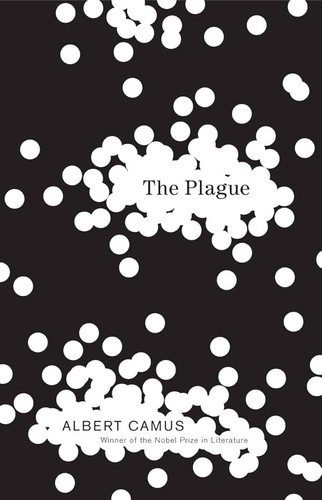
The Plague
by Albert Camus · 1947
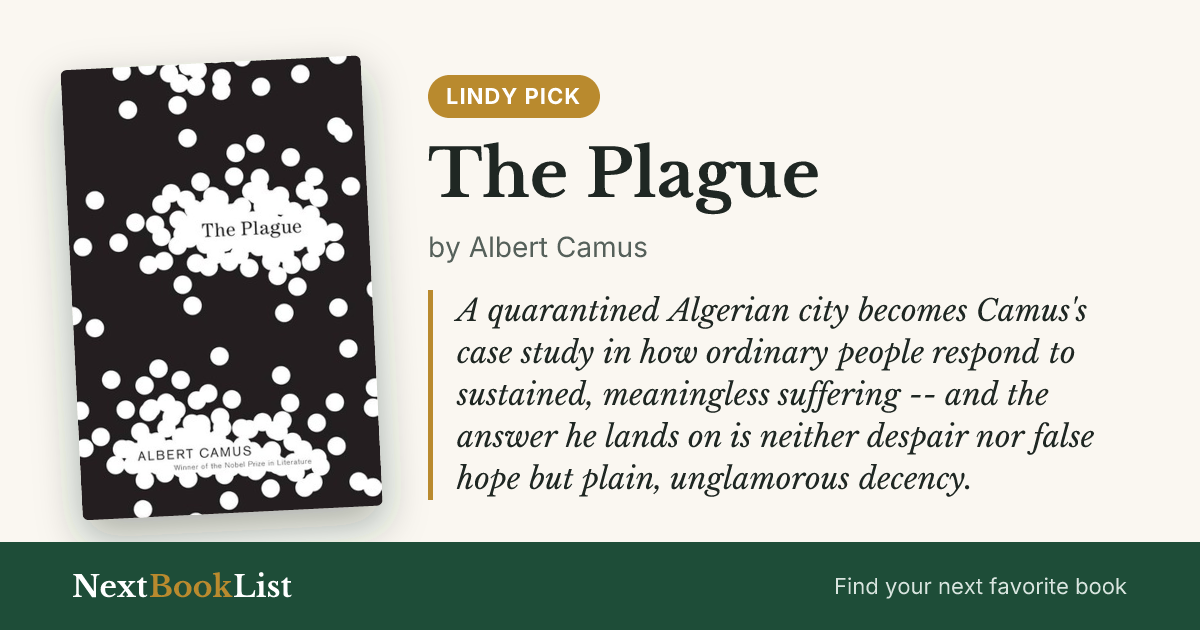
A quarantined Algerian city becomes Camus's case study in how ordinary people respond to sustained, meaningless suffering -- and the answer he lands on is neither despair nor false hope but plain, unglamorous decency.
Worth reading? The Plague got a second life during COVID because it nails something true about how societies actually behave under sustained crisis: not heroics, mostly just people showing up to do necessary, unglamorous work day after day. Camus uses the plague as a stand-in for any large-scale, absurd suffering -- fascism, occupation, disease -- and the novel's real subject is what decency looks like when there's no cosmic reward for it.
| Full Title | The Plague |
|---|---|
| Author | Albert Camus |
| Published | 1947 |
| Publisher | Vintage International |
| Category | Fiction |
| Favorite quote | “The only means of fighting a plague is common decency.” |
The Verdict
This book earned its 2020 sales spike honestly. Camus wrote a plague novel in 1947 that gets more right about quarantine psychology, and the specific way communities slide from denial to endurance to complacency, than most things written about COVID in real time.
It’s slower than The Stranger, more chronicle than thriller, and you should go in expecting that pace rather than fighting it. The payoff isn’t plot twists, it’s watching Rieux keep doing his job with no illusions that it means anything cosmically, because the alternative is doing nothing.
Read it if you want a serious book about how people actually behave under sustained collective crisis. Skip it if you came from The Stranger expecting something equally short and tight – this one takes its time and rewards patience rather than speed.
you want a novel about collective crisis that reads like it was written after 2020 instead of decades before it
you want fast pacing -- this is a slow, procedural, almost documentary account of a city under quarantine, closer to a chronicle than a thriller
Book Summary
The Algerian port city of Oran is sealed off after a rat-borne plague breaks out, and the novel follows Dr. Rieux and a handful of other characters (the journalist Rambert, the priest Paneloux, the outsider Tarrou) as they respond to a crisis with no clear end date and no guaranteed survival.
Camus wrote the book with the Nazi occupation of France clearly in mind, and it works as an allegory for any collective, absurd catastrophe that descends on ordinary life without warning or reason -- the plague doesn't care who deserves it, and neither does fascism, war, or disease.
Rieux's quiet, repetitive work as a doctor becomes the novel's real moral center: he doesn't believe suffering has meaning, and he keeps treating patients anyway, because the alternative is to do nothing. Camus frames this as heroism without needing heroic language -- decency as a habit, not a grand gesture.
Father Paneloux's arc, from a sermon calling the plague God's punishment to a much more shaken, humbled position after watching a child die slowly, is Camus's rebuttal to easy religious explanations for suffering: some pain doesn't fit into a moral framework, and pretending it does is its own kind of dishonesty.
Top 7 Lessons from The Plague
- Rieux's refusal to find cosmic meaning in the plague, paired with his refusal to stop treating patients, is Camus's model for how to act inside absurdity -- keep doing the necessary work without needing a reward or explanation.
- The novel reads as a direct allegory for the Nazi occupation of France, using plague as a stand-in for any collective catastrophe that arrives without justice or warning.
- Father Paneloux's shift after watching a child die slowly argues against tidy religious explanations for suffering -- some pain resists being folded into a moral lesson.
- Rambert's arc, from wanting to flee the quarantined city to reunite with his lover to choosing to stay and help, dramatizes solidarity as a choice made against self-interest, not a natural instinct.
- The novel treats heroism as unglamorous and procedural -- showing up, doing the next necessary task -- rather than as a single dramatic act.
- Tarrou's diary entries about wanting to become 'a saint without God' articulate Camus's interest in ethics that don't depend on religious belief.
- The plague's return at the very end (rats reappearing after the city celebrates its lifting) warns that crises like this recur, and complacency after relief is its own danger.
Top 4 Quotes from The Plague
"The only means of fighting a plague is common decency."
Albert Camus, The Plague
"What's true of all the evils in the world is true of plague as well. It helps men to rise above themselves."
Albert Camus, The Plague
"There is no shame in preferring happiness."
Albert Camus, The Plague
"Everybody knows that pestilences have a way of recurring in the world; yet somehow we find it hard to believe in ones that crash down on our heads from a blue sky."
Albert Camus, The Plague
Frequently Asked Questions
Is The Plague worth reading?
Yes, especially if you want a serious literary account of how communities actually behave under sustained crisis, without false heroics or false despair.
What is The Plague about?
A quarantined Algerian city during a plague outbreak, following Dr. Rieux and others as they respond to sustained, meaningless suffering with quiet, unglamorous decency.
Is The Plague an allegory for something else?
Yes -- Camus wrote it with the Nazi occupation of France in mind, and it works broadly as an allegory for any collective catastrophe that descends on ordinary life.
Is The Plague relevant after COVID-19?
Very -- many readers returned to it during 2020 because its depiction of quarantine, isolation, and collective endurance reads uncannily current.
Is The Plague harder to read than The Stranger?
It's longer and slower-paced, more chronicle than thriller, but not more difficult prose-wise -- it just asks for more patience.
Ready to read it?
Get The Plague on Amazon