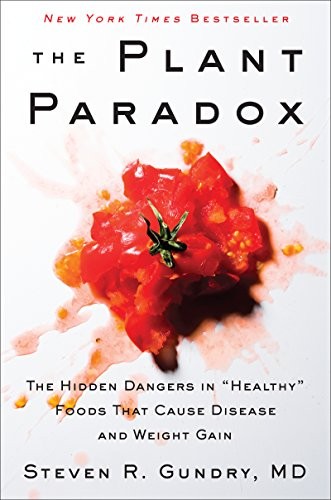
The Plant Paradox
by Steven R. Gundry, M.D. · 2017
Gundry argues that lectins, a defense protein found in grains, beans, and many 'healthy' vegetables, are quietly driving inflammation and weight gain in foods you've been told are good for you.
Worth reading? Gundry's lectin argument is built on a real biological mechanism (plants do produce lectins as a defense against being eaten) stretched into a sweeping explanation for modern disease that the mainstream nutrition science doesn't support at anywhere near this scale. The clinic-patient anecdotes are compelling to read and impossible to verify. It's worth reading as a provocative outsider's theory, but it asks you to give up a long list of foods (tomatoes, beans, whole grains, most fruit) most nutrition guidance treats as unambiguously healthy, on evidence that's thin outside Gundry's own practice.
| Full Title | The Plant Paradox: The Hidden Dangers in "Healthy" Foods That Cause Disease and Weight Gain |
|---|---|
| Author | Steven R. Gundry, M.D. |
| Published | 2017 |
| Publisher | Harper Wave |
| Category | Health & Fitness |
| Favorite quote | “Quite simply, plants don't want to be eaten -- and who can blame them? Like any living thing, their instinct is to propagate the next generation of their species.” |
The Verdict
Gundry’s biology isn’t invented: plants really do produce lectins, and some people really do react badly to raw or poorly-prepared legumes and grains. Where the book overreaches is in scaling that real mechanism into an explanation for a huge swath of modern disease, on evidence that’s mostly Gundry’s own patients rather than independent research the rest of the field has been able to replicate.
It’s genuinely interesting as a contrarian read, and the traditional-prep angle (soaking, fermenting, pressure-cooking) is a reasonable point even if you don’t buy the scale of the lectin claim. But it asks you to cut foods – tomatoes, beans, whole grains – that most other credible nutrition guidance treats as core to a healthy diet, and it does that mostly on the author’s say-so.
Read it if you’re curious about a well-argued outsider theory and you’re willing to test an elimination protocol on yourself rather than take the claims at face value. Skip it if you want a diet grounded in consensus nutrition science rather than one doctor’s clinical hunch scaled into a book-length theory.
you've tried conventional healthy eating without results and you're open to a contrarian, higher-restriction theory about specific foods (tomatoes, beans, whole grains) being the hidden culprit
you want a diet grounded in consensus nutrition science -- the lectin-avoidance theory is a fringe position most dietitians and researchers don't accept, and the book leans heavily on the author's own clinical anecdotes
Book Summary
Gundry's core claim is that lectins, proteins many plants produce specifically to deter or punish predators (including humans) for eating them, are a hidden driver of inflammation, gut damage, autoimmune trouble, and weight gain, hiding in foods conventional nutrition treats as healthy: whole grains, legumes, nightshades like tomatoes and peppers, and even some fruit.
The book frames this as an evolutionary arms race, plants can't run from predators so they've evolved chemical defenses instead, and argues that modern humans, unlike traditional diets that used soaking, fermenting, and pressure-cooking to neutralize lectins, are eating far more raw or minimally-processed lectin-containing food than our bodies are adapted to handle.
The prescriptive back half is an elimination-and-reintroduction protocol: cut lectin-heavy foods (including many considered health staples) for a defined period, watch for symptom improvement, then selectively reintroduce foods prepared in traditional lectin-reducing ways (peeling, deseeding, pressure-cooking) to find an individual tolerance level.
Top 8 Lessons from The Plant Paradox
- Lectins are framed as a plant's chemical defense mechanism against being eaten, not an incidental byproduct -- plants 'want' to discourage predation, including by humans.
- Many foods marketed and generally accepted as healthy (whole grains, legumes, tomatoes, peppers, some fruits) are targeted specifically because they're high in lectins, putting the book's recommendations at odds with mainstream dietary guidance.
- Traditional food preparation methods (soaking, fermenting, pressure-cooking, peeling, deseeding) are presented as time-tested techniques for neutralizing lectins that modern fast food-prep habits have largely abandoned.
- The book proposes an elimination-then-reintroduction protocol, encouraging readers to test their own tolerance rather than follow one fixed rule for every food.
- Chronic, low-grade inflammation is positioned as the throughline connecting lectins to a wide range of seemingly unrelated conditions -- gut issues, joint pain, autoimmune symptoms, weight gain.
- Antibiotic use in conventional livestock is cited as a related concern, with the claim that residual antibiotics in meat can also disrupt gut health independent of the lectin argument.
- Gundry draws heavily on his own cardiac surgery patients and clinic case histories as evidence, which makes the argument vivid but means much of the book's proof is anecdotal rather than from independent, peer-reviewed trials.
- Not all lectins are treated equally -- the book distinguishes degrees of lectin content and risk across different foods rather than treating all plants as equally dangerous.
Top 3 Quotes from The Plant Paradox
"Did you know that a plant knows when it is being eaten? Well, as recent research reveals, it does, but it doesn't just sit there and accept its fate."
Steven R. Gundry, M.D., The Plant Paradox
"Quite simply, plants don't want to be eaten -- and who can blame them? Like any living thing, their instinct is to propagate the next generation of their species."
Steven R. Gundry, M.D., The Plant Paradox
"Almost all American chicken or beef contains enough antibiotics to kill bacteria in a petri dish!"
Steven R. Gundry, M.D., The Plant Paradox
Frequently Asked Questions
Is The Plant Paradox worth reading?
Worth reading as a provocative outsider theory, but treat it skeptically -- the lectin-avoidance framework isn't accepted by mainstream nutrition science, and much of the book's evidence is Gundry's own clinical anecdotes.
What is The Plant Paradox about?
Steven Gundry argues that lectins, a defense protein in many plants, drive inflammation and weight gain, and lays out an elimination-and-reintroduction diet to avoid or neutralize lectin-heavy foods like grains, legumes, and nightshades.
Is the lectin theory in The Plant Paradox scientifically accepted?
No -- most dietitians and nutrition researchers consider it a fringe position that overstates lectins' real-world health impact for most people; the mechanism is real but the scale of harm claimed isn't broadly supported.
What foods does The Plant Paradox recommend avoiding?
Whole grains, legumes, nightshade vegetables (tomatoes, peppers, eggplant), and some fruits and nuts, unless prepared with traditional lectin-reducing methods like peeling, deseeding, soaking, or pressure-cooking.
How does The Plant Paradox compare to How Not to Die?
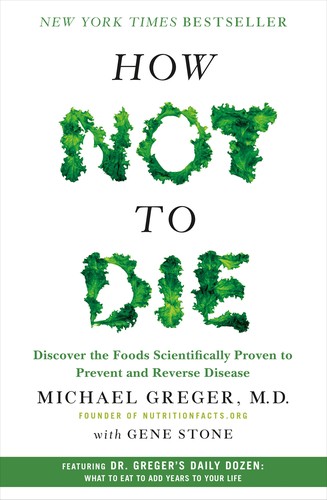
Nearly opposite conclusions -- How Not to Die pushes toward more whole grains, legumes, and plant foods for disease prevention, while The Plant Paradox argues many of those same foods should be restricted or specially prepared.
Ready to read it?
Get The Plant Paradox on Amazon