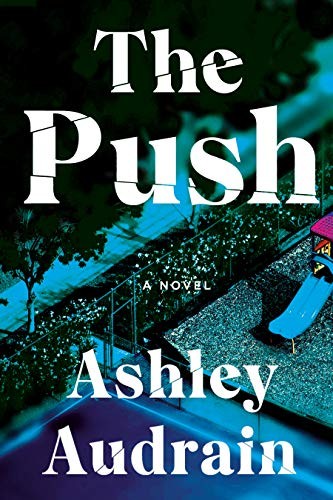
The Push
by Ashley Audrain · 2021
Blythe knew something was wrong with her daughter from the beginning -- but nobody, including her own husband, believed a mother could say that about her own child.
Worth reading? The Push earns its unsettling reputation by refusing to answer its own central question -- was Violet actually a dangerous child, or was Blythe's inherited trauma from her own mother and grandmother distorting what she saw? Audrain keeps both readings alive to the end, and that ambiguity is the book's real achievement, not a cop-out. It's a harder, more serious book than its thriller marketing suggests.
| Author | Ashley Audrain |
|---|---|
| Published | 2021 |
| Publisher | Pamela Dorman Books |
| Category | Fiction |
| Favorite quote | “Mothers aren't supposed to have children who suffer. We aren't supposed to have children who die. And we are not supposed to make bad people.” |
The Verdict
The generational structure is what keeps this from being a simple unreliable-narrator gimmick – by the time you’re deep into Blythe’s mother’s and grandmother’s own failures to love their children the way they were supposed to, the question stops being “is Blythe crazy” and becomes “how much of this was ever a choice for any of them.”
you want a novel that takes the taboo of not bonding with your child seriously, without resolving into a tidy answer about who's actually responsible for what goes wrong
you're pregnant or newly postpartum and sensitive to intrusive-thought content -- this book sits directly inside the fear that something is wrong with your baby, or with you, and doesn't soften it
Book Summary
Blythe narrates her own motherhood in second person, addressed to her ex-husband Fox, describing years of believing her daughter Violet was dangerous -- to other children, and eventually to Blythe's own second child, Sam -- while Fox and everyone else dismissed her fears as postpartum anxiety or projection. The book intercuts Blythe's story with her mother's and grandmother's own failures to bond with their children, suggesting a generational pattern Blythe is terrified of repeating.
The novel's real subject is the unbearable social taboo around a mother who doesn't feel what she's supposed to feel. Whether Violet is genuinely disturbed or Blythe's own damaged capacity for maternal love is projecting danger onto an ordinary child is never resolved -- and the book argues that society's refusal to let mothers voice ambivalence or fear about their own kids makes it nearly impossible to tell the difference in real time.
Top 7 Lessons from The Push
- The book never confirms whether Violet is truly dangerous or whether Blythe's inherited trauma is distorting her perception -- that ambiguity is deliberate, not a plot failure.
- Blythe's mother and grandmother's own inability to bond with their children is presented as a real generational pattern, raising the question of how much of maternal instinct is nature versus learned behavior from your own upbringing.
- Fox's total dismissal of Blythe's fears isn't just spousal disagreement -- it's the book's indictment of how readily society disbelieves mothers who admit ambivalence toward their children.
- The second-person narration addressed to Fox turns the entire book into an accusation and a plea for belief at once, which is unusual structurally and reinforces how alone Blythe is in her own account.
- Sam's death is the book's turning point precisely because it forces the reader to decide, alongside Blythe, whether they believe her version of what Violet is capable of.
- The novel treats postpartum mental health as genuinely high-stakes and complicated rather than a plot device -- Blythe's exhaustion, isolation, and unbelieved fear compound each other realistically.
- Motherhood in The Push is depicted without the instinctive-bond assumption most fiction relies on -- Blythe's struggle to love Violet the way she's supposed to is treated as a real and terrifying possibility, not a moral failing to be easily corrected.
Top 5 Quotes from The Push
"Mothers aren't supposed to have children who suffer. We aren't supposed to have children who die. And we are not supposed to make bad people."
Ashley Audrain, The Push
"But I was on the cusp of the age when women worry about disappearing to everyone but themselves, blending in with their sensible hair, their practical coats."
Ashley Audrain, The Push
"Sometimes we don't notice how far we've gone until all of a sudden, the water meets the horizon and it feels like we'll never make it back."
Ashley Audrain, The Push
"I looked up and felt nothing for you -- not love, not hate, not anything in between."
Ashley Audrain, The Push
"It is often said that the first sound we hear in the womb is our mother's heartbeat."
Ashley Audrain, The Push
Frequently Asked Questions
Is The Push worth reading?
Yes, if you want serious literary fiction about maternal ambivalence and unreliable perception -- it's more thoughtful than its thriller marketing suggests.
Is The Push triggering for new or expecting mothers?
It can be -- the book sits directly inside fears about not bonding with a child or a child being dangerous, and doesn't soften that content. Approach with caution if you're currently postpartum.
Does The Push resolve whether Violet is actually dangerous?
No, deliberately -- the ambiguity about whether Violet is disturbed or Blythe's perception is distorted by inherited trauma is left open to the end.
Is The Push a thriller?
It's marketed as psychological suspense but reads more like literary fiction about motherhood, trauma, and belief -- slower and more introspective than a typical thriller.
Ready to read it?
Get The Push on Amazon