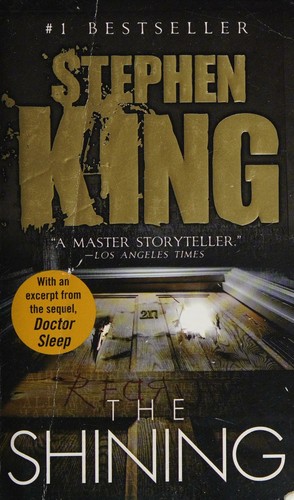
The Shining
by Stephen King · 1977
A recovering alcoholic writer takes his family to an isolated mountain hotel for the winter as caretaker, and the hotel's malevolent history slowly takes over his already-fraying mind -- the novel that made King a horror-genre landmark, and a very different book from the movie most people picture.
Worth reading? The Shining works because King ties the haunting directly to something painfully real: Jack Torrance's alcoholism and his history of losing control with his own son. The Overlook Hotel doesn't invent Jack's rage, it amplifies what's already there, which makes the horror feel earned rather than arbitrary. It's also, notably, a more sympathetic and more tragic book than the Kubrick film most people know it from -- King has been vocal for decades about how much he dislikes that adaptation, and reading the source material makes clear why.
| Author | Stephen King |
|---|---|
| Published | 1977 |
| Publisher | Doubleday |
| Category | Fiction |
| Favorite quote | “All work and no play makes Jack a dull boy.” |
The Verdict
What makes The Shining hold up as horror, decades later, is that King never lets the Overlook off the hook by making it the sole villain. Jack’s rage and drinking are real before the hotel ever touches him – the haunting works because it’s aiming at an actual crack in a real person, not inventing one.
If your image of this story comes from the Kubrick film, expect a different experience. King’s Jack is more sympathetic early on, Wendy gets more to do and more agency, and the ending resolves differently. King’s public dislike of the movie isn’t just an author being precious about adaptation, the two versions are meaningfully different stories with different points to make.
Danny’s “shining” ability is the smartest structural choice in the book: it means the reader (through Danny) usually understands the danger before the adults do, which builds dread more effectively than a straightforward jump-scare structure would.
Read it if you want slow-burn psychological horror about addiction and family, told with real sympathy for a father losing the fight against himself. Skip it if you’re only interested in the version from the movie – the book tells a related but distinctly different story.
you want a slow-burn psychological horror novel about addiction and family violence, told mostly from inside a father's collapsing mind, more than a jump-scare haunted house story
you're expecting the Kubrick film's version of events -- King's Jack Torrance is a more sympathetic, more clearly loving father whose descent is tied specifically to alcoholism, and the ending is substantially different from the movie's
Book Summary
Jack Torrance, a recovering alcoholic and struggling writer with a history of losing his temper (including once breaking his young son Danny's arm), takes a winter caretaker job at the isolated Overlook Hotel, hoping the isolation will help him finish a play and repair his family.
Danny, Jack's son, has psychic abilities ("the shining") that let him see the hotel's violent past and sense the malevolent presence accumulating in its empty rooms -- the Overlook, King makes clear, has been quietly killing and feeding on trauma for years before the Torrances arrive.
As the winter isolates the family completely, the hotel begins actively working on Jack's specific weaknesses -- his drinking, his resentment, his fear of failing as a provider -- pushing him toward violence against his own family in a way King frames as addiction and generational trauma made supernaturally literal, not a random possession.
Top 7 Lessons from The Shining
- Jack Torrance's alcoholism and history of losing control with his son Danny (including once breaking his arm) are established before the family ever arrives at the Overlook -- the hotel amplifies an existing danger rather than creating one from nothing.
- Danny's psychic ability ('the shining') lets him perceive the hotel's violent history and the danger accumulating around his father, making him the character with the clearest view of what's actually happening, even though the adults around him are slower to believe it.
- The Overlook Hotel is written as an entity that specifically targets Jack's existing weaknesses -- his drinking, his resentment of his family's dependence on him, his fear of professional failure -- rather than exerting generic possession.
- King has said publicly and repeatedly that the novel is more directly autobiographical about his own struggles with alcoholism than most of his other books, written before he got sober himself.
- The book's isolation (a family snowed in alone for a winter with no way to leave) is the mechanism that makes the horror plausible -- there's no easy escape, so the family's only real defense is each other.
- Wendy Torrance, Jack's wife, is given more agency and a clearer arc of recognizing the danger and acting on it in the novel than she's typically remembered for, partly because the Kubrick film adaptation wrote her as more passive.
- The novel's ending differs substantially from the famous 1980 Kubrick film -- without spoiling specifics, King's version resolves Jack's arc with more tragedy and more of his humanity intact, which is part of why King has been openly critical of the film for decades.
Top 1 Quotes from The Shining
"All work and no play makes Jack a dull boy."
Stephen King, The Shining
Frequently Asked Questions
Is The Shining worth reading?
Yes -- it's a landmark horror novel and a more sympathetic, more specifically alcoholism-driven story than most readers expect from the Kubrick film alone.
Is The Shining book different from the movie?
Yes, substantially -- King's Jack Torrance is more clearly loving before his descent, Wendy has more agency, and the ending is different. King has been publicly critical of Kubrick's adaptation for decades.
Do I need to read The Shining before Doctor Sleep?
Yes, ideally -- Doctor Sleep is King's direct sequel following an adult Danny Torrance, and it assumes you know what happened at the Overlook.
Is The Shining scary or more of a psychological drama?
Both -- it has genuine horror set pieces, but its most effective material is psychological, built around addiction, isolation, and a father's fear of failing his family.
Is The Shining based on King's own experience?
King has said the novel draws on his own struggles with alcoholism, written years before he got sober, making Jack's arc more personal than most of his other books.
Ready to read it?
Get The Shining on Amazon