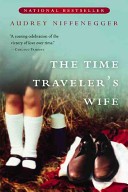
The Time Traveler's Wife
by Audrey Niffenegger · 2003
A man with a genetic disorder that yanks him involuntarily through time falls in love with the woman who has known him, in fragments, since she was six years old.
Worth reading? The premise sounds like a gimmick until you notice what Niffenegger actually built with it: a marriage told out of order, where both people already know how some of the worst days end. That structural trick does more emotional work than a straight chronological love story ever could.
| Author | Audrey Niffenegger |
|---|---|
| Published | 2003 |
| Publisher | MacAdam/Cage |
| Category | Fiction |
The Verdict
The chronology is the whole trick here, and it works. You meet Henry and Clare at wildly different points in their relationship within the same chapter, and Niffenegger trusts you to track who knows what and when. That trust pays off – by the second half, you’re holding the same dread the characters are, because you’ve already read scenes they haven’t lived yet.
Where the book earns its reputation is in refusing to make Henry’s condition convenient. It costs him jobs, costs Clare stability, and eventually the book uses it to write toward an ending you can see coming a hundred pages out. That’s a hard thing to pull off without it feeling manipulative, and Niffenegger mostly does.
It runs long, and the prose style shifts between Henry’s and Clare’s first-person sections in ways that some readers find distracting rather than illuminating.
Read it if you want a love story that actually uses its speculative premise instead of just decorating with it. Skip it if you’d rather your time travel have rules, or you don’t want a romance that’s this upfront about where it’s headed.
you want a genuinely inventive love story that uses its sci-fi premise to ask hard questions about fate, loss, and what it costs to love someone whose absences you can't control
you want your time travel to come with rules and a tidy explanation -- Niffenegger treats the mechanics as a given and spends her energy on the marriage instead
Book Summary
Henry DeTamble has a genetic condition that involuntarily displaces him through time, usually to moments in his own past or future, always naked and disoriented. Clare Abshire meets him for the first time at age six, when an older Henry visits her from his future -- meaning by the time Clare meets the "present-day" Henry as an adult, she's already known him for years and he's meeting her for the first time.
The novel structures itself around this asymmetry: Clare's timeline runs forward normally, while Henry's jumps around, so the reader (and the couple) experience the same relationship from two different vantage points on time. Niffenegger uses this to explore how much of intimacy is really about shared history versus shared present -- Clare loves a man she's known her whole life; Henry is often meeting the woman he loves for the first time.
Underneath the time-travel mechanics, the book is a meditation on the parts of a relationship you can't control -- illness, absence, the person you love disappearing without warning and coming back changed or not coming back at all. Henry knows how and when he dies before it happens, and that certainty shapes the entire back half of the book.
Top 8 Lessons from The Time Traveler's Wife
- The novel's central trick is telling a marriage out of chronological order, which forces you to sit with information (like how a relationship ends) well before the characters experience it themselves.
- Henry's time jumps are involuntary and uncontrollable -- he can't choose when or where he goes, which strips the fantasy of time travel down to something closer to a chronic illness than a superpower.
- Clare falls in love with Henry as a child before he's ever met her as an adult, which flips the usual courtship structure and raises real questions about consent and free will in how the relationship began.
- The book treats grief as something you can rehearse: because Henry has visited his own future, he and Clare sometimes know painful events are coming before they happen.
- Money, jobs, and ordinary domestic life still have to function around Henry's disappearances, and the book doesn't skip that -- his job, his marriage, and Clare's art all have to accommodate a partner who might vanish mid-conversation.
- The couple's daughter, Alba, inherits Henry's condition, which reframes the disorder as something generational rather than a one-off event happening to one man.
- Niffenegger keeps the science vague on purpose -- there's no lab explanation for the time travel, because the book isn't interested in the mechanism, only in what it does to the people living with it.
- The ending is telegraphed well before it arrives, and the book's power comes from watching Clare (and the reader) wait for something they already know is coming.
Frequently Asked Questions
Is The Time Traveler's Wife worth reading?
Yes -- it's a smart, emotionally heavy love story that uses its time-travel premise for real structural and thematic purpose rather than as a gimmick.
What is The Time Traveler's Wife about?
Henry, a man with a genetic disorder that causes involuntary time travel, and Clare, who has known him since she was six because of his visits from the future, and the marriage they build around his unpredictable disappearances.
Is The Time Traveler's Wife sad?
Yes -- it's a romance, but one built around loss, illness, and a foretold ending, so go in expecting an emotionally heavy read, not a light one.
Do you need to understand time travel science to follow it?
No -- the book never explains the mechanics in scientific terms. It treats Henry's condition more like an illness than a science-fiction system, so no background knowledge is required.
Is The Time Traveler's Wife the same as the movie or TV show?
The book is the source material for both the 2009 film and the 2022 HBO series, but it goes deeper into the timeline structure and the couple's interior lives than either adaptation had room for.
Ready to read it?
Get The Time Traveler's Wife on Amazon