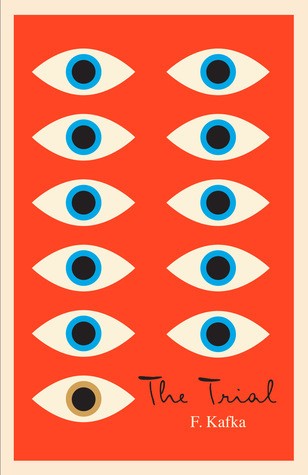
The Trial
by Franz Kafka · 1925
Josef K. is arrested one morning for a crime nobody will name, by a court he can never locate, and the harder he tries to prove his innocence the more the system swallows him whole.
Worth reading? The Trial is the book that made 'Kafkaesque' a word people actually use, and it earns the coinage. Josef K. never learns what he's accused of, and the novel's genius is making that unresolved dread feel more true to how power actually works than any clear villain could. It's bleaker and more disorienting than The Metamorphosis, and deliberately unfinished, but if you want to understand why Kafka's name became an adjective, this is the book that did it.
| Full Title | The Trial |
|---|---|
| Author | Franz Kafka |
| Published | 1925 |
| Publisher | Schocken Books |
| Category | Fiction |
| Favorite quote | “Someone must have slandered Josef K., for one morning, without having done anything wrong, he was arrested.” |
The Verdict
Read The Metamorphosis first if you haven’t. The Trial asks for more patience and delivers a less contained experience, and it helps to already trust Kafka’s specific brand of dread before committing to a full novel of it.
Once you’re in, don’t fight the disorientation. The court’s illogic, the endless procedural non-answers, the lawyers who can’t actually help – all of that is the argument, not a flaw in the writing. Kafka wants you to feel what K. feels: exhausted by a system that was never built to be understood.
Know going in that it’s unfinished. Kafka died before he could fully sequence the later chapters, and the ending, while genuinely powerful, doesn’t resolve things the way a completed novel might have. Skip it if you need narrative closure; this book was never going to give you that even if Kafka had lived to finish it.
you want the definitive fictional portrait of a faceless, incomprehensible bureaucracy grinding down an individual who did nothing wrong
you need a resolved plot -- Kafka died before finishing the manuscript, and even in its completed form the novel refuses to give you the satisfaction of a real explanation
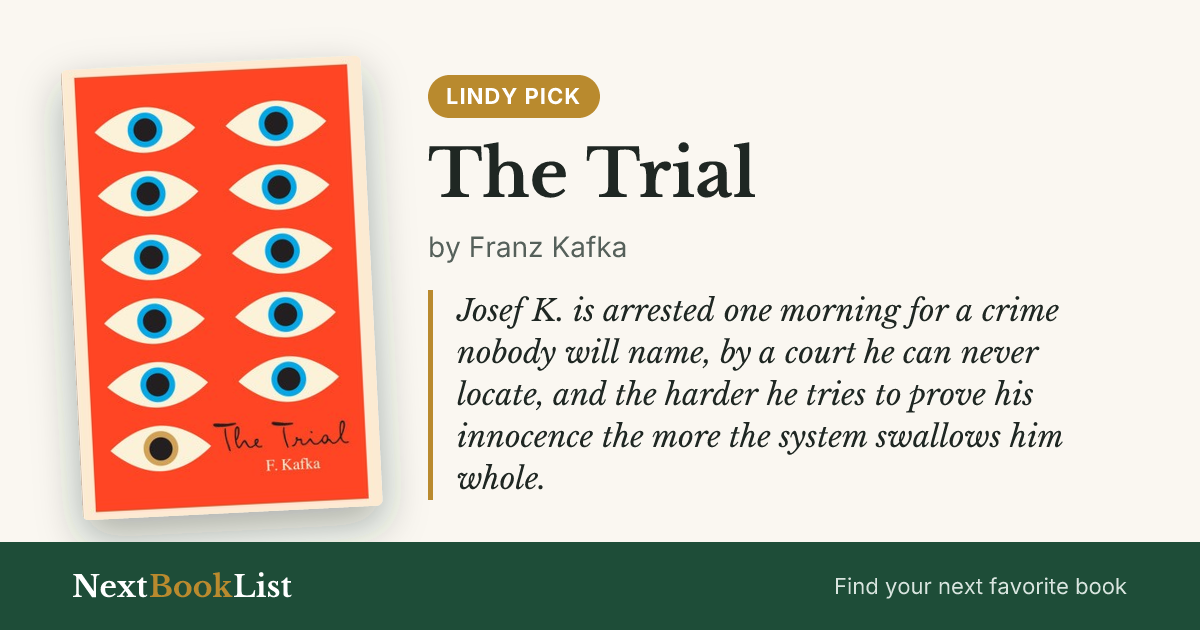
Book Summary
Josef K., a bank clerk, is arrested on his 30th birthday by agents who won't say what crime he's committed, and is told he remains "free" to continue his normal life while the case against him proceeds through a court system he can never locate, understand, or meaningfully appeal to.
The novel builds an entire logic of bureaucratic nightmare: lawyers who can't actually help, court officials who exist in attics and back rooms, endless procedural delays, and an accusation that never gets specified because specificity was never the point -- the system exists to process K., not to judge him fairly.
The parable "Before the Law," told to K. by a priest late in the novel, is the book's philosophical center: a man spends his whole life waiting for permission to enter a door meant only for him, and dies still waiting, having never simply walked through. It works as a miniature of the entire novel's argument about power and passivity.
K.'s own compromises -- hiring inadequate lawyers, seeking help from people with even less power than him, occasionally trying to seduce or manipulate his way to an advantage -- implicate him in the system's logic even as he's its victim, which is part of what makes the novel more unsettling than a simple oppressor/oppressed story.
Top 7 Lessons from The Trial
- The refusal to ever name K.'s crime is the whole argument -- Kafka is depicting a system where the charge matters less than the process of being charged, which is itself the punishment.
- 'Kafkaesque' as a term exists because of this specific dynamic: a vast, illogical bureaucracy that can't be reasoned with, escaped, or even fully located.
- The 'Before the Law' parable argues that power often works by making its victims complicit in their own paralysis -- the man at the door could have walked through and never does.
- K.'s attempts to fight the system through the system's own tools (lawyers, connections, favors) only entangle him further -- the novel suggests the process cannot be beaten on its own terms.
- The novel was left unfinished at Kafka's death, and its famous ending was assembled from chapters Kafka hadn't fully sequenced -- worth knowing going in, since the pacing reflects that incompleteness.
- K.'s own moral compromises during the trial (manipulating women for help, condescending to people trying to assist him) complicate any reading of him as a purely innocent victim.
- The court's presence in ordinary, mundane locations (an apartment building's attic, a painter's cramped studio) rather than grand halls of justice reinforces how ordinary and inescapable the bureaucratic nightmare is.
Top 3 Quotes from The Trial
"Someone must have slandered Josef K., for one morning, without having done anything wrong, he was arrested."
Franz Kafka, The Trial
"It was as if the shame of it must outlive him."
Franz Kafka, The Trial
"It is not necessary to accept everything as true, one must only accept it as necessary."
Franz Kafka, The Trial
Frequently Asked Questions
Is The Trial worth reading?
Yes, if you want the definitive fictional portrait of an incomprehensible bureaucracy -- it's the origin of the word 'Kafkaesque' for a reason.
What is The Trial about?
Josef K. is arrested for an unnamed crime by an unlocatable court, and his efforts to prove his innocence only entangle him deeper in the bureaucratic process.
Is The Trial finished?
No -- Kafka died before completing the manuscript, and the published version was assembled by his friend Max Brod from chapters left in unclear order.
Should I read The Metamorphosis or The Trial first?
The Metamorphosis -- it's shorter, more contained, and a gentler introduction before tackling The Trial's longer, more disorienting structure.
What does 'Kafkaesque' mean and where does it come from?
It describes a nightmarishly complex, illogical bureaucratic situation with no clear way out -- the term comes directly from the world of The Trial.
Ready to read it?
Get The Trial on Amazon