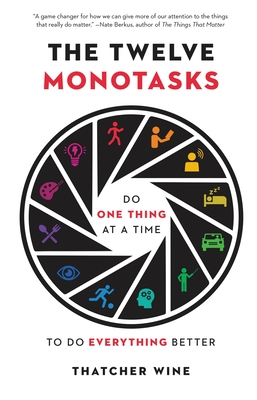
The Twelve Monotasks
by Thatcher Wine · 2023
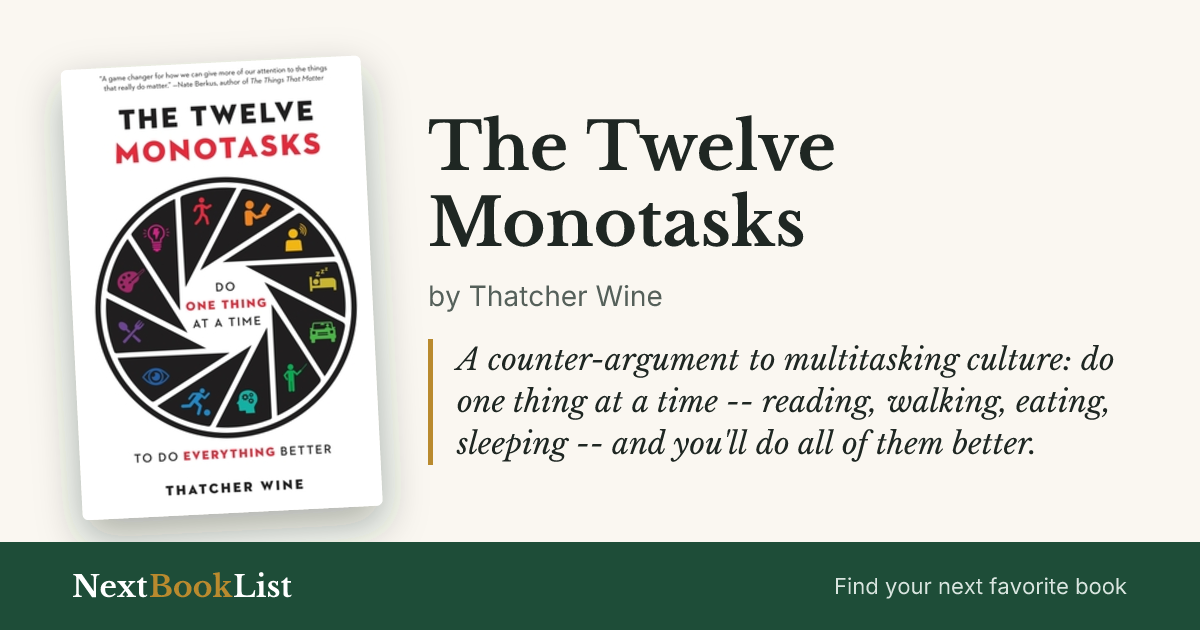
A counter-argument to multitasking culture: do one thing at a time -- reading, walking, eating, sleeping -- and you'll do all of them better.
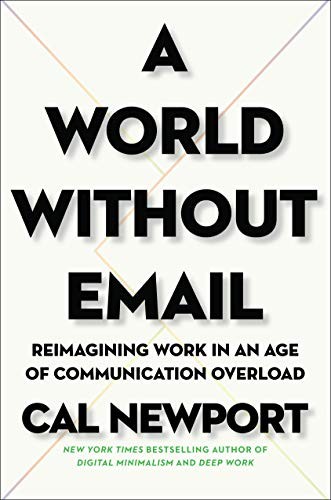
Worth reading? The Twelve Monotasks is a gentler, more approachable single-tasking book than Cal Newport's Deep Work -- it's less about building a rigorous system and more about small daily resets. Read Deep Work if you want a framework for serious knowledge work; read this if you want short, practical nudges toward paying attention to your own life again.
| Full Title | The Twelve Monotasks: Do One Thing at a Time to Do Everything Better |
|---|---|
| Author | Thatcher Wine |
| Published | 2023 |
| Category | Self-Improvement & Psychology |
The Verdict
This isn’t a research-heavy book, and it doesn’t try to be – it’s closer to a set of short essays with a practice attached to each. That’s the appeal and the limit. If you want the “why” behind single-tasking backed by deep research, read Cal Newport first. If you already believe the why and just want twelve easy on-ramps, this delivers.
you feel perpetually distracted and want simple, single-task rituals (not a full productivity system) to rebuild focus
you already practice deep work or mindfulness seriously -- the core insight (single-tasking beats multitasking) will feel obvious and the chapters are light on new research
Book Summary
Multitasking is a myth -- what people call multitasking is actually rapid task-switching, and every switch costs attention, time, and quality. The book's central claim is that doing twelve everyday activities (reading, eating, walking, sleeping, listening, and others) one at a time, without a phone or competing input, restores focus and enjoyment.
Attention is trainable like a muscle. Each monotask chapter functions as a small rep -- read without your phone nearby, eat without a screen, walk without a podcast -- building the habit of undivided attention in low-stakes moments so it's available in high-stakes ones.
The book frames single-tasking as a quiet act of resistance against an attention economy engineered to fragment focus, tying personal practice to a broader critique of always-on culture.
Top 8 Lessons from The Twelve Monotasks
- Multitasking is really fast task-switching, and each switch has a measurable cognitive cost.
- Pick one everyday activity (reading, eating, walking) and do it without a second input -- no phone, no podcast, no TV.
- Reading a physical book, distraction-free, retrains attention span that constant scrolling erodes.
- Eating without a screen improves both digestion awareness and the actual enjoyment of food.
- Sleep quality improves when the pre-sleep routine is monotasked -- no phone in bed, no scrolling to fall asleep.
- Listening (to a person, to music) as a dedicated activity rather than background noise deepens both attention and relationships.
- Small monotasking wins build the confidence and habit needed to eventually single-task on harder, more important work.
- The book positions single-tasking as a form of self-respect and resistance to an economy built on fragmenting your attention.
Frequently Asked Questions
Is The Twelve Monotasks worth reading?
Yes, if you want simple, low-effort focus exercises rather than a full productivity overhaul. If you already do deep work seriously, the core idea will feel familiar.
How is The Twelve Monotasks different from Deep Work?
Deep Work is a rigorous framework for professional focus; this book is a lighter, everyday-life set of single-tasking rituals covering things like eating, walking, and sleeping, not just work.
What are the twelve monotasks?
They cover everyday activities like reading, walking, eating, sleeping, and listening -- the throughline is doing each one without a competing input like a phone.
Who should read The Twelve Monotasks?
Anyone who feels chronically distracted and wants small, concrete resets rather than another complex system to maintain.
Ready to read it?
Get The Twelve Monotasks on Amazon