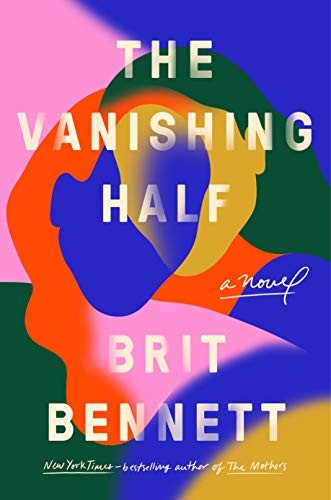
The Vanishing Half
by Brit Bennett · 2020
Twin sisters from a Black community built on colorism run away together as teenagers, then split -- one returns and raises a daughter in their hometown, the other passes as white and builds an entirely separate, hidden life.
Worth reading? The Vanishing Half earns comparisons to classic passing narratives while doing something distinctly its own: it doesn't just follow the sister who passes as white, it follows both, and lets their daughters' generation carry the story's second half. Bennett is careful not to make either sister's choice a simple moral verdict -- Stella's decision to pass and Desiree's decision to stay both come with real costs the novel takes seriously. The fictional town of Mallard, built explicitly on colorism within its own Black community, is one of the book's sharpest and least commonly explored ideas.
| Author | Brit Bennett |
|---|---|
| Published | 2020 |
| Publisher | Riverhead Books |
| Category | Fiction |
The Verdict
Bennett’s sharpest idea is Mallard itself – a town built by and for light-skinned Black residents, colorism as a founding principle rather than an outside force. That framing lets the novel examine prejudice within a community, not just between racial groups, which is rarer ground for a passing narrative to cover.
Splitting the story between both sisters, then handing the second half to their daughters, is a real structural commitment. It costs the book some momentum but earns a wider, more honest picture of what each choice actually cost, generation to generation.
Read it if you want a patient, generationally layered novel about racial passing, identity, and colorism that resists easy moral verdicts. Skip it if you want a fast-paced, plot-driven read – this book takes its time.
you want a multi-generational novel that treats racial passing, identity, and family estrangement with real narrative complexity, following both sisters' divergent lives across decades
you want a fast-paced plot -- this is a patient, character-driven family saga spanning decades and multiple perspectives, not a page-turner built on external tension
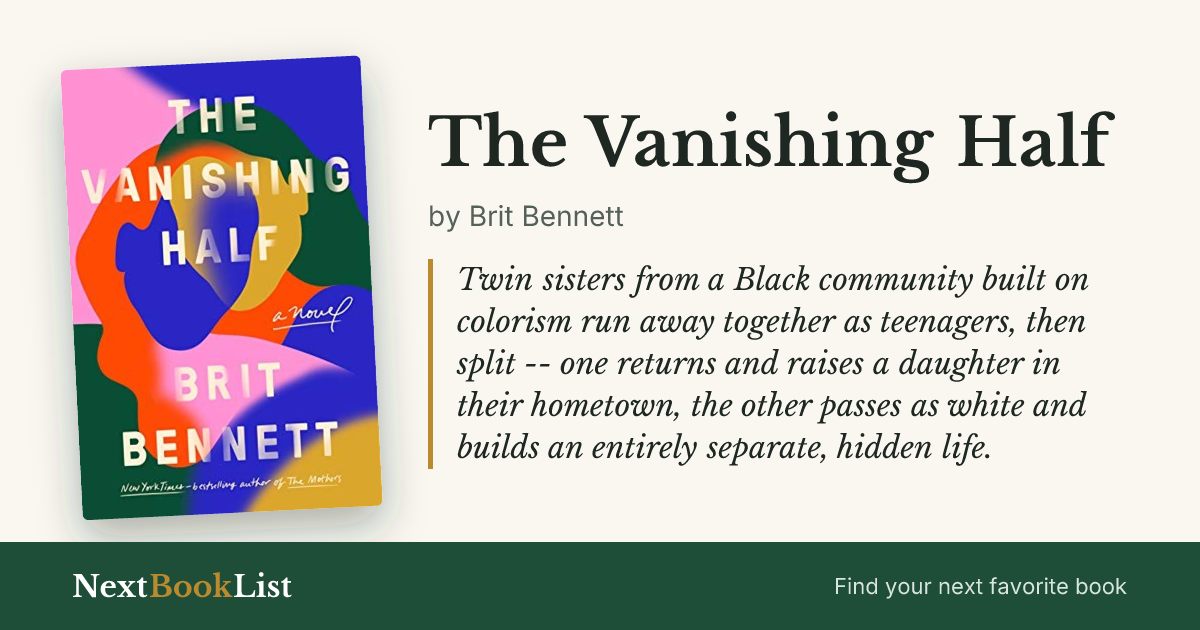
Book Summary
Bennett centers the novel on identical twin sisters, Desiree and Stella, who grow up in Mallard, a fictional Louisiana town founded by and for light-skinned Black residents, built on an internal colorism the town's founders explicitly intended.
The twins run away together as teenagers, but Stella eventually separates from Desiree and begins passing as a white woman, marrying a white man who never learns her background, while Desiree returns to Mallard years later with her own dark-skinned daughter, Jude.
The novel's second half largely follows the twins' daughters -- Jude, who faces colorism within her own community because of her darker skin, and Kennedy, Stella's daughter, who grows up wealthy and entirely unaware of her mother's hidden Black identity -- as their paths eventually intersect.
Bennett treats racial passing not as a single dramatic act but as an ongoing, exhausting performance with continuous psychological cost, while also examining how colorism operates within Black communities themselves, not just as something imposed from outside.
Top 11 Lessons from The Vanishing Half
- Colorism -- discrimination based on skin shade, distinct from racism between racial groups -- is shown operating within a single community (the fictional town of Mallard, founded explicitly on light-skinned identity) rather than only between different racial groups.
- Racial passing, in the novel's treatment, isn't a single decision but an ongoing, sustained performance that requires continuous concealment and carries lasting psychological cost, even decades after the initial choice.
- Family estrangement can compound across generations -- Stella's choice to pass and cut contact doesn't just affect her relationship with Desiree, it shapes her daughter Kennedy's entire, unknowing relationship to her own heritage.
- Neither twin's path is presented as a clean moral choice -- Bennett gives real weight to both what Stella gained and lost by passing, and what Desiree gained and lost by staying and living openly.
- Identity, in the novel, is shown as something actively constructed and maintained (through choices about where to live, who to marry, what to disclose) rather than simply an inherited fact.
- The consequences of a parent's choices about identity and concealment pass down to the next generation, who inherit the effects of decisions they had no part in making.
- Jude, Desiree's darker-skinned daughter, experiences colorism within Mallard itself, showing the town's founding prejudice reproducing itself on the next generation rather than fading with time.
- Kennedy grows up wealthy and entirely unaware her mother is passing, which shows concealment's cost lands even on people who never learn what was hidden from them.
- Stella's marriage to a white man who never learns her background shows that passing demands vigilance in the most intimate relationships, not just in public-facing life.
- The cousins' paths eventually intersect after decades apart, and the novel uses that convergence to show how two radically different chosen lives still circle back to the same original family rupture.
- The novel refuses to treat either sister's identity as the 'real' one and the other as a mask -- both Stella's constructed white life and Desiree's inherited Mallard life are presented as equally real to the people living them.
Frequently Asked Questions
Is The Vanishing Half worth reading?
Yes -- it's a patient, multi-generational novel that treats racial passing and colorism with real complexity, following both twin sisters and their daughters rather than a single perspective.
What is The Vanishing Half about?
Identical twin sisters from a town built on colorism split apart as teenagers -- one passes as white and hides her past, one stays and raises her daughter openly -- and the novel follows both their lives and their daughters' across decades.
Is The Vanishing Half a fast-paced novel?
No -- it's a character-driven family saga that unfolds patiently across decades and multiple perspectives, not a plot-driven thriller.
Does The Vanishing Half focus only on racial passing?
That's a central thread, but the novel also examines colorism within Black communities specifically, and how a parent's choices about identity ripple into the next generation.
Ready to read it?
Get The Vanishing Half on Amazon