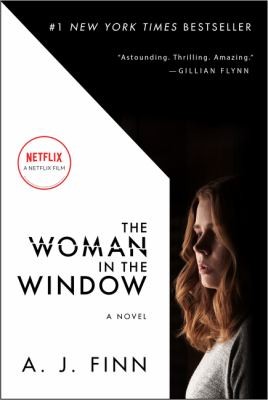
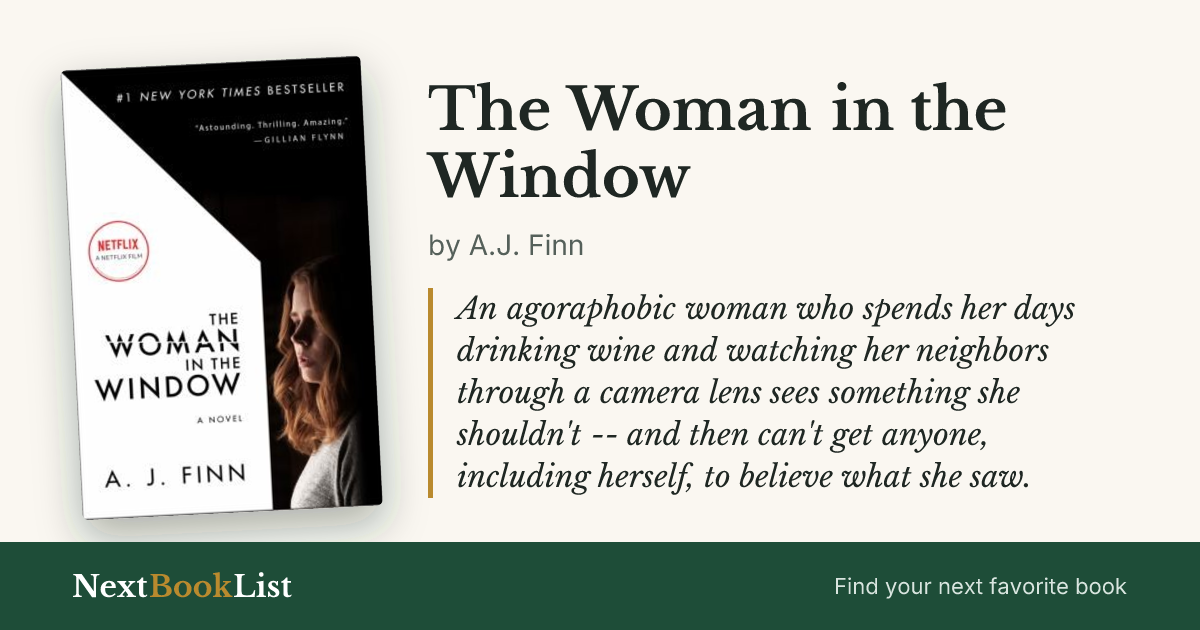
The Woman in the Window
by A.J. Finn · 2018
An agoraphobic woman who spends her days drinking wine and watching her neighbors through a camera lens sees something she shouldn't -- and then can't get anyone, including herself, to believe what she saw.
Worth reading? The Woman in the Window is explicit about its debts to Hitchcock's Rear Window and to the wave of unreliable-narrator thrillers Gone Girl kicked off, and it doesn't pretend otherwise -- the protagonist literally watches old movies including Rear Window. What it does with those influences is competent, twisty, and fast, even if you'll clock some of the machinery if you've read enough of this genre.
| Author | A.J. Finn |
|---|---|
| Published | 2018 |
| Publisher | William Morrow |
| Category | Fiction |
The Verdict
Finn is smart to make the Hitchcock influence explicit rather than pretend the book isn’t working the same territory. Anna’s isolation, her drinking, her medication, all get built up carefully enough that when the reveal lands, it feels earned by grief rather than just sprung as a trick.
If you’ve burned through a lot of “is she crazy or is something actually wrong” thrillers already, some of the beats here will feel familiar. This is a well-executed version of a very familiar shape, not a reinvention of it.
Read it if you want a fast, well-built unreliable-narrator thriller that owns its influences. Skip it if the genre’s tropes have started to feel repetitive to you.
you want a Rear Window-style unreliable-narrator thriller with an isolated, unwell protagonist whose credibility is genuinely in question, not just for show
you've read Gone Girl, The Girl on the Train, and similar 'unreliable woman narrator' thrillers back to back -- this one wears its influences openly and doesn't hide it
Book Summary
Anna Fox, a child psychologist who hasn't left her New York townhouse in nearly a year due to agoraphobia, fills her days watching classic thrillers, drinking heavily against her medication, and observing her neighbors through her camera's zoom lens. When she witnesses what looks like a violent attack in the house across the park, no one, not the police, not her own family, believes an isolated agoraphobic drinking wine with her antidepressants.
The novel plays its unreliable-narrator card directly: Anna herself doesn't fully trust her own perception, and the book uses her medication, alcohol use, and isolation as genuine narrative uncertainty rather than a twist withheld from the reader for shock value.
The book's reveal, when it comes, ties Anna's isolation and trauma (revealed gradually across the novel) to what she saw, in a way that recontextualizes her unreliability as grief rather than simple unreliability for its own sake.
Top 9 Lessons from The Woman in the Window
- The book is openly in conversation with Hitchcock's Rear Window, using Anna's own cinephilia as a structural nod rather than hiding the influence.
- Anna's unreliability (medication, alcohol, isolation) is established as genuine narrative uncertainty from the start, not a twist sprung on the reader late.
- Agoraphobia and its daily mechanics (grocery delivery, virtual therapy, watching the outside world through glass) are rendered with enough specificity to make Anna's isolation feel structural, not just a plot device.
- The eventual reveal reframes Anna's unreliability as connected to unresolved trauma and grief, giving her unreliable narration an emotional root rather than treating it as a pure gimmick.
- The novel's plotting borrows heavily and openly from genre precedents (Hitchcock, domestic-thriller conventions), which some readers find derivative and others find comfortingly familiar.
- Anna's former career as a child psychologist gives her a trained eye for reading people, which makes her observations feel credible even as the novel keeps her personal reliability in question.
- The reveal is built from backstory disclosed gradually across the novel rather than sprung in a single late chapter, so tension accumulates instead of arriving all at once.
- Anna's fragmented relationship with her estranged husband and daughter supplies the emotional stakes underneath the thriller plot, not just background color.
- The neighbor family's outward normalcy against what Anna witnesses through her lens dramatizes how easily abuse or crime can hide behind a picture-perfect exterior.
Frequently Asked Questions
Is The Woman in the Window worth reading?
Yes, if you enjoy unreliable-narrator thrillers -- it's a competent, fast-moving entry, though it wears its Rear Window and Gone Girl influences openly.
What is The Woman in the Window about?
An agoraphobic former child psychologist witnesses what looks like a violent attack in a neighbor's house, but no one believes her account of what she saw.
Is The Woman in the Window similar to Rear Window?
Yes, deliberately -- the protagonist's own cinephilia references Hitchcock's Rear Window directly as an acknowledged influence on the plot.
Is the narrator of The Woman in the Window reliable?
Her reliability is genuinely in question throughout, given her medication use, drinking, and isolation, which the book treats as real uncertainty rather than a late twist.
Was The Woman in the Window adapted into a film?
Yes, a 2021 Netflix film starring Amy Adams.
Ready to read it?
Get The Woman in the Window on Amazon