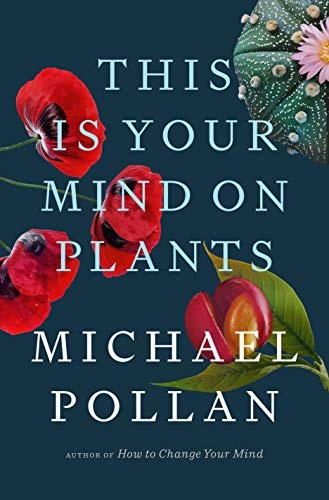
This Is Your Mind on Plants
by Michael Pollan · 2021
Michael Pollan grows opium poppies, quits caffeine for months, and eats cactus to ask why some plant drugs are legal, some are demonized, and none of it tracks with actual danger.
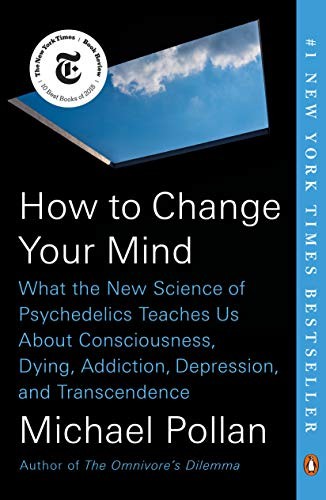
Worth reading? This Is Your Mind on Plants is a lesser sibling of How to Change Your Mind, not because the writing is worse but because the subject is more scattered -- three loosely related essays instead of one sustained argument. The caffeine section alone, where Pollan quits coffee for three months and reports back, is worth the cover price. Read How to Change Your Mind first if you only have time for one Pollan drug book.
| Author | Michael Pollan |
|---|---|
| Published | 2021 |
| Publisher | Penguin Press |
| Category | Science & Nature |
| Favorite quote | “The war on drugs is in truth a war on some drugs, their enemy status the result of historical accident, cultural prejudice, and institutional imperative.” |
The Verdict
The caffeine chapter does something rare for a nonfiction book: it changes how you experience your own body within a week of reading it. Pollan quitting coffee for three months and reporting the withdrawal in granular detail makes the “everyone’s on a drug and doesn’t know it” argument land harder than any lecture could.
The opium and mescaline sections are more historical and less personal, and the book overall reads like three good long-form magazine pieces rather than one unified argument – which it originally was. That’s fine if you’re reading in chunks, less satisfying if you want the throughline of How to Change Your Mind.
you liked How to Change Your Mind and want the same rigor applied to opium, caffeine, and mescaline -- three drugs most people don't think of as drugs at all
you want a straightforward pro- or anti-drug argument -- Pollan is deliberately ambivalent and more interested in the question than a verdict
Book Summary
The book is three long essays on three plant-based psychoactive substances -- opium, caffeine, and mescaline -- chosen specifically because they sit at wildly different points on the legal spectrum despite the fact that legality tracks cultural history and politics far more than actual danger or addictiveness.
The caffeine essay is the most personal: Pollan quits coffee for three months to see what changes, and uses the experiment to argue that caffeine is the most successful psychoactive drug in history precisely because its effects (focus, alertness) are so normalized that most people don't register themselves as being on a drug at all.
Running under all three essays is Pollan's recurring argument, carried over from How to Change Your Mind, that a psychoactive substance is not just a molecule -- it's a relationship between a molecule and a mind, and the same substance can be medicine, poison, or sacrament depending entirely on set, setting, and cultural framing.
Top 9 Lessons from This Is Your Mind on Plants
- Legality of a drug tracks cultural and political history far more than its actual danger or addiction potential.
- Caffeine is arguably the most successful psychoactive drug in history because its effects are so culturally normalized nobody clocks it as a drug.
- Quitting caffeine produces real, measurable withdrawal (headaches, brain fog) that most habitual users have never experienced because they've never stopped.
- A drug's effect isn't just chemistry -- it's a relationship between the molecule and the mind and context using it (set and setting).
- Opium's journey from freely available tincture to prohibited narcotic tracks a shift in who was using it and how it was racialized, not a change in the drug itself.
- Growing opium poppies for tea is technically illegal in ways most gardeners don't realize, which Pollan uses to probe how arbitrary some drug law is.
- Mescaline and peyote's legal status is tangled up with religious-freedom law specific to Native American use, a carve-out most other psychoactive plants don't get.
- Pollan deliberately avoids a clean verdict on any of the three substances -- ambivalence is presented as the honest position, not a cop-out.
- The same plant chemical can function as medicine, poison, or sacrament depending entirely on dose, context, and culture.
Top 5 Quotes from This Is Your Mind on Plants
"Sometimes the best way to show your respect for something is to just leave it alone."
Michael Pollan, This Is Your Mind on Plants
"In order for the English mind to be sharpened with tea, the Chinese mind had to be clouded with opium."
Michael Pollan, This Is Your Mind on Plants
"Much like a food, a psychoactive drug is not a thing -- without a human brain, it is inert -- so much as it is a relationship; it takes both a molecule and a mind to make anything happen."
Michael Pollan, This Is Your Mind on Plants
"Caffeine's big contribution to human progress has been to intensify spotlight consciousness."
Michael Pollan, This Is Your Mind on Plants
"The war on drugs is in truth a war on some drugs, their enemy status the result of historical accident, cultural prejudice, and institutional imperative."
Michael Pollan, This Is Your Mind on Plants
Frequently Asked Questions
Is This Is Your Mind on Plants worth reading?
Yes, especially the caffeine essay, which will change how you think about your own coffee habit. It's a good but less unified read than How to Change Your Mind.
What is the main idea of This Is Your Mind on Plants?
That a drug's legal and cultural status tracks history and politics far more than its actual danger, and that even a substance as normalized as caffeine is a powerful psychoactive drug most people don't register as one.
Is This Is Your Mind on Plants a sequel to How to Change Your Mind?
Not a direct sequel, but a companion -- it uses the same set-and-setting framework applied to opium, caffeine, and mescaline instead of psychedelics.
Who should read This Is Your Mind on Plants?
Readers curious about drug policy, caffeine, or plant-based psychoactive substances who want rigor over polemic. Skip it if you want a clean pro- or anti-drug argument.
Ready to read it?
Get This Is Your Mind on Plants on Amazon