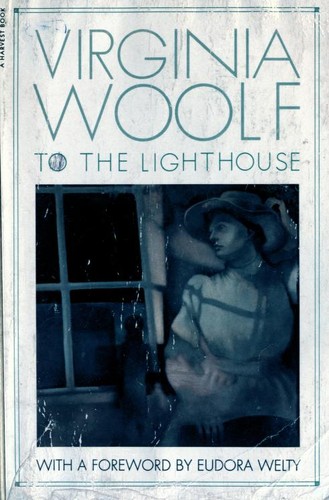
To the Lighthouse
by Virginia Woolf · 1927
A family's summer house visit, a decade later, and the ten years of loss and change squeezed into one brief middle section -- Woolf's argument that a single afternoon of consciousness holds as much as a whole plot.
Worth reading? To the Lighthouse is proof that plot isn't the same thing as story. Nothing much happens across three sections -- a dinner party, a decade collapsed into thirty devastating pages, a delayed boat trip -- and yet it captures grief, time, and family with more precision than most novels twice its length and twice as busy. Woolf's prose asks for patience and close attention, but it rewards both.
| Full Title | To the Lighthouse |
|---|---|
| Author | Virginia Woolf |
| Published | 1927 |
| Publisher | Harvest Books |
| Category | Fiction |
| Favorite quote | “For now she need not think of anybody. She could be herself, by herself.” |
The Verdict
Don’t expect plot momentum here, and don’t fight the book for lacking it. A dinner party, a decade compressed into thirty pages, a delayed boat trip – that’s the entire external action, and it’s more than enough because Woolf puts you directly inside how her characters actually experience time, loss, and each other.
The middle section, “Time Passes,” is the part that’ll stick with you. Ten years and several deaths, including Mrs. Ramsay’s, narrated almost entirely from the empty house’s point of view, reported in brackets like footnotes to a story that’s moved on without you. It’s one of the boldest structural choices in modernist fiction.
Read it if you want to see what interior, perception-first fiction can do at its best. Skip it if you need external stakes and forward momentum to stay engaged – this book asks you to slow down to its speed, not the other way around.
you want to feel what stream-of-consciousness fiction can do at its best, and you're drawn to interior, emotionally precise writing over plot-driven storytelling
you need conventional plot momentum -- almost nothing 'happens' in the traditional sense, and the drama is entirely in perception, memory, and the passage of time
Book Summary
The novel is structured in three parts: "The Window," a single evening at the Ramsays' Scottish summer house where a trip to a nearby lighthouse is promised and delayed; "Time Passes," a brief, formally radical middle section that compresses ten years, including WWI and several family deaths, into thirty pages narrated almost entirely from the house's own perspective; and "The Lighthouse," where the surviving family finally makes the trip years later.
Mrs. Ramsay, who dominates the first section with her quiet social genius (holding a dinner party together, managing everyone's emotional needs), dies between sections, and her death is reported almost in passing, in brackets, inside the "Time Passes" section -- a formal choice that mirrors how loss actually intrudes on ongoing time rather than pausing it.
Woolf's stream-of-consciousness technique moves fluidly between characters' interior perceptions within single scenes, arguing implicitly that the real substance of a life is thought, perception, and memory, not external events -- a dinner party contains more genuine drama, filtered through consciousness, than most novels' entire plots.
Lily Briscoe, the painter who struggles across the novel to finish a painting of Mrs. Ramsay and the house, becomes Woolf's stand-in for the act of artistic creation itself -- her finished brushstroke in the final line stands in for finally making sense of loss, memory, and unfinished feeling.
Top 7 Lessons from To the Lighthouse
- Woolf argues that interior perception, thought, and memory carry as much narrative weight as external plot events -- a dinner party can contain more real drama than a war, if you're inside the right consciousness.
- Mrs. Ramsay's death, reported in brackets in the middle of the 'Time Passes' section rather than dramatized directly, formally mirrors how loss actually interrupts ongoing time instead of pausing the world for it.
- The 'Time Passes' section, narrated largely from the empty house's perspective as it decays over ten years, is one of modernist fiction's boldest formal experiments with compressing time.
- Lily Briscoe's unfinished painting works as a metaphor for the difficulty of making sense of another person, and of loss, through art -- her final brushstroke is Woolf's version of closure.
- Mr. Ramsay's need for reassurance and his wife's constant emotional labor to provide it dramatizes a specific, unequal marital dynamic Woolf observed in her own parents' marriage.
- The lighthouse itself functions as a symbol that shifts meaning across the book -- a childhood wish, then a delayed promise, then finally a completed but bittersweet journey after the person who mattered most is gone.
- The novel is widely read as Woolf processing her own mother's death and her parents' marriage, making the emotional precision feel earned rather than merely technical.
Top 3 Quotes from To the Lighthouse
"For now she need not think of anybody. She could be herself, by herself."
Virginia Woolf, To the Lighthouse
"What is the meaning of life? That was all -- a simple question; one that tended to close in on one with years. The great revelation had never come. The great revelation perhaps never did come. Instead there were little daily miracles, illuminations, matches struck unexpectedly in the dark."
Virginia Woolf, To the Lighthouse
"To be silent; to be alone. All the being and the doing, expansive, glittering, vocal, evaporated; and one shrunk, with a sense of solemnity, to being oneself, a wedge-shaped core of darkness, something invisible to others."
Virginia Woolf, To the Lighthouse
Frequently Asked Questions
Is To the Lighthouse worth reading?
Yes, if you're drawn to interior, perception-driven writing -- it's short but dense, and rewards close, patient reading over speed.
What is To the Lighthouse about?
The Ramsay family's visits to their Scottish summer house, split across a single evening, a decade compressed into a brief middle section, and a delayed trip to a nearby lighthouse years later.
Why does Mrs. Ramsay die in brackets in To the Lighthouse?
Woolf reports her death in passing inside the 'Time Passes' section as a formal choice, mirroring how loss actually intrudes on ongoing time rather than pausing the narrative for it.
Is To the Lighthouse a good introduction to Virginia Woolf?
It's one of her most accessible major novels, shorter and more emotionally direct than The Waves, though Mrs. Dalloway is sometimes recommended as an even gentler entry point.
How long does it take to read To the Lighthouse?
At roughly 200 pages it's short, but the dense, interior prose means most readers move through it more slowly than the page count suggests.
Ready to read it?
Get To the Lighthouse on Amazon