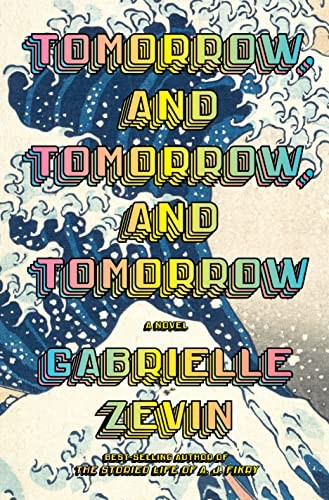
Tomorrow, and Tomorrow, and Tomorrow
by Gabrielle Zevin · 2022
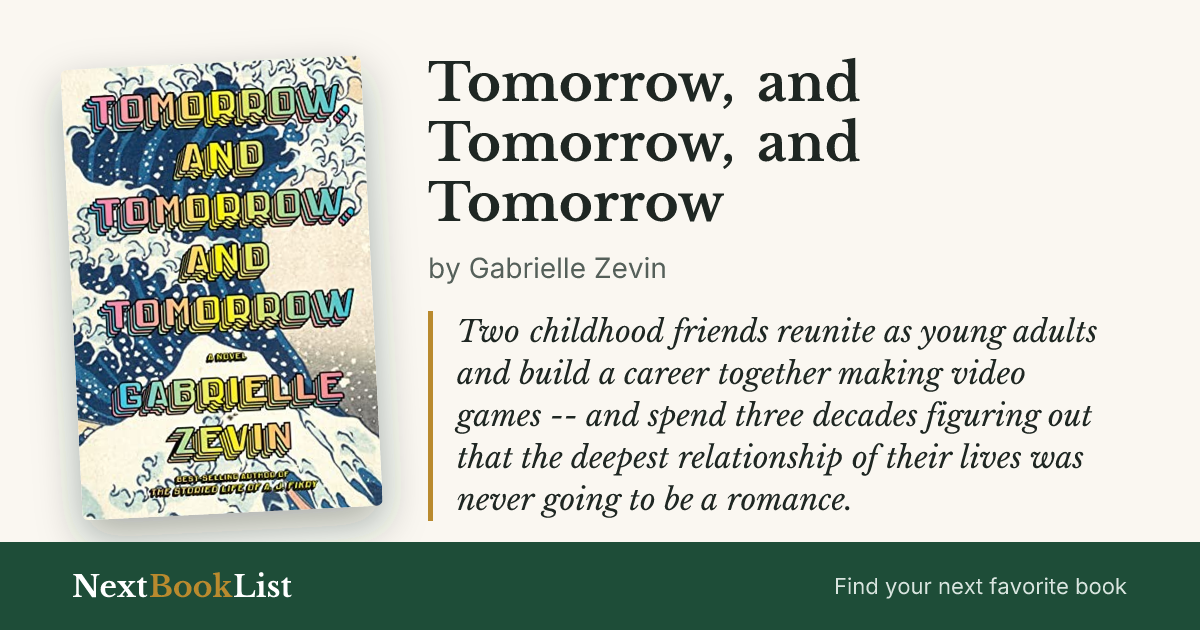
Two childhood friends reunite as young adults and build a career together making video games -- and spend three decades figuring out that the deepest relationship of their lives was never going to be a romance.
Worth reading? Tomorrow, and Tomorrow, and Tomorrow works because Zevin refuses the easy move -- she never lets Sam and Sadie's bond collapse into a romance plot, even when the narrative keeps circling that possibility, and that restraint is what makes the book feel true rather than manipulative. It's genuinely moving without being sentimental, and the video-game backdrop is smarter and more thematically load-bearing than 'quirky industry setting' books usually manage.
| Author | Gabrielle Zevin |
|---|---|
| Published | 2022 |
| Category | Fiction |
| Favorite quote | “What is a game? It's tomorrow, and tomorrow, and tomorrow. It's the possibility of infinite rebirth, infinite redemption. The idea that if you keep playing, you could win. No loss is permanent, because nothing is permanent, ever.” |
The Verdict
Sam’s chronic disability (a foot injury from childhood that shapes his relationship to his own body for decades) gets handled with more specificity than most novels bother with – it’s not a plot device that resolves, it’s just part of who he is, which matches the book’s larger refusal to tie things up cleanly. That level of care is part of why it outperformed a lot of 2022’s other big literary releases.
you want a decades-spanning novel about creative partnership, ambition, disability, and grief, told through two people who love each other in a way that doesn't fit neatly into 'friends' or 'more than friends'
you're expecting either a book actually about video game development in a technical sense, or a romance -- it's neither; the games are a backdrop for the relationship, and Sadie and Sam's bond is deliberately not a romance, which some readers go in expecting and come out disappointed by
Book Summary
The title comes from Macbeth's "tomorrow and tomorrow and tomorrow" speech about time collapsing into meaningless repetition, and Zevin uses the video-game industry as a structural metaphor for that -- games let you die and restart, try again, live a version of a life without the permanence of the real one. Sam and Sadie's creative partnership becomes their way of processing grief and disability by building worlds where the rules are kinder than the ones they actually live in.
The book's real subject is a category of love that English doesn't have a clean word for -- deeper than friendship, not romantic, built through decades of creative collaboration and repeated rupture and repair. Zevin resists resolving it into a romance, which is the choice that makes the book more interesting than a will-they-won't-they would have been.
Top 7 Lessons from Tomorrow, and Tomorrow, and Tomorrow
- Refusing to resolve a deep relationship into romance can make it feel more true than giving in to the will-they-won't-they pull.
- A creative partnership can process grief and disability more honestly than direct discussion of either.
- An industry backdrop earns its place when it functions as structural metaphor, not just setting dressing.
- Some categories of love don't have a clean word in English, and fiction can sit inside that gap instead of forcing a label.
- Chronic disability handled as an ongoing fact of a character's life, not a plot arc that resolves, reads as more honest.
- Decades-spanning structure works when rupture and repair repeat believably instead of resolving too neatly.
- A title borrowed from literature (Macbeth's soliloquy) can frame a book's theme without requiring the reader to know the source.
Top 1 Quotes from Tomorrow, and Tomorrow, and Tomorrow
"What is a game? It's tomorrow, and tomorrow, and tomorrow. It's the possibility of infinite rebirth, infinite redemption. The idea that if you keep playing, you could win. No loss is permanent, because nothing is permanent, ever."
Gabrielle Zevin, Tomorrow, and Tomorrow, and Tomorrow
Frequently Asked Questions
Is Tomorrow, and Tomorrow, and Tomorrow worth reading?
Yes. It's a genuinely moving novel about creative partnership and a kind of platonic love that's rarely centered this seriously in fiction, wrapped in a smart use of video games as metaphor.
Is Tomorrow, and Tomorrow, and Tomorrow a romance novel?
No. Sam and Sadie's relationship is central but explicitly not romantic -- readers going in expecting a love story between them will find the book deliberately resists that arc.
Do I need to know anything about video games to read it?
No. Game development is the backdrop and a recurring metaphor, but the book explains what it needs to and isn't written for a gaming-industry audience specifically.
Where does the title come from?
Macbeth's soliloquy about time repeating meaninglessly ('tomorrow, and tomorrow, and tomorrow') -- Zevin uses it to frame the games-as-second-chances theme running through the book.
Ready to read it?
Get Tomorrow, and Tomorrow, and Tomorrow on Amazon