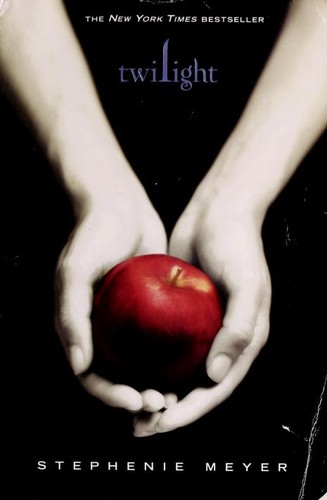
Twilight
by Stephenie Meyer · 2005
A teenage girl moves to a rainy Washington town, falls for a boy who turns out to be a 108-year-old vampire, and the resulting romance became one of the best-selling YA phenomena of the 2000s -- for reasons worth taking seriously even if the prose isn't the draw.
Worth reading? Twilight isn't a well-crafted novel by conventional literary standards, and it doesn't need to be one to explain its success. Meyer taps directly into the specific intensity of first teenage obsession -- the sense that this one person is the entire world -- more effectively than almost any YA book before it, which is exactly why it sold tens of millions of copies and exactly why its central relationship reads as alarming to a lot of readers coming to it as adults.
| Author | Stephenie Meyer |
|---|---|
| Published | 2005 |
| Publisher | Little, Brown and Company |
| Category | Fiction |
| Favorite quote | “And so the lion fell in love with the lamb.” |
The Verdict
Judge Twilight by its prose and you’ll miss why it sold tens of millions of copies. Meyer isn’t writing for craft-focused adult readers, she’s writing the specific, all-consuming feeling of a first teenage crush and dialing it up to a supernatural extreme, and that emotional accuracy is what actually drove the phenomenon.
The harder problem, and it’s a real one, is Edward. Reading it as an adult, the surveillance and control that the book frames as devotion (watching her sleep without asking, deciding what she’s allowed to know “for her safety”) reads as a warning sign, not a romantic gesture. That’s not snobbery about the writing, it’s a legitimate concern worth naming rather than waving off.
Where the book earns real credit is influence: without Twilight there’s no YA paranormal-romance boom of the late 2000s, and without Twilight’s fanfic community there’s no Fifty Shades of Grey. Whatever you think of the prose, the cultural footprint is real.
Read it if you want to understand a genuine publishing phenomenon, or you just want a melodramatic teen romance without irony. Skip it if you want prose you can admire or a central relationship you’d want to see modeled for a teenager today.
you want to understand (or revisit) the book that reshaped YA publishing and fandom culture for a decade, or you just want an unapologetically melodramatic teen romance
you're looking for polished prose or a relationship dynamic that holds up to scrutiny -- Edward's behavior (stalking, controlling Bella's choices 'for her own good') reads very differently, and more troubling, to many adult readers than it did to teens in 2005
Book Summary
Bella Swan moves from Arizona to the perpetually overcast town of Forks, Washington, to live with her father, and becomes instantly fixated on Edward Cullen, a beautiful, aloof classmate who turns out to be a vampire who has stopped aging at 17.
The romance plot runs almost entirely on obsessive intensity rather than compatibility -- Edward watches Bella sleep without her knowledge, controls information about his family and his own nature, and frames his controlling behavior as protection from the danger he poses to her, a dynamic the book presents as swoon-worthy rather than examines critically.
The book's real cultural significance isn't its plot (a fairly simple vampire-and-human romance with a climactic hunt by a rival vampire) but the fandom and publishing wave it triggered -- it helped establish YA paranormal romance as a dominant commercial category and turned Meyer, a first-time novelist, into one of the best-selling authors of the decade.
Top 11 Lessons from Twilight
- The book's appeal runs almost entirely on the intensity of Bella and Edward's obsession with each other, not on a believable relationship built on shared interests or equal footing -- that's a deliberate choice tuned to how first infatuation actually feels to a teenager, not a writing failure Meyer stumbled into.
- Edward's controlling behavior -- watching Bella sleep uninvited, restricting information, making choices for her safety without her consent -- is presented within the book as romantic devotion rather than something to be questioned, which is the single biggest reason the book reads very differently to adult readers than to its original teen audience.
- Bella is written with famously little personality of her own (few hobbies, few friendships that matter to her, an identity defined almost entirely by her relationship to Edward), which many readers argue was a deliberate blank-slate choice to let readers project themselves into her position.
- The vampire mythology in Twilight (sparkling in sunlight instead of burning, a diet of animal rather than human blood for the 'vegetarian' Cullen family) is a significant departure from traditional vampire lore, built specifically to make a vampire boyfriend seem safe and desirable rather than monstrous.
- The book triggered a massive wave of YA paranormal romance publishing in the late 2000s, reshaping what publishers acquired and what got shelf space for nearly a decade.
- Twilight's fandom, particularly its online fan-fiction community, directly produced other major commercial properties -- Fifty Shades of Grey began as Twilight fan fiction before being rewritten with the names changed.
- The forbidden human/vampire romance draws on classic star-crossed-lovers tropes, updated for a YA audience with the danger made literal (Edward's vampirism) rather than metaphorical.
- The Bella/Edward/Jacob triangle, only lightly present in this first book, becomes a defining structural element across the series, seeded here through Jacob's early, mostly background appearances.
- The isolated, perpetually rainy setting of Forks functions almost as a character in its own right, narrowing Bella's world enough that her fixation on Edward reads as inevitable rather than exaggerated.
- Bella's eagerness to give up her human life and mortality for Edward is treated as the story's ultimate romantic gesture, without the book interrogating what, exactly, she's giving up.
- Twilight's massive commercial success despite mixed critical reception is itself a lesson in the gap between critical acclaim and what actually drives YA market demand.
Top 3 Quotes from Twilight
"And so the lion fell in love with the lamb."
Stephenie Meyer, Twilight
"About three things I was absolutely positive. First, Edward was a vampire. Second, there was a part of him -- and I didn't know how potent that part might be -- that thirsted for my blood. And third, I was unconditionally and irrevocably in love with him."
Stephenie Meyer, Twilight
"You are exactly my brand of heroin."
Stephenie Meyer, Twilight
Frequently Asked Questions
Is Twilight worth reading?
It depends on what you want -- as a novel it's not polished, but as a cultural phenomenon and an unapologetic teen-obsession romance, it's worth reading once to understand what made it one of the biggest YA franchises ever.
Is Twilight well-written?
By conventional literary standards, no -- critics consistently point to simple prose and thin secondary characters. Its success came from the intensity of the central romance, not the craft.
Is Edward's behavior in Twilight considered problematic?
Yes, by a large number of readers revisiting the book as adults -- his stalking and controlling behavior toward Bella is framed as romantic within the book, which many now read as a red flag rather than a swoon-worthy trait.
How many books are in the Twilight series?
Four main novels (Twilight, New Moon, Eclipse, Breaking Dawn), plus companion books including a retelling from Edward's perspective.
Did Twilight influence other bestselling books?
Yes -- Fifty Shades of Grey began as Twilight fan fiction before E.L. James rewrote it as an original work.
Ready to read it?
Get Twilight on Amazon