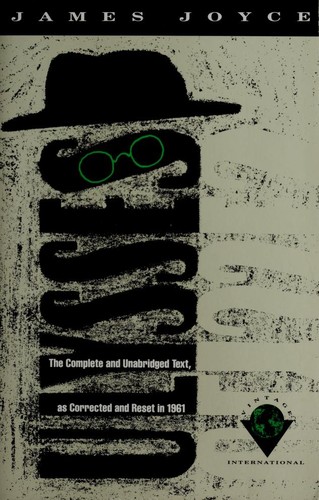
Ulysses
by James Joyce · 1922
One ordinary day in Dublin, tracked hour by hour through the minds of Leopold Bloom, his wife Molly, and young Stephen Dedalus, told in a different literary style for nearly every chapter -- the most influential and most avoided novel of the 20th century.
Worth reading? Ulysses deserves its reputation as difficult, and it also deserves its reputation as one of the most rewarding novels ever written, and those two facts aren't in tension -- they're the same fact. Don't read it cold. Get an annotated edition or a companion guide (Gifford's annotations, or a chapter-by-chapter summary like the one from SparkNotes for orientation) running alongside your first pass, and the book that seemed impenetrable becomes one of the funniest, warmest, most technically dazzling things ever written.
| Full Title | Ulysses |
|---|---|
| Author | James Joyce |
| Published | 1922 |
| Publisher | Vintage International |
| Category | Fiction |
| Favorite quote | “...yes I said yes I will Yes.” |
The Verdict
Do not read this one cold. That’s not snobbery, it’s practical advice: Ulysses without a guide is a genuinely different, much harder book than Ulysses with one, and there’s no prize for suffering through it unaided.
Get an annotated edition or keep a free chapter summary open on your phone, and the book that looked impenetrable starts revealing itself as funny, warm, and technically stunning in roughly equal measure. Bloom’s wandering, ordinary day treated with Homeric weight is one of literature’s best jokes and one of its most sincere arguments at the same time.
Skip it if you’re not willing to put in that scaffolding. Read it if you want to understand what nearly every ambitious novel written since 1922 is arguing with, directly or indirectly.
you want to read the book that reshaped what a novel could do, and you're genuinely willing to use a reading guide alongside it
you want a book you can pick up cold with no preparation -- Ulysses without any guide or annotation is a genuinely different, much harder experience than with one
Book Summary
Ulysses tracks a single day, June 16, 1904, in Dublin, loosely mapping the structure of Homer's Odyssey onto the mundane wanderings of Leopold Bloom (an advertising canvasser), his wife Molly, and the young writer Stephen Dedalus -- Bloom's "odyssey" is a walk around the city, not a ten-year sea voyage, which is part of the joke and part of the point.
Joyce writes nearly every chapter in a different style -- stream of consciousness, dramatic script, newspaper headlines, a parody of English prose history, question-and-answer catechism -- which means the reading experience keeps resetting itself. This is deliberate and it's the source of both the book's difficulty and its reputation as a technical landmark.
Underneath the formal experimentation is a genuinely tender story: a marriage strained by grief and infidelity (the Blooms lost an infant son years earlier), a young man searching for a father figure, and an ordinary day treated with the same epic weight Homer gave to gods and kings -- Joyce's real argument is that ordinary consciousness and ordinary life are worthy of that scale of attention.
Molly Bloom's closing soliloquy, the unpunctuated "Penelope" chapter, is one of the most famous passages in modern literature -- her interior monologue, ending on the repeated "yes," is often read as the novel's warmest and most affirming note after 700-plus pages of formal difficulty.
Top 7 Lessons from Ulysses
- Joyce maps The Odyssey onto one ordinary Dublin day to argue that ordinary consciousness deserves the same epic attention classical literature gave to gods and heroes.
- The novel's shifting styles per chapter (stream of consciousness, newspaper parody, dramatic script) are a deliberate structural choice, not showing off for its own sake -- each style reflects the content or setting of that episode.
- Underneath the technical difficulty is a real, grounded story about a marriage strained by grief and infidelity, and a young man's search for a father figure -- the formal complexity houses genuine emotional stakes.
- Molly Bloom's unpunctuated closing soliloquy is widely read as the novel's most affirming passage, ending on a repeated 'yes' after hundreds of pages of formal difficulty.
- The 'Ithaca' chapter's question-and-answer catechism format turns the mundane details of Bloom and Stephen's night into something almost sacred through sheer formal seriousness.
- Ulysses was banned for obscenity in the US and UK for over a decade after publication, and the 1933 US court ruling that lifted the ban (United States v. One Book Called Ulysses) is itself a landmark in free-expression law.
- The novel rewards re-reading more than almost any other -- details that seem incidental on a first pass (recurring objects, phrases, minor characters) accumulate meaning across the day's structure.
Top 4 Quotes from Ulysses
"Stately, plump Buck Mulligan came from the stairhead, bearing a bowl of lather on which a mirror and a razor lay crossed."
James Joyce, Ulysses
"History is a nightmare from which I am trying to awake."
James Joyce, Ulysses
"Ineluctable modality of the visible: at least that if no more, thought through my eyes."
James Joyce, Ulysses
"...yes I said yes I will Yes."
James Joyce, Ulysses
Frequently Asked Questions
Is Ulysses worth reading?
Yes, but only if you're willing to use an annotated edition or reading guide alongside it -- attempted cold, it's a much harder and less rewarding experience.
What is Ulysses about?
One ordinary day in Dublin (June 16, 1904), following Leopold Bloom, his wife Molly, and Stephen Dedalus, loosely structured around Homer's Odyssey.
Is Ulysses the hardest classic novel to read?
It's widely considered one of the most difficult, mostly because of its shifting styles chapter to chapter -- a reading guide makes a large difference in how approachable it feels.
What reading guide should I use for Ulysses?
Gifford's annotations are the scholarly standard; a free chapter-by-chapter summary (like SparkNotes) is enough for most first-time readers to stay oriented.
Why was Ulysses banned?
It was banned for obscenity in the US and UK through the 1920s and into the early 1930s; the 1933 US court decision lifting the ban is a landmark free-expression ruling.
Ready to read it?
Get Ulysses on Amazon