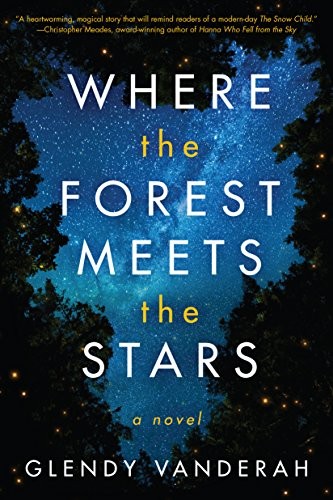
Where the Forest Meets the Stars
by Glendy Vanderah · 2017
A grieving grad student studying birds in rural Illinois finds a strange, silent girl who claims to be from another planet camped outside her cabin, and can't quite bring herself to send her home.
Worth reading? Where the Forest Meets the Stars uses its odd premise, a child insisting she's an alien sent to observe Earth, as a way into a much more grounded story about grief, abuse, and the families people build when their biological ones fail them. It's a gentler, more sentimental book than most on this list, and it earns that sentimentality more often than it doesn't.
| Author | Glendy Vanderah |
|---|---|
| Published | 2017 |
| Publisher | Lake Union Publishing |
| Category | Fiction |
The Verdict
Vanderah keeps the “is she really an alien” question at a low simmer for most of the book, which is the right call. The novel isn’t actually curious about that question, it’s curious about whether the adults around Ursa will finally pay attention to what she’s really telling them.
The sentimentality runs thick in places, and if you’re resistant to found-family, healing-through-connection stories, some passages will feel a bit much. But the emotional logic holds together, and the reveal of what Ursa’s actually been through lands with real weight.
Read it if you want a gentle, emotionally grounded novel that uses a strange premise for real purpose. Skip it if you want the speculative element to be literal, or if heavy sentimentality isn’t your thing.
you want quiet, character-driven fiction with a light magical-realist frame around a genuinely earned story about grief, found family, and small-town secrets
you need the 'is she really an alien' premise to pay off literally -- this is grounded, emotionally realistic fiction using a child's fantasy as a lens, not speculative fiction
Book Summary
Joanna, a doctoral student conducting field research on birds in rural Illinois while grieving her mother's recent death, discovers a barefoot young girl camping in her yard who claims to be an alien named Ursa, sent to Earth to witness five miracles before returning home. Joanna, unable to locate any family for the girl and increasingly protective of her, lets Ursa stay.
As the two form a bond, and as a local man named Gabriel becomes part of their makeshift household, the novel gradually reveals the real, much darker reason behind Ursa's fantastical story, a reason rooted in childhood trauma the girl isn't ready to name directly, which recontextualizes her insistence on being an alien as a coping mechanism rather than whimsy.
The novel treats its central question, is the alien story real, as almost irrelevant next to what matters: whether the adults around Ursa will actually see and protect her, and whether Joanna, grieving her own losses, can let herself be needed again.
Top 7 Lessons from Where the Forest Meets the Stars
- The novel uses a child's fantastical claim (being an alien) as a framework for processing real trauma, treating the fantasy as a coping mechanism rather than a literal plot mystery to solve.
- Joanna's grief over her mother and Ursa's unspoken trauma are structured as parallel wounds, so the found-family bond between them heals both characters rather than just one.
- The book's 'five miracles' framing device gives Ursa's stay narrative shape and lets the novel build toward emotional beats without needing a conventional plot mystery to resolve.
- The eventual reveal about Ursa's real circumstances recontextualizes her behavior throughout the book as protective self-mythologizing rather than simple childhood imagination.
- The novel is more interested in who chooses to show up for a child than in punishing or fully explaining the adults who failed her, which keeps its tone gentle even when the underlying material is dark.
- Joanna's own grief over her mother gives the book a second, adult arc running alongside Ursa's, so the story is about two people learning to be needed again, not just one adult rescuing one child.
- Gabriel joining the household turns Joanna and Ursa's makeshift arrangement into a genuine found family rather than a temporary caretaking situation, widening the book's idea of what a family can look like.
Frequently Asked Questions
Is Where the Forest Meets the Stars worth reading?
Yes, if you want gentle, character-driven fiction about grief and found family -- it's more sentimental than plot-driven, and it mostly earns the sentiment.
What is Where the Forest Meets the Stars about?
A grieving graduate student takes in a young girl who claims to be an alien sent to Earth, and slowly uncovers the real trauma behind the girl's story.
Is Where the Forest Meets the Stars actually science fiction?
No -- the alien premise is a child's coping framework for real trauma, not a literal speculative-fiction plot.
Is Where the Forest Meets the Stars a sad book?
It deals with grief and childhood trauma, but it's ultimately hopeful, centered on found family and healing.
Is Where the Forest Meets the Stars appropriate for readers who dislike heavy content?
The trauma at the story's center is handled gently rather than graphically, but it is present and central to the plot.
Ready to read it?
Get Where the Forest Meets the Stars on Amazon