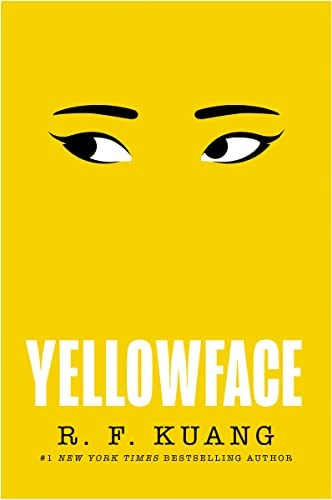
Yellowface
by R.F. Kuang · 2023
A failed white novelist steals her dead Asian friend's unpublished manuscript, publishes it as her own, and the publishing industry rewards her for it.
Worth reading? Yellowface is the sharpest publishing-industry satire in years because Kuang refuses to soften June into a misunderstood antihero -- she's petty, self-justifying, and genuinely dangerous, and the book trusts you to see it even when June can't. It beats most 'cancel culture' novels by being funnier and crueler about the actual mechanics of the industry rather than making a generic point about Twitter.
| Author | R.F. Kuang |
|---|---|
| Published | 2023 |
| Publisher | William Morrow |
| Category | Fiction |
| Favorite quote | “The bad thing about being a writer, the meanest thing, is that even your own tragedies are fodder for your art.” |
The Verdict
Kuang’s real trick is pacing: this reads like a thriller even though the plot is mostly June’s spiraling justifications and Twitter anxiety. It’s meaner and funnier than the average “publishing industry expose” novel because it never lets June – or the industry around her – off easy. If you liked the discomfort of watching a narrator lie to themselves in real time, this beats most literary fiction published about the same topic in the last five years.
you want a fast, uncomfortable satire of publishing, race, and internet outrage that doesn't let its narrator off the hook
you need a likable protagonist to enjoy a book -- June Hayward is a genuinely unpleasant narrator by design, and 300 pages in her head can wear on you
Book Summary
Publishing rewards the story that sells, not the person who deserves to tell it. June convinces herself she's earned Athena's manuscript through editing labor, and the industry -- eager for a marketable narrative -- lets her.
The book is a study in self-justification. June's internal monologue constantly reframes theft as fairness, jealousy as critique, and racism as misunderstanding, and Kuang lets the gap between June's narration and reality do the satirical work.
Online discourse doesn't correct injustice so much as it becomes a new arena for the same status games -- callouts, review-bombing, and cancellation in the novel function as plot mechanics, not moral resolution.
Top 8 Lessons from Yellowface
- June frames editing a dead friend's manuscript as co-authorship to justify claiming it as her own.
- Publishing's appetite for a 'good story' about a book (a marketable author narrative) matters as much as the writing itself.
- June's unreliable narration constantly rationalizes racist and unethical choices as reasonable responses to unfairness.
- Athena, even as a ghost/off-page presence, is revealed to have exploited people in her own life for material -- nobody in this book is innocent.
- Twitter pile-ons in the novel escalate June's paranoia without ever delivering real accountability.
- The publishing industry's diversity efforts are shown as often performative, more about marketing optics than structural change.
- June's insecurity about her own mediocre first novel drives her resentment of Athena's success long before the theft.
- The book satirizes how a stolen or borrowed identity narrative can become more valuable than an author's actual life.
Top 3 Quotes from Yellowface
"The bad thing about being a writer, the meanest thing, is that even your own tragedies are fodder for your art."
R.F. Kuang, Yellowface
"Nobody wants to admit this, but publishing is a business, and writers, no matter how brilliant, are workers within an industry."
R.F. Kuang, Yellowface
"I am not a racist. I just don't think white people should be punished for their skin color."
R.F. Kuang, Yellowface
Frequently Asked Questions
Is Yellowface worth reading?
Yes, if you want sharp, uncomfortable satire about publishing and race that doesn't soften its narrator to make you comfortable. Skip it if you need to like the protagonist to enjoy a book.
Is Yellowface based on a true story?
No, it's fiction, but Kuang has said it draws on real dynamics she's observed and experienced in the publishing industry as an Asian American author.
Is Yellowface hard to read?
Not structurally -- it's a fast, propulsive thriller-paced novel. What's uncomfortable is spending the whole book inside a narrator who constantly rationalizes bad behavior.
Who should read Yellowface?
Readers who like dark satire, publishing-industry exposes, or unreliable narrators. It also works well for book clubs since the ethics are genuinely debatable.
Ready to read it?
Get Yellowface on Amazon