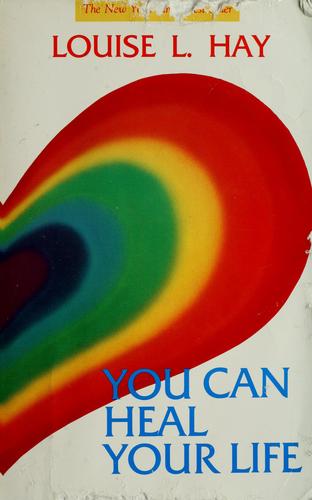
You Can Heal Your Life
by Louise Hay · 1984
The affirmations-and-mindset bible that sold 50 million copies on a single premise: your thoughts create your reality, including your illness.
Worth reading? You Can Heal Your Life is enormously influential and enormously unscientific at the same time, and you should read it with both facts in view. The affirmation practice and the idea that self-criticism keeps you stuck are useful and low-risk. The disease-causation list, where Hay maps specific ailments to specific negative thoughts, is not something to use as medical guidance. Feeling Good gives you a version of 'your thoughts shape your experience' that's actually clinically tested.
| Author | Louise Hay |
|---|---|
| Published | 1984 |
| Category | Self-Improvement & Psychology |
| Favorite quote | “The point of power is always in the present moment.” |
The Verdict
Hay’s real contribution was making self-acceptance practice accessible and repeatable at mass scale – millions of people who’d never touch a therapy workbook picked up a mirror and an affirmation instead. Use the book for that. Leave the disease-causation charts alone; that part hasn’t held up and was never medically grounded to begin with.
you want an accessible, affirmation-based entry point into mind-body self-help and don't need scientific rigor to get value from a mantra
you want evidence-based psychology. Hay's claim that specific thoughts cause specific diseases isn't supported by medicine, and treating it as diagnosis is genuinely risky
Book Summary
Hay's central claim is that your habitual thought patterns -- especially self-criticism, resentment, and fear -- shape your physical and emotional reality, and that changing the thought pattern (primarily through repeated affirmations and mirror work) changes the outcome. Loving and accepting yourself, in her framework, is the precondition for almost everything else working.
The book also popularized "affirmations" as a mainstream self-help tool: short, present-tense, positive statements repeated deliberately to reprogram habitual negative self-talk. Whatever you think of the underlying theory, the practice of noticing and interrupting a constant inner critic is the part that transfers cleanly to secular self-improvement.
Top 7 Lessons from You Can Heal Your Life
- Self-criticism is a habit, and habits can be replaced with deliberate practice.
- Affirmations work best stated in the present tense, as if already true.
- Mirror work -- looking yourself in the eye and speaking kindly to yourself -- interrupts automatic self-judgment.
- Resentment and unexpressed anger are worth examining, whatever their physical effects or lack thereof.
- Forgiveness (including of yourself) is something you practice, not something that happens to you.
- Your habitual self-talk sets a ceiling on what you'll attempt.
- Change is a practice you repeat, not a decision you make once.
Top 3 Quotes from You Can Heal Your Life
"The point of power is always in the present moment."
Louise Hay, You Can Heal Your Life
"Every thought we think is creating our future."
Louise Hay, You Can Heal Your Life
"Loving ourselves works miracles in our lives."
Louise Hay, You Can Heal Your Life
Frequently Asked Questions
Is You Can Heal Your Life worth reading?
Worth reading for the affirmation practice and self-acceptance framing, not for the disease-causation claims, which aren't medically supported and shouldn't guide health decisions.
What is the main idea of You Can Heal Your Life?
Habitual thought patterns, especially self-criticism, shape your reality, and deliberately replacing them with affirmations changes your emotional and (per Hay) physical outcomes.
Is You Can Heal Your Life scientifically supported?
No. The affirmation-and-self-acceptance practice has soft overlap with real psychology, but the specific claim that named diseases are caused by named thought patterns has no medical backing.
What's a more evidence-based alternative to You Can Heal Your Life?
Feeling Good covers the 'thoughts shape emotional reality' idea with a clinically tested, CBT-based method instead of affirmations and metaphysics.
Ready to read it?
Get You Can Heal Your Life on Amazon