Lindy List: 9 History Books That Still Explain the Present

Updated July 24, 2026 · 9 books

Lindy List: 9 History Books That Still Explain the Present: ranked list of 9 books

Most history books get replaced by the next one with better sourcing. These nine got cited by the next one instead.

Start with The Lessons of History. It’s the shortest book on this list and the widest in scope: 5,000 years of civilization compressed into the patterns that keep repeating, war, wealth, religion, decline. Once you’ve got that frame, go specific: The Guns of August for how wars start by accident, The Gulag Archipelago for what a totalitarian system actually does to people, Guns, Germs, and Steel for why history’s winners and losers landed where they did.

The genre warning: history written to serve an agenda ages fast, even when it’s popular on release. Every book here has survived scrutiny from historians who disagree with parts of it and still can’t ignore it. That’s a higher bar than “well-reviewed.”

Quick Comparison

#BookBest for
1The Lessons of HistoryWill Durant and Ariel Durantreaders who want the highest-density, most re-readable summary of what actually repeats across historyAmazon
2The Guns of AugustBarbara Tuchmanyou want the classic account of how great powers can talk, plan, and alliance-build their way into a catastrophe nobody individually chose -- still assigned in military and diplomatic history courses over 60 years after publicationAmazon
3The Gulag ArchipelagoAleksandr Solzhenitsynreaders who want the definitive firsthand account of the Soviet labor camp system, from someone who survived itAmazon
4Guns, Germs, and SteelJared Diamondyou want the classic, Pulitzer-winning answer to why some societies ended up with guns, steel, and immunity to smallpox while others didn't -- geography and environment, not race or cultureAmazon
5A People's History of the United StatesHoward Zinnyou want the counter-narrative to the textbook version of American history, told through workers, enslaved people, women, and war resisters instead of generals and presidentsAmazon
6Ordinary MenChristopher R. Browningreaders who want the most rigorous historical answer to how ordinary people commit atrocityAmazon
7The Road to Wigan PierGeorge Orwellreaders who want firsthand economic reportage paired with an author willing to criticize his own sideAmazon
8The Rape of NankingIris Changreaders who want a documented, harrowing account of an atrocity that's still underrepresented in most WWII educationAmazon
9A History of Religious Ideas, Volume 1Mircea Eliadereaders who want a serious, scholarly survey of how religious belief actually developed across the ancient worldAmazon

The Books

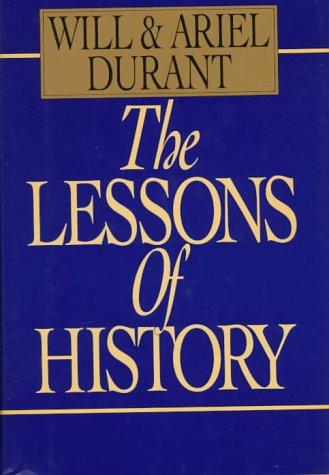
The Lessons of History by Will Durant and Ariel Durant book cover

1. The Lessons of History

Will Durant and Ariel Durant · 1968

Two historians distill their eleven-volume Story of Civilization into under 100 pages of the actual recurring patterns across all of recorded human history.

Most history books ask for a serious time commitment. This one asks for almost none and still leaves you with more genuinely transferable patterns than books ten times its length. Read it once fast, then keep it around to reread slowly.

Read it if: readers who want the highest-density, most re-readable summary of what actually repeats across history

Skip it if: you want detailed narrative history, this is pure distilled pattern-recognition, almost no storytelling
Full verdict: The Lessons of History →

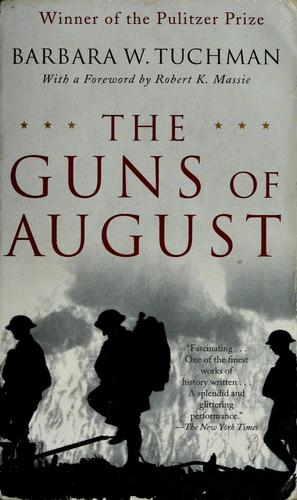
The Guns of August by Barbara Tuchman book cover

2. The Guns of August

Barbara Tuchman · 1962

Barbara Tuchman's account of the diplomatic failures and first month of fighting that dragged Europe into World War I -- a war almost nobody wanted but nobody could stop once the mobilization plans started running.

The Kennedy connection isn’t folklore dressed up for the book jacket – it’s documented that he distributed copies to his cabinet during the missile crisis specifically to keep the room focused on how easily rigid plans and mutual distrust can escalate past the point anyone intended. That’s a rare thing for a 1962 history book: still functioning as an active policy reference decades later.

Read it if: you want the classic account of how great powers can talk, plan, and alliance-build their way into a catastrophe nobody individually chose -- still assigned in military and diplomatic history courses over 60 years after publication

Skip it if: you want a full history of WWI -- this covers only the diplomatic buildup and the first month of fighting (through the Battle of the Marne), not the war's later years, trench stalemate, or its resolution

Full verdict: The Guns of August →

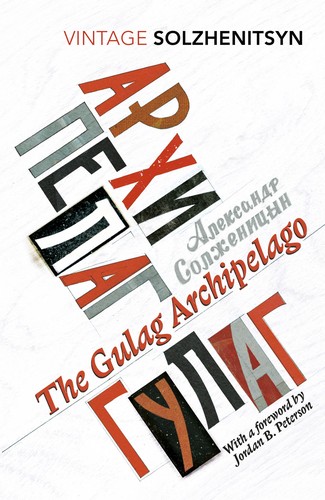
The Gulag Archipelago by Aleksandr Solzhenitsyn book cover

3. The Gulag Archipelago

Aleksandr Solzhenitsyn · 1973

Solzhenitsyn's own eight years in Soviet labor camps became the foundation for the book that exposed the gulag system to the world, and later got a foreword from Jordan Peterson himself.

Solzhenitsyn didn’t write this for comfort, he wrote it because he’d lived through the system he was documenting and wanted a record no propaganda could erase. Even in abridged form it’s long and deliberately unrelenting, and it’s exactly that refusal to soften the material that made it the book that changed how the West understood Soviet communism.

Read it if: readers who want the definitive firsthand account of the Soviet labor camp system, from someone who survived it

Skip it if: you want a light read, this is long, dense, and deliberately unrelenting, even in the abridged edition

Full verdict: The Gulag Archipelago →

Guns, Germs, and Steel by Jared Diamond book cover

4. Guns, Germs, and Steel

Jared Diamond · 1997

Jared Diamond's answer to why Europeans conquered the Americas and not the other way around: not intelligence, not culture, but geography -- crops, livestock, and continents shaped like they are.

Diamond wrote this as a biologist and geographer, not a historian, and that outsider’s-eye framing is both the book’s strength (a genuinely novel angle) and the source of most of the specialist pushback (insufficient grounding in the historical particulars he’s explaining). Worth knowing which hat he’s wearing before you treat any single claim as final.

Read it if: you want the classic, Pulitzer-winning answer to why some societies ended up with guns, steel, and immunity to smallpox while others didn't -- geography and environment, not race or culture

Skip it if: you want a book anthropologists and historians broadly still endorse without pushback -- Diamond's environmental-determinism thesis has drawn serious, ongoing academic criticism for oversimplifying and downplaying human agency, similar to the pushback Sapiens gets on this site

Full verdict: Guns, Germs, and Steel →

A People's History of the United States by Howard Zinn book cover

5. A People's History of the United States

Howard Zinn · 1980

Howard Zinn rewrites 500 years of American history from the ground up -- told through the people who built, farmed, fought, and sometimes rioted their way through it, not the presidents who signed the paperwork.

Zinn wrote most of this from secondary sources, not new archival research – his contribution was framing and selection, not discovery. That’s worth knowing before you cite it as primary evidence in an argument; treat it as the sharpest available synthesis of the story usually left out, not as the last word on any of it.

Read it if: you want the counter-narrative to the textbook version of American history, told through workers, enslaved people, women, and war resisters instead of generals and presidents

Skip it if: you want a balanced, two-sided survey -- Zinn openly writes as an advocate for the marginalized, not a neutral referee, so read it as a deliberate corrective, not the whole story

Full verdict: A People's History of the United States →

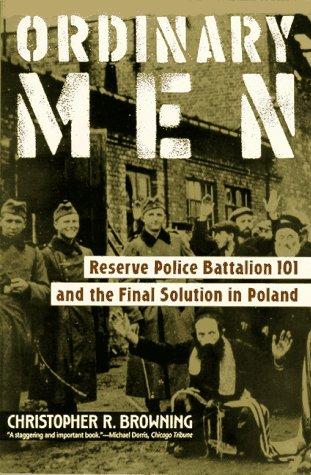
Ordinary Men by Christopher R. Browning book cover

6. Ordinary Men

Christopher R. Browning · 1992

A historian uses surviving trial testimony to show how a battalion of middle-aged German reservists, not fanatics, became mass murderers, and what that says about all of us.

This isn’t an easy book, and it shouldn’t be. Browning built his argument from actual postwar testimony, not theory, and the uncomfortable finding, that permission to refuse didn’t stop most men from participating, is exactly why the book still gets assigned in psychology and history courses decades later.

Read it if: readers who want the most rigorous historical answer to how ordinary people commit atrocity

Skip it if: the subject matter, sustained detail on mass killing, is genuinely difficult reading

Full verdict: Ordinary Men →

The Road to Wigan Pier by George Orwell book cover

7. The Road to Wigan Pier

George Orwell · 1937

Orwell goes underground into England's Depression-era coal towns, then turns the second half into a brutally honest essay on why socialism keeps failing to win over the working class it claims to speak for.

Orwell doesn’t let anyone off easy in this book, not the mine owners, not the government, and not his own socialist allies. The reportage half earns its reputation on documentary detail alone; the essay half is what makes people still argue about it nearly a century later.

Read it if: readers who want firsthand economic reportage paired with an author willing to criticize his own side

Skip it if: you want a tidy political argument, Orwell spends half the book attacking his own movement's failures

Full verdict: The Road to Wigan Pier →

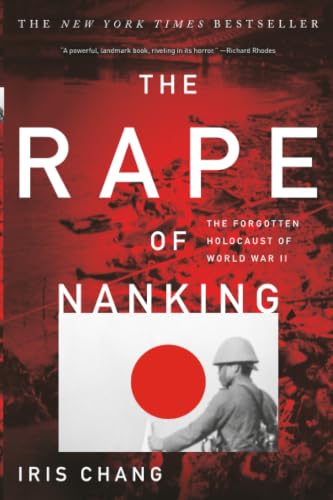
The Rape of Nanking by Iris Chang book cover

8. The Rape of Nanking

Iris Chang · 1997

The book that forced a largely Western audience to confront a 1937 atrocity in China that had been left out of most WWII histories entirely.

Chang wrote this in her twenties and it became the book that put the Nanking Massacre on the map for readers who had never encountered it in a WWII history course. It’s harrowing by necessity, not for effect, and it belongs on any serious 20th-century history shelf.

Read it if: readers who want a documented, harrowing account of an atrocity that's still underrepresented in most WWII education

Skip it if: you're not prepared for sustained, graphic historical detail about mass killing and sexual violence

Full verdict: The Rape of Nanking →

A History of Religious Ideas, Volume 1 by Mircea Eliade book cover

9. A History of Religious Ideas, Volume 1

Mircea Eliade · 1978

A landmark scholar of comparative religion traces spiritual belief from Paleolithic burial rites through ancient Egypt, Mesopotamia, and Greek mystery religions, the first of a three-volume survey.

This is a genuine scholarly undertaking, not a popular history, and it rewards patient readers with one of the most comprehensive comparative surveys of ancient religious thought available. Volume 1 alone covers enormous ground, from Paleolithic burial sites to Greek mystery cults, treating each with the same rigor.

Read it if: readers who want a serious, scholarly survey of how religious belief actually developed across the ancient world

Skip it if: you want a light overview, this is a dense academic reference work, not a casual read

Full verdict: A History of Religious Ideas, Volume 1 →

Frequently Asked Questions

What's the best history book to start with if you don't read history?

The Lessons of History (1968) by Will and Ariel Durant. It's under 100 pages, distills their 11-volume history of civilization into the patterns that repeat, and reads more like a book of principles than a textbook.

Why is The Guns of August still relevant?

Because it's the definitive account of how competent people sleepwalk into a catastrophe nobody wanted. JFK made his cabinet read it during the Cuban Missile Crisis. That's a 60-year-old book still shaping real decisions.

Is Guns, Germs, and Steel still credible?

It's contested among specialists on some details, but the core question, why did some societies end up conquering others instead of the reverse, is still the framework most people reach for. Read it as the strongest version of one big argument, not settled fact.

Is Ordinary Men a hard read?

Yes, deliberately. It's about how normal, non-fanatical men became Holocaust killers, and the answer (peer pressure and conformity, not ideology) is more disturbing than a simpler story about monsters would be. Read it if you want to understand atrocity, skip it if you need distance right now.

Why include a memoir like Road to Wigan Pier as 'history'?

Because Orwell's firsthand reporting on Depression-era English poverty is treated as a primary historical source, not just a personal account. It's been assigned in social history courses for 80+ years.

Keep Reading