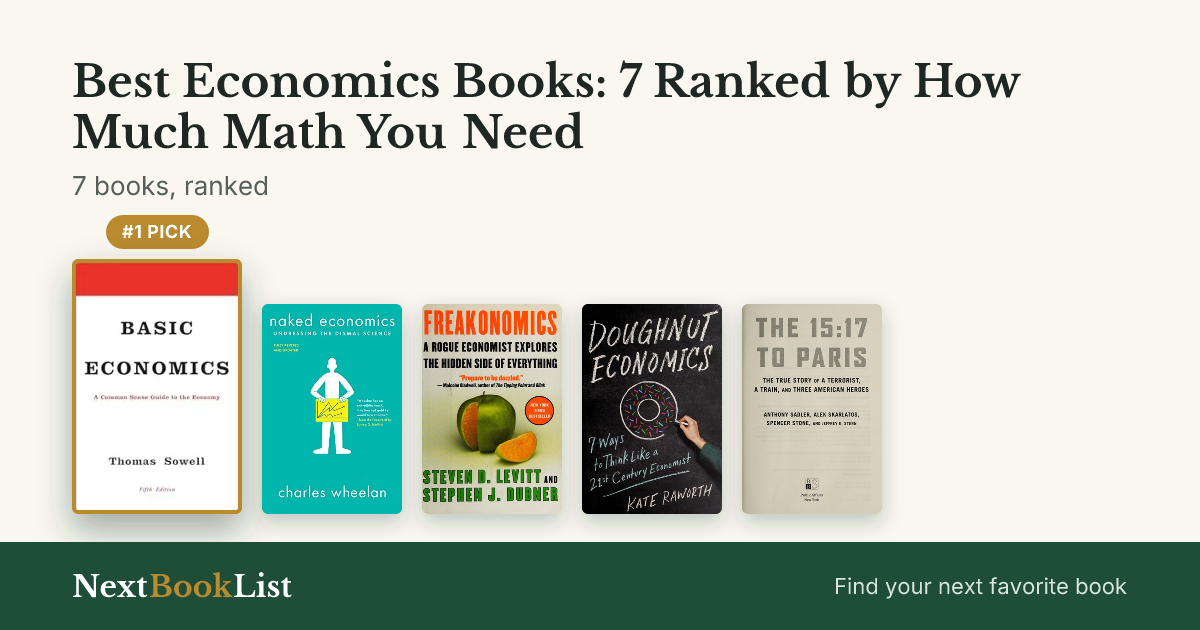
Best Economics Books: 7 Ranked by How Much Math You Need

Updated July 16, 2026 · 7 books

Best Economics Books: 7 Ranked by How Much Math You Need: ranked list of 7 books

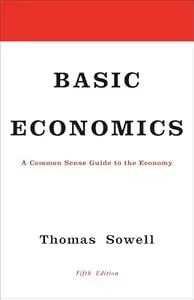
The best economics book for a beginner is Basic Economics, because Thomas Sowell explains how prices, trade, and incentives work using real history instead of graphs. No math, no assumed background, just a clear argument built one example at a time. Naked Economics covers similar ground in a faster, more anecdotal style, either one is a fine front door.

Once the fundamentals click, Freakonomics is the natural next step, same plain-English approach, pointed at stranger questions. Doughnut Economics goes a different direction entirely: Kate Raworth doesn’t just explain how the economy works, she argues economics has been optimizing for the wrong goal for a century, and proposes a new one. Read it as a values argument, not a mechanics lesson.

For readers who want evidence over theory, Good Economics for Hard Times and Poor Economics are the pairing to make. Both come from Banerjee and Duflo’s field research into what actually reduces poverty, cash transfers, health interventions, education spending, tested rather than assumed. They’re honest about how often intuition gets development economics wrong.

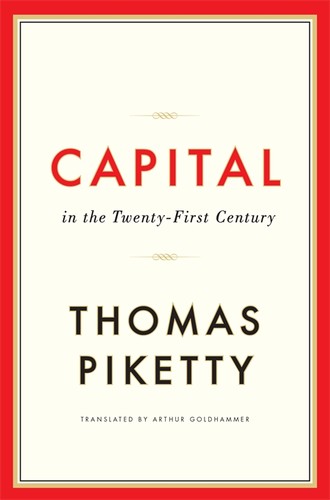
Capital in the Twenty-First Century sits at the end for a reason. Thomas Piketty’s inequality book is the most cited, most debated economics book of the last fifteen years, and also the longest and most academic entry here, centuries of wealth data, dense argument, no shortcuts. Read the first four books before you decide you’re ready for this one, and don’t feel obligated to finish it cover to cover if you’re not.

Quick Comparison

#BookBest for
1Basic economicsThomas Sowellanyone weighing whether Basic economics belongs on their business and money shelfAmazon
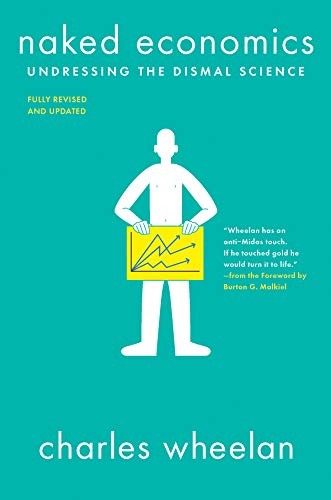
2Naked EconomicsCharles Wheelanreaders who want economics explained without equations or jargonAmazon
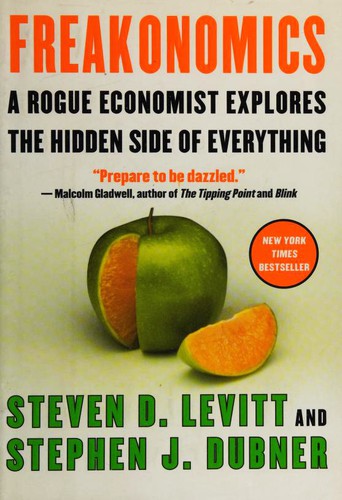
3FreakonomicsSteven D. Levittanyone weighing whether Freakonomics belongs on their business and money shelfAmazon
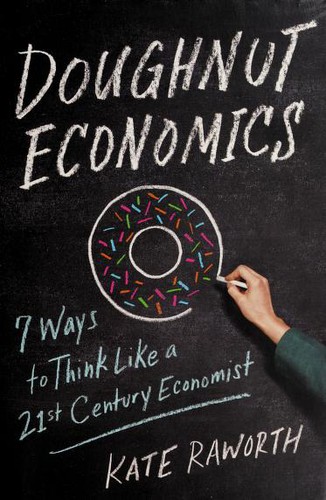
4Doughnut EconomicsKate Raworthyou're open to questioning whether GDP growth should be the default measure of economic successAmazon
5Good Economics for Hard TimesAbhijit V. Banerjee & Esther Dufloyou want to understand trade, immigration, and inequality debates without the ideological talking points from either sideAmazon
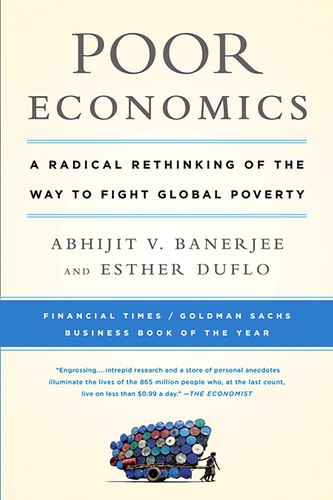
6Poor EconomicsAbhijit V. Banerjee & Esther Dufloyou want evidence for what actually reduces poverty instead of another ideological argument about aidAmazon
7Capital in the Twenty-First CenturyThomas Pikettyyou want the historical data behind wealth inequality, not just another opinion piece about itAmazon

The Books

Basic economics by Thomas Sowell book cover

1. Basic economics

Thomas Sowell · 2000

Thomas Sowell's take on business, the honest verdict is below.

Thomas Sowell’s tour of how economies actually work, with almost no equations. Read it before any partisan economic rant, it’ll steady you. Skip it if you want a left or right manifesto; Sowell’s lens is free-market and he’s not subtle about it.

Read it if: anyone weighing whether Basic economics belongs on their business and money shelf

Skip it if: you want a different angle than Thomas Sowell's
Full verdict: Basic economics →

Naked Economics by Charles Wheelan book cover

2. Naked Economics

Charles Wheelan · 2002

Wheelan's plain-English tour of how markets, trade, and government policy actually work.

Naked Economics does what most economics writing fails to: makes supply and demand, trade, and monetary policy genuinely readable without dumbing the ideas down. Wheelan uses real-world examples instead of abstract graphs, which is why the book has stayed a go-to recommendation for two decades. Skip it if you already have formal training, this is an on-ramp, not an advanced text.

Read it if: readers who want economics explained without equations or jargon

Skip it if: you already have formal economics training and want depth, not an overview

Full verdict: Naked Economics →

Freakonomics by Steven D. Levitt book cover

3. Freakonomics

Steven D. Levitt · 2005

Steven D. Levitt's take on business, the honest verdict is below.

Levitt and Dubner prove economics is just the study of incentives applied to anything, sumo, drugs, baby names. Read it before you trust any ‘common sense’ social claim; skip it if you hate playful stats, because that’s the whole vibe.

Read it if: anyone weighing whether Freakonomics belongs on their business and money shelf

Skip it if: you want a different angle than Steven D. Levitt's

Full verdict: Freakonomics →

Doughnut Economics by Kate Raworth book cover

4. Doughnut Economics

Kate Raworth · 2017

An economist draws a doughnut and argues growth for its own sake is the wrong goal entirely.

Raworth trained as an economist and writes like one arguing with her own profession – respectful of the tools, impatient with the goal they’ve been pointed at for a century. The doughnut diagram does more explanatory work in one image than most economics books do in a chapter, which is why it’s the thing people remember years after reading this.

Read it if: you're open to questioning whether GDP growth should be the default measure of economic success

Skip it if: you want a defense of free-market growth economics -- this book is explicitly arguing against that framework

Full verdict: Doughnut Economics →

Good Economics for Hard Times by Abhijit V. Banerjee & Esther Duflo book cover

5. Good Economics for Hard Times

Abhijit V. Banerjee & Esther Duflo · 2019

The same Nobel-winning economists who fixed the poverty debate turn their evidence-first method on trade, migration, and inequality in rich countries too.

Banerjee and Duflo wrote this after the Nobel, and you can feel the confidence to swing at bigger targets – trade wars, immigration panic, the assumption that growth must always accelerate. It’s less tightly focused than Poor Economics, but the same instinct runs through it: check the data before you trust the argument that sounds right.

Read it if: you want to understand trade, immigration, and inequality debates without the ideological talking points from either side

Skip it if: you already read Poor Economics cover to cover recently and want new territory, not a second helping of the same method

Full verdict: Good Economics for Hard Times →

Poor Economics by Abhijit V. Banerjee & Esther Duflo book cover

6. Poor Economics

Abhijit V. Banerjee & Esther Duflo · 2011

Forget the big theories -- Banerjee and Duflo tested what actually helps poor people, one randomized experiment at a time.

Banerjee and Duflo later won the Nobel Prize in part for the research method this book popularizes: treat anti-poverty programs like clinical trials, not political statements. The book is patient and detailed rather than punchy, but that’s the point – it earns its conclusions instead of asserting them.

Read it if: you want evidence for what actually reduces poverty instead of another ideological argument about aid

Skip it if: you want a grand unified theory of why poverty exists -- this book deliberately refuses to give you one

Full verdict: Poor Economics →

Capital in the Twenty-First Century by Thomas Piketty book cover

7. Capital in the Twenty-First Century

Thomas Piketty · 2014

Two hundred years of tax records compressed into one equation explaining why wealth concentrates faster than economies grow.

Piketty didn’t write an opinion piece about inequality – he built two centuries of tax data first, then let the data make the argument. Whether or not you buy his wealth-tax prescription, the r > g diagnosis is hard to argue with once you’ve seen the numbers.

Read it if: you want the historical data behind wealth inequality, not just another opinion piece about it

Skip it if: you want a quick read -- this is nearly 700 pages of data and argument, closer to a textbook than a business book

Full verdict: Capital in the Twenty-First Century →

Frequently Asked Questions

What is the best economics book for a total beginner?

Basic Economics by Thomas Sowell. No equations, no jargon, no political throat-clearing before it gets to the point, just how prices, trade, and incentives actually work, explained through history rather than models. If you've never taken an economics class, this is where to start.

Is Naked Economics different from Basic Economics?

Same audience, different flavor. Naked Economics is faster and more anecdote-driven, Basic Economics is more thorough and repeats its core ideas across more examples. Either works as a first book, pick whichever opening chapter reads better to you.

Is Capital in the Twenty-First Century worth the length?

Only if you're genuinely interested in wealth inequality and willing to sit with charts and historical data across several centuries. Piketty's book is long, dense, and academic in a way nothing else on this list is, don't start here.

What's the best book on whether foreign aid actually works?

Poor Economics and Good Economics for Hard Times, both by Nobel winners Abhijit Banerjee and Esther Duflo. They're built on field research into what specific anti-poverty interventions actually move the needle, rather than ideology about what should work.

Keep Reading