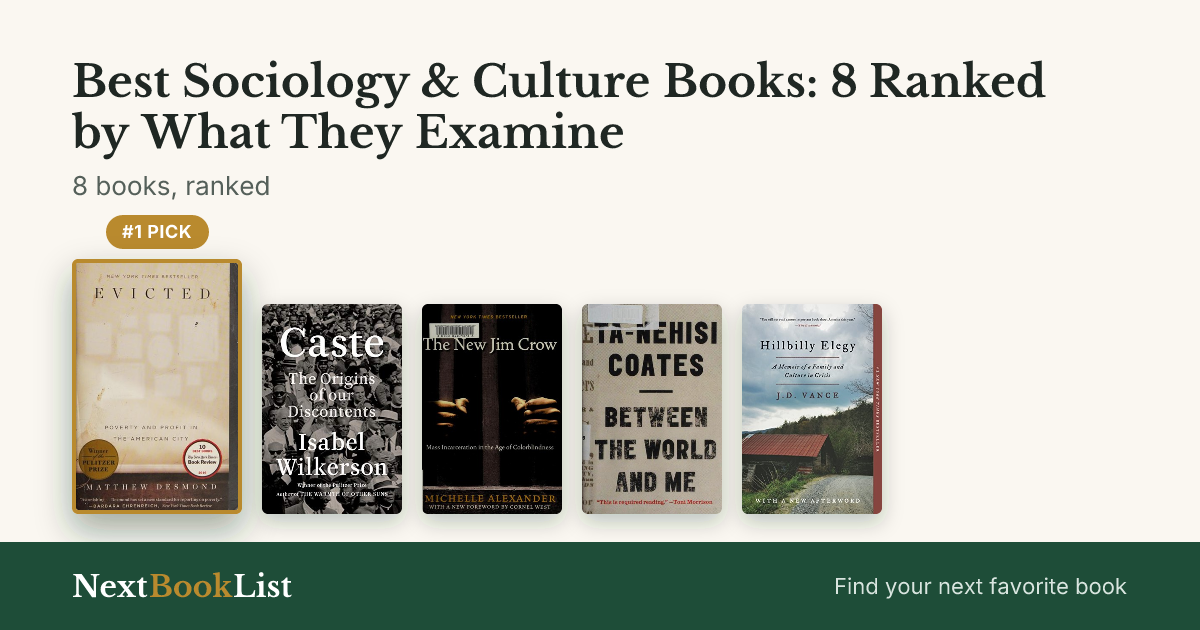
The best sociology book to start with is Evicted, because Matthew Desmond didn’t study eviction from a distance, he lived directly in a Milwaukee trailer park and rooming house to follow eight families through the actual process, and the resulting specificity (named people, real rent amounts, actual court dates) is what won it the Pulitzer.
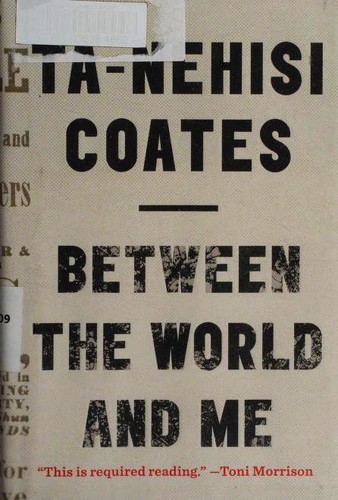
The structural frameworks: Caste argues American racial hierarchy is better understood as a caste system than as racism alone, built through direct comparison to India and Nazi Germany. The New Jim Crow makes a narrower, more legal case that mass incarceration functions as a redesigned racial caste system operating under colorblind law. Between the World and Me closes this thread as a letter from a father to his son, refusing the comfortable resolution the first two books’ arguments might otherwise invite.
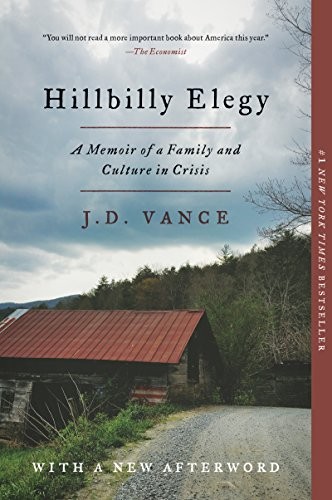
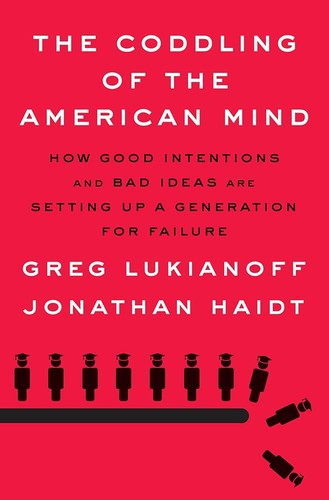
One American region, one generational argument: Hillbilly Elegy, read as a specific memoir rather than a survey of an entire region, and The Coddling of the American Mind, which traces campus culture and youth anxiety back to three specific ideas absorbed through well-intentioned but ultimately counterproductive parenting and institutional practice.
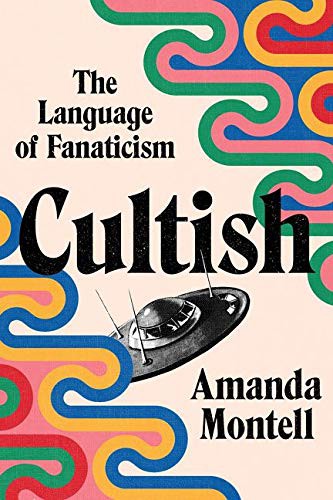
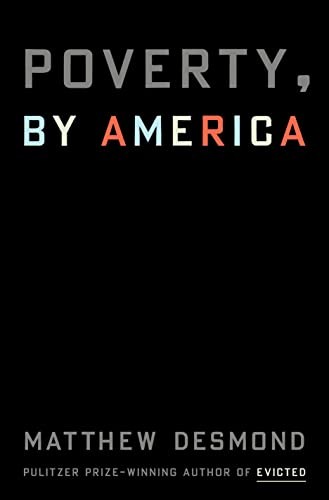
Close with Cultish and Poverty, by America. Amanda Montell’s linguistics background surfaces something the other books don’t: the actual language patterns, loaded jargon, thought-terminating cliches, us-versus-them framing, that let high-commitment groups exert control, from historical cults to modern fitness brands. Poverty, by America is Desmond’s follow-up to Evicted, more argumentative than that book’s ground-level reporting, making the case that American poverty persists because other people, not just circumstances, benefit from it.
One warning: several of these books generated real, sustained public debate after publication, and that’s not incidental. Books that examine how societies actually work tend to unsettle people who benefit from not examining it too closely, read them for the argument, not for confirmation of what you already believed walking in.
Matthew Desmond · 2016
A Princeton sociologist moved into a Milwaukee trailer park and a rooming house to follow eight families through eviction, and won the Pulitzer for showing exactly how losing housing traps people in poverty, not just reflects it.
Desmond’s embedded method (living directly alongside the families and landlords he’s documenting) is what separates this from policy-level poverty writing – the specificity of named people, actual rent amounts, and real court dates gives the mechanism of eviction a concreteness that statistics alone can’t produce.
Read it if: you want rigorous, embedded sociology that follows real families through a specific crisis rather than summarizing poverty statistics from a distance
Skip it if: you want policy prescriptions and solutions -- Desmond documents the mechanism of eviction and its consequences in granular detail, with policy recommendations mostly reserved for a closing section
Full verdict: Evicted →
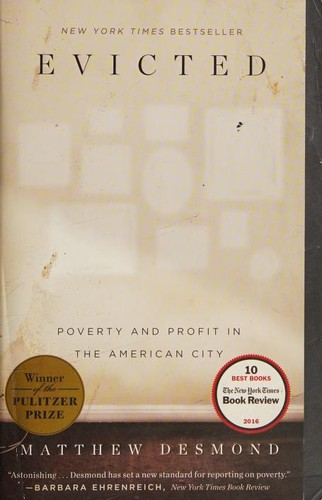
Isabel Wilkerson · 2020
A Pulitzer-winning journalist argues America's racial hierarchy is better understood as a caste system than as racism alone, and draws a direct, researched comparison to India's caste system and Nazi Germany's racial laws to make the case.
Wilkerson’s decision to build this as an explicitly comparative, structural argument, rather than another narrative history, is what makes it a genuine companion to rather than a repeat of The Warmth of Other Suns – the two books address the same underlying subject through almost entirely different methods, and reading them together gives you both the individual and structural view.
Read it if: you want a rigorously researched, comparative framework for understanding American racial hierarchy as a structural system, not just individual prejudice
Skip it if: you want a purely historical narrative -- Caste is more analytical and comparative in structure than Wilkerson's earlier The Warmth of Other Suns, building an explicit theoretical framework rather than following individual life stories
Full verdict: Caste →
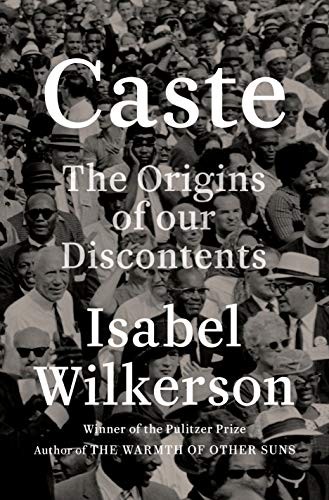
Michelle Alexander · 2010
A civil rights lawyer's argument that the War on Drugs rebuilt a racial caste system under the cover of colorblind law, and that mass incarceration is functioning as the mechanism, not a side effect.
Alexander’s background as a practicing litigator, not just an academic observer, gives the book’s central argument a specificity most policy-level criminal justice writing lacks – she’s describing patterns she encountered directly in casework, not synthesizing secondhand research from a distance.
Read it if: you want the foundational legal and sociological argument connecting the War on Drugs to systemic racial control, from a lawyer who spent years litigating these cases directly
Skip it if: you want a purely historical or statistical treatment -- Alexander is making a sustained legal and moral argument throughout, not a neutral survey of criminal justice data
Full verdict: The New Jim Crow →
Ta-Nehisi Coates · 2015
A National Book Award-winning letter from a father to his teenage son, about what it means to inhabit a Black body in America, written as intimate correspondence, not a policy argument.
Coates’s decision to address one specific person – his own son – rather than a general reader is what gives the book’s biggest structural arguments their intimacy and stakes. It’s short enough to read in a sitting and dense enough to reread; both are worth doing.
Read it if: you want a literary, personal reckoning with race in America, built as a direct letter rather than a policy or statistical argument
Skip it if: you want a comprehensive historical or sociological survey of racism in America -- this is deliberately personal and specific, addressed to one person, not a broad analytical treatment
Full verdict: Between the World and Me →
Greg Lukianoff & Jonathan Haidt · 2018
A First Amendment lawyer and a social psychologist trace campus culture's biggest fights back to three specific bad ideas, and argue well-meaning adults, not the students themselves, installed them.
Lukianoff and Haidt’s deliberate choice to spread causal responsibility across parenting, education, technology, and politics broadly, rather than picking a single villain, is part of what’s made the book cited across a genuinely wide ideological range since publication – it’s harder to dismiss as partisan than most books tackling the same territory.
Read it if: you want a research-grounded, cross-ideological analysis of how protective parenting and campus culture may be undermining young people's resilience
Skip it if: you want a book that lets any single political side off the hook -- Lukianoff and Haidt spread responsibility across parenting, education, politics, and technology broadly, not one ideological faction
Full verdict: The Coddling of the American Mind →
Amanda Montell · 2021
A linguist argues cults don't need charisma or isolation to work, they need a specific, identifiable language pattern, and that pattern shows up everywhere from Jonestown to your SoulCycle instructor.
Montell’s linguistics training gives this a mechanism-level specificity most cult writing lacks – rather than asking why people join cults psychologically, she’s showing exactly which words and phrases do the actual persuasive work, which makes the patterns genuinely recognizable once you know what to listen for.
Read it if: you want a linguistics-grounded look at how persuasive, high-commitment groups actually use language, spanning from historical cults to modern fitness brands and multi-level marketing
Skip it if: you want a purely historical or true-crime account of specific cults -- Montell's focus is the linguistic mechanism across many groups, not a deep single-cult narrative
Full verdict: Cultish →
Matthew Desmond · 2023
The follow-up to Evicted that asks who benefits from American poverty, not just who suffers from it.
Desmond spent Evicted showing you what poverty does to people. Poverty, by America spends its pages arguing why it persists – and the answer he lands on is uncomfortable: because enough of everyone else benefits from it staying that way. Low wages, high fees on the poor, tax breaks concentrated upward, zoning that locks the poor out of better neighborhoods. None of it is accidental, and none of it fixes itself.
It’s a harder read than Evicted in a different way – less heartbreak, more indictment. Read Evicted first for the human stakes, then this one for the argument about who’s responsible.
Read it if: readers who finished Evicted and want the argument behind the reporting
Skip it if: you want more ground-level narrative reporting like Evicted -- this book is argument, not story
Full verdict: Poverty, by America →
Frequently Asked Questions
What is the best sociology book to start with?
Evicted, if you want embedded, ground-level research. Matthew Desmond moved into a Milwaukee trailer park to follow eight families through eviction. If you want the bigger structural framework first, start with Caste instead.
What's the difference between Caste and The New Jim Crow?
Caste argues American racial hierarchy is better understood through a structural caste framework, comparing the U.S. directly to India and Nazi Germany. The New Jim Crow is a narrower, more legal argument specifically about mass incarceration and the War on Drugs.
Is Hillbilly Elegy still relevant given how politically discussed it's become?
Read it as a specific memoir of one Appalachian family's experience, not as a sociological survey of an entire region, that distinction is exactly where most of the later criticism and debate about the book actually lives.
What book explains how ordinary groups (not religious cults) manipulate through language?
Cultish. Amanda Montell, a linguist, traces the same manipulative language patterns from Jonestown through to modern multi-level marketing companies and certain fitness brands, the mechanism is linguistic, not just psychological.