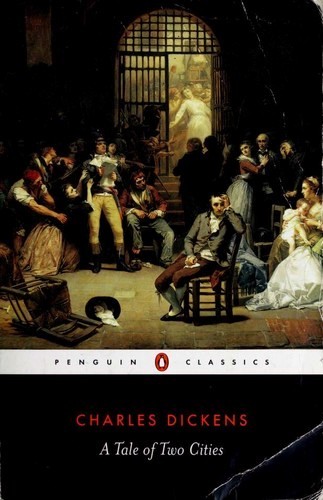
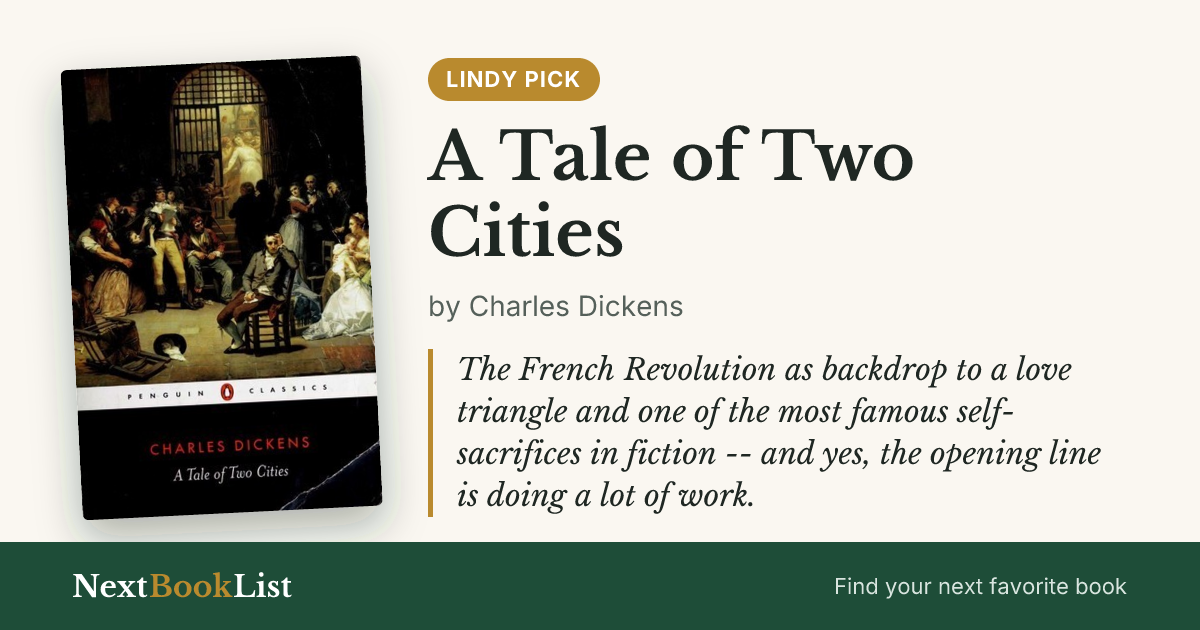
A Tale of Two Cities
by Charles Dickens · 1859
The French Revolution as backdrop to a love triangle and one of the most famous self-sacrifices in fiction -- and yes, the opening line is doing a lot of work.
Worth reading? A Tale of Two Cities has stayed in print for over 160 years partly on the strength of its opening and closing lines alone, but the middle holds up too -- it's Dickens's tightest plot, built around revolutionary Paris and a genuinely earned sacrifice. It beats most of his other novels as a fast entry point, since it skips his usual sprawl of comic subplots for a leaner, more focused story.
| Author | Charles Dickens |
|---|---|
| Published | 1859 |
| Publisher | Penguin Classics |
| Category | Fiction |
| Favorite quote | “It was the best of times, it was the worst of times.” |
The Verdict
Everyone knows the opening line; fewer people remember how much narrative discipline Dickens shows getting from there to Carton’s closing one. This is Dickens without his usual sprawling cast of comic eccentrics, and the plot is tighter for it.
Carton’s sacrifice works because Dickens earns it – pages and pages of him wasting his own life first, so the final act actually costs him something instead of reading as a cheap twist.
you want historical fiction with real stakes, a genuinely surprising redemption arc, and don't mind Dickens at his most plot-driven rather than his most comic
you came for Dickens's usual sprawling comic subplots and eccentric side characters -- this is his leanest, most focused novel, with almost none of that
Book Summary
Set between London and revolutionary Paris, the novel follows Dr. Manette, imprisoned unjustly in the Bastille for eighteen years, and his daughter Lucie, who becomes the center of a love triangle between the virtuous Charles Darnay (secretly a French aristocrat renouncing his family's cruelty) and the dissolute, self-loathing lawyer Sydney Carton.
Dickens uses the Reign of Terror to show revolutionary justice curdling into the same cruelty it was meant to replace -- Madame Defarge's personal vendetta against the Darnay/Evremonde family is framed as understandable given her family's suffering, but no less destructive for being justified.
Carton's arc is the novel's emotional center: a wasted, self-loathing man who finally does something meaningful by taking Darnay's place at the guillotine, out of love for Lucie and a desire to give his life some final purpose. It's Dickens's clearest statement that redemption doesn't require a long life, just one真 genuinely meaningful act.
Top 8 Lessons from A Tale of Two Cities
- Dr. Manette's eighteen years of unjust imprisonment in the Bastille establishes the novel's central argument: revolutionary violence has real, specific roots in real aristocratic cruelty, even when the violence itself goes too far.
- Sydney Carton begins the novel as a wasted, self-loathing alcoholic lawyer, and his final sacrifice only lands because Dickens spends real time establishing how little he otherwise valued his own life.
- Madame Defarge's vendetta against the Darnay family, rooted in her own family's destruction by the aristocracy, is portrayed as sympathetic in origin and dangerous in practice -- Dickens doesn't let revolutionary cruelty off the hook just because it's justified.
- Charles Darnay's renunciation of his family's aristocratic title and cruelty shows that guilt and privilege can be inherited even by someone who never personally caused harm.
- The 'recalled to life' motif -- Dr. Manette's release from prison, Carton's final redemptive act -- runs through the whole novel as a repeated image of resurrection.
- Carton's substitution for Darnay at the guillotine is only possible because of their near-identical appearance, a plot device Dickens sets up carefully well before it's needed.
- The Reign of Terror is shown escalating past its original justice-seeking purpose into indiscriminate cruelty, mirroring the aristocratic excess it replaced.
- Lucie Manette functions less as an active character and more as the emotional center everyone else orbits -- her role is to inspire the men around her toward their best (or worst) selves.
Top 4 Quotes from A Tale of Two Cities
"It was the best of times, it was the worst of times."
Charles Dickens, A Tale of Two Cities
"It is a far, far better thing that I do, than I have ever done; it is a far, far better rest that I go to, than I have ever known."
Charles Dickens, A Tale of Two Cities
"A wonderful fact to reflect upon, that every human creature is constituted to be that profound secret and mystery to every other."
Charles Dickens, A Tale of Two Cities
"Liberty, equality, fraternity, or death; -- the last, much the easiest to bestow, O Guillotine!"
Charles Dickens, A Tale of Two Cities
Frequently Asked Questions
Is A Tale of Two Cities worth reading?
Yes -- it's Dickens's tightest, most plot-driven novel, and Sydney Carton's final sacrifice is one of the most famous, genuinely earned redemption arcs in classic fiction.
Is A Tale of Two Cities a good first Dickens novel?
It's a solid entry point specifically because it skips his usual sprawl of comic subplots -- it's leaner and faster than Oliver Twist or Great Expectations.
What is the famous line at the end of A Tale of Two Cities?
'It is a far, far better thing that I do, than I have ever done' -- Sydney Carton's final line before taking Charles Darnay's place at the guillotine.
What is the main theme of A Tale of Two Cities?
That revolutionary justice can curdle into the same cruelty it replaces, and that redemption doesn't require a long life -- just one genuinely meaningful final act.
Ready to read it?
Get A Tale of Two Cities on Amazon