The Odyssey
by Homer · -700
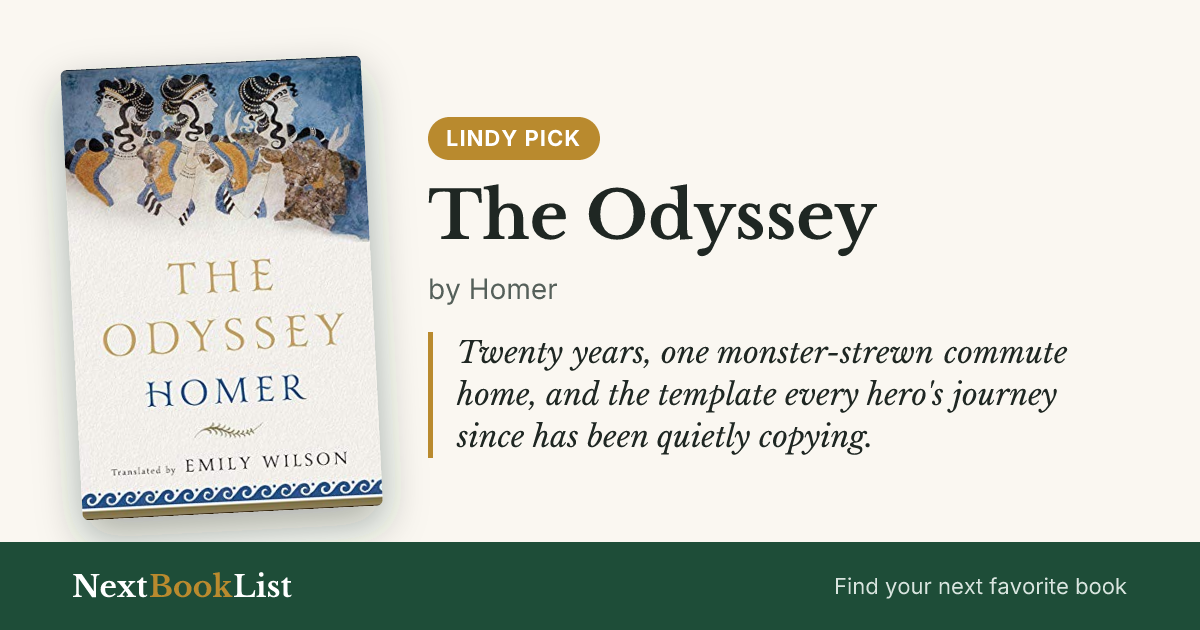
Twenty years, one monster-strewn commute home, and the template every hero's journey since has been quietly copying.
Worth reading? The Odyssey earns its 2,700-year run because it's built around cunning, not just combat, Odysseus survives by outthinking almost everyone he meets. Emily Wilson's translation is the one to start with, it's the first major English version to render the poem in plain, fast-moving verse instead of ornate 19th-century diction. Skip it only if verse itself, any verse, is a hard no for you.
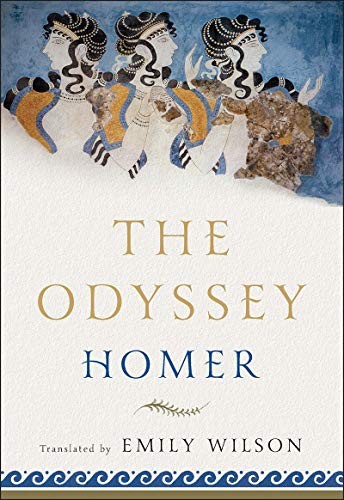
| Full Title | The Odyssey (Emily Wilson Translation) |
|---|---|
| Author | Homer |
| Published | -700 |
| Publisher | W. W. Norton & Company |
| Category | Fiction |
| Favorite quote | “Tell me about a complicated man. Muse, tell me how he wandered and was lost when he had wrecked the holy town of Troy, and where he went, and who he met, the pain he suffered in the storms at sea, and how he worked to save his life and bring his men back home.” |
The Verdict
Most people who bounced off The Odyssey in school bounced off a translation, not the story. Wilson’s version reads like a story again: fast, plain, and propulsive, which is closer to what the poem actually was for its original audience than the ornate 19th-century English most of us grew up assigned. If you’ve never finished it, this is the edition to try before writing the whole poem off.
Read this before any modern “hero’s journey” story you’ve heard described as Homeric, most of the tropes trace straight back here: the monster gauntlet, the loyal-but-tested household, the disguised return.
you want the foundational epic of Western storytelling in a translation that actually moves, not a museum piece you're obligated to admire
you want prose, this is verse, and you're not up for tracking a large cast of gods, suitors, and digressions along the way
Book Summary
Odysseus, delayed ten years getting home from the Trojan War by monsters, gods, and his own choices, finally returns to Ithaca to find his household overrun by suitors pressuring his wife Penelope to remarry and his son Telemachus pushed to the margins of his own home.
The poem is built around cunning as much as courage. Odysseus survives the Cyclops, Circe, and the journey home by lying, disguising himself, and outthinking every obstacle, not by brute strength alone, which is why Wilson's opening line calls him "a complicated man" rather than a warrior.
Wilson's translation strips away centuries of embellishment that softened the poem's treatment of slavery, gender, and violence, restoring some of its harder edges, while rendering it in plain, propulsive verse instead of the ornate, Victorian-inflected diction most English readers grew up with.
Top 10 Lessons from The Odyssey
- Odysseus spends ten years trying to get home from Troy, delayed by the Cyclops Polyphemus, the witch Circe, the Sirens, and the wrath of the sea god Poseidon.
- Penelope holds off more than a hundred suitors for years using her own cunning, famously unweaving her father-in-law's burial shroud each night to stall a decision.
- Telemachus, Odysseus's son, comes of age over the course of the poem, traveling to seek news of his father and gradually asserting himself against the suitors.
- Odysseus survives less through strength than through cunning and disguise, tricking Polyphemus with the 'Nobody' ploy is the clearest example.
- The gods actively intervene in human affairs throughout, Athena helps Odysseus while Poseidon works against him for blinding his son.
- Odysseus's journey includes a descent into the underworld, where he speaks with the dead, including his own mother and the prophet Tiresias.
- Hospitality is a central cultural value in the poem, and how characters treat guests and strangers marks them as civilized or monstrous.
- The suitors' abuse of Odysseus's household, eating his food and courting his wife under his own roof, is framed as the deepest violation the poem depicts.
- When Odysseus finally returns to Ithaca, he disguises himself as a beggar and tests loyalty among his own household before revealing who he is.
- The poem ends with Odysseus's bloody reclaiming of his house, killing the suitors, and Athena has to intervene directly to stop a cycle of retaliatory violence.
Top 2 Quotes from The Odyssey
"Tell me about a complicated man. Muse, tell me how he wandered and was lost when he had wrecked the holy town of Troy, and where he went, and who he met, the pain he suffered in the storms at sea, and how he worked to save his life and bring his men back home."
Homer, The Odyssey
"Now, goddess, child of Zeus, tell the old story for our modern times. Find the beginning."
Homer, The Odyssey
Frequently Asked Questions
Is The Odyssey worth reading?
Yes, it's the foundational text behind most Western storytelling, and Emily Wilson's translation makes it genuinely readable rather than a chore. Skip it only if verse narrative, in any form, isn't for you.
What is The Odyssey about?
Odysseus's ten-year journey home from the Trojan War, fighting monsters and gods along the way, while his wife Penelope and son Telemachus try to hold off suitors overrunning their household back on Ithaca.
Is The Odyssey hard to read?
Less than its reputation suggests, especially in Emily Wilson's translation, which uses plain, contemporary language and a steady meter. The main hurdle is tracking the cast of gods and place names, not the sentences themselves.
Why is the Emily Wilson translation of The Odyssey a big deal?
She was the first woman to publish a major English translation of the poem, and she rendered it in clear, unadorned verse that reads far faster than older, more ornate 19th and 20th-century translations.
Ready to read it?
Get The Odyssey on Amazon