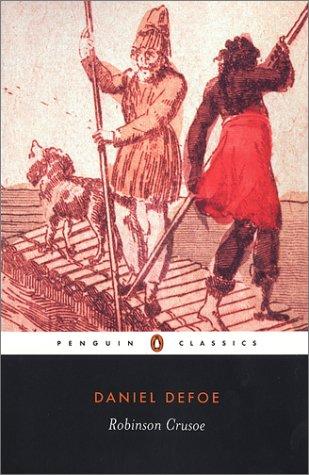
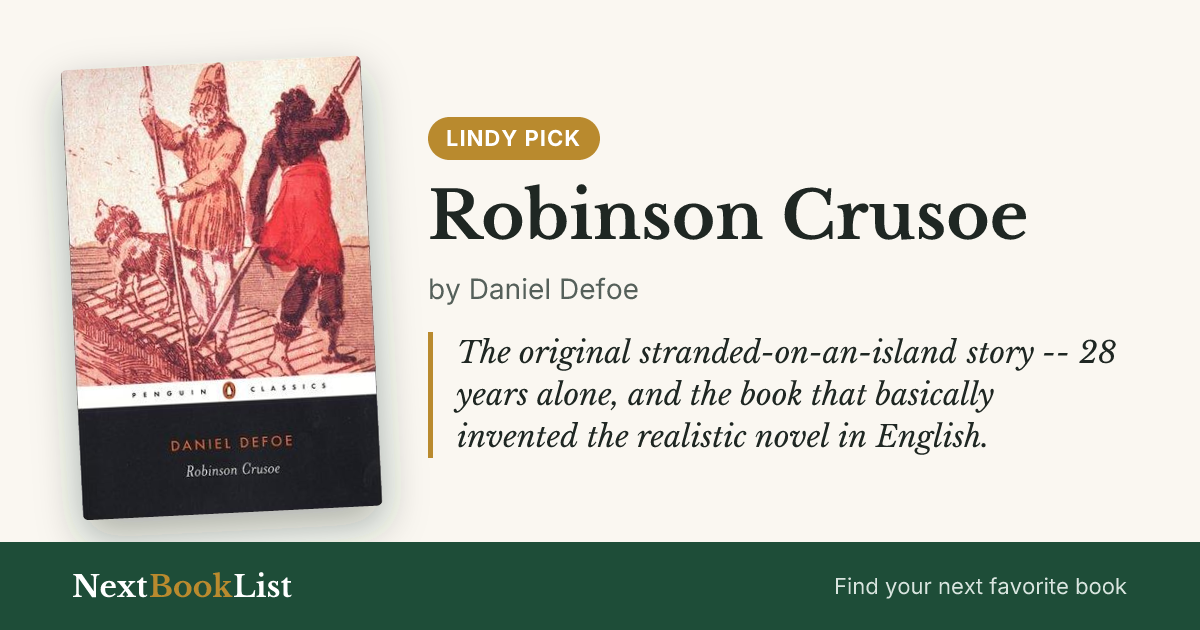
Robinson Crusoe
by Daniel Defoe · 1719
The original stranded-on-an-island story -- 28 years alone, and the book that basically invented the realistic novel in English.
Worth reading? This is worth reading as the origin point of an entire genre, but go in knowing what it is: a slow, journal-style 18th-century book with dated colonial attitudes in its second half. If you want a faster, less complicated survival story, most modern castaway fiction is a lighter read -- but none of it exists without this one.
| Author | Daniel Defoe |
|---|---|
| Published | 1719 |
| Publisher | Penguin Classics |
| Category | Fiction |
| Favorite quote | “It is never too late to be wise.” |
The Verdict
The survival details still work – rebuilding shelter, farming, keeping a calendar alone for years is genuinely gripping in a quiet way. What doesn’t work, and what you should go in expecting, is the second half’s treatment of Friday, which is a product of its era and needs to be read as one.
Skip it if you want a fast plot or a book that doesn’t require you to read critically at points. But as the actual origin of the castaway genre, and one of the first novels in English written like a believable first-person account, it’s a genuine landmark – just not an easy or uncomplicated one.
you want to read the source of every castaway story since (Swiss Family Robinson, Cast Away, even parts of survival-game design) and you're willing to sit with slow, journal-style 18th-century prose
you want fast pacing or a modern sense of plot -- long stretches are inventory-taking and religious reflection, and the book's colonial-era attitudes toward Friday and non-European people have aged badly and need to be read with that context, not around it
Book Summary
Crusoe survives a shipwreck and spends nearly three decades alone on an island, rebuilding civilization from scratch: shelter, farming, livestock, a calendar, a religious practice. Defoe wrote it as if it were a real memoir, in plain first-person prose, and that documentary style -- lists of supplies, practical problem-solving, day-by-day detail -- is a big part of why literary historians treat it as one of the first true novels in English.
Survival here is as much spiritual as practical. Crusoe reads his isolation as divine punishment and then as an opportunity for religious conversion, and the book keeps circling back to providence, gratitude, and self-reliance as much as it does rope-making and goat-herding.
The back half of the book, once Crusoe rescues "Friday" and other castaways, shifts the story's center from man-versus-nature to master-and-servant, and it's the part that dates the book hardest -- Crusoe's assumption of authority over Friday reflects the colonial attitudes of Defoe's era rather than anything the book seriously questions.
Top 8 Lessons from Robinson Crusoe
- Crusoe's methodical rebuilding of shelter, farming, and tools argues that patient, incremental competence beats panic in a survival situation.
- He keeps an inventory and a calendar almost obsessively -- tracking what you have and marking time are treated as ways to preserve sanity, not just logistics.
- Crusoe reinterprets his shipwreck as divine punishment and later as providence, showing how people build meaning out of disaster to make it survivable.
- His gratitude practice -- weighing what he has against what he's lost -- is presented as the actual difference between despair and endurance.
- The famous discovery of a single footprint in the sand turns Crusoe's solitude from peaceful to terrifying overnight, showing how much of his calm depended on being truly alone.
- Crusoe's assumption of authority over Friday reflects colonial-era attitudes the book doesn't seriously question -- worth reading critically, not just as adventure.
- Isolation forces Crusoe to become self-sufficient in skills (carpentry, farming, pottery) he'd never have learned in ordinary life.
- The book treats fear of a danger as often worse than the danger itself once it's actually faced.
Top 4 Quotes from Robinson Crusoe
"It is never too late to be wise."
Daniel Defoe, Robinson Crusoe
"Fear of danger is ten thousand times more terrifying than danger itself."
Daniel Defoe, Robinson Crusoe
"All our discontents about what we want appeared to me to spring from the want of thankfulness for what we have."
Daniel Defoe, Robinson Crusoe
"Let no man despise the secret hints and notices of danger, which sometimes are given him."
Daniel Defoe, Robinson Crusoe
Frequently Asked Questions
Is Robinson Crusoe worth reading?
Yes, as a historically important book -- it's the template for the castaway genre and one of the first novels in English. Go in expecting slow, journal-style pacing, not a thriller.
Is Robinson Crusoe hard to read?
The prose itself is plain, but the pacing is slow by modern standards -- long inventory lists and religious reflection take up real space.
What is the main theme of Robinson Crusoe?
Self-reliance and providence: Crusoe rebuilds a working life from nothing and interprets his survival as evidence of divine plan and personal gratitude.
Is Robinson Crusoe outdated?
In its treatment of Friday and non-European peoples, yes -- the book reflects early-18th-century colonial attitudes that modern readers should read critically rather than uncritically.
Ready to read it?
Get Robinson Crusoe on Amazon