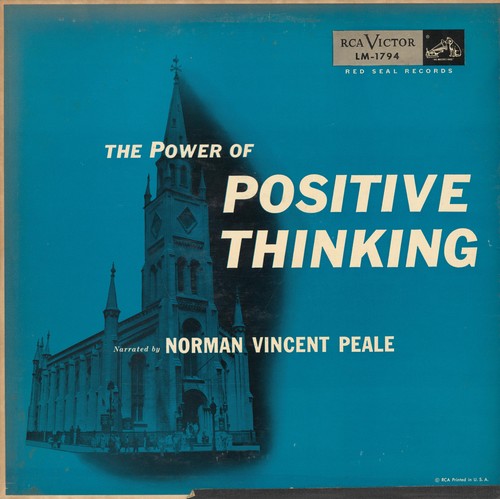
The Power of Positive Thinking
by Norman Vincent Peale · 1952
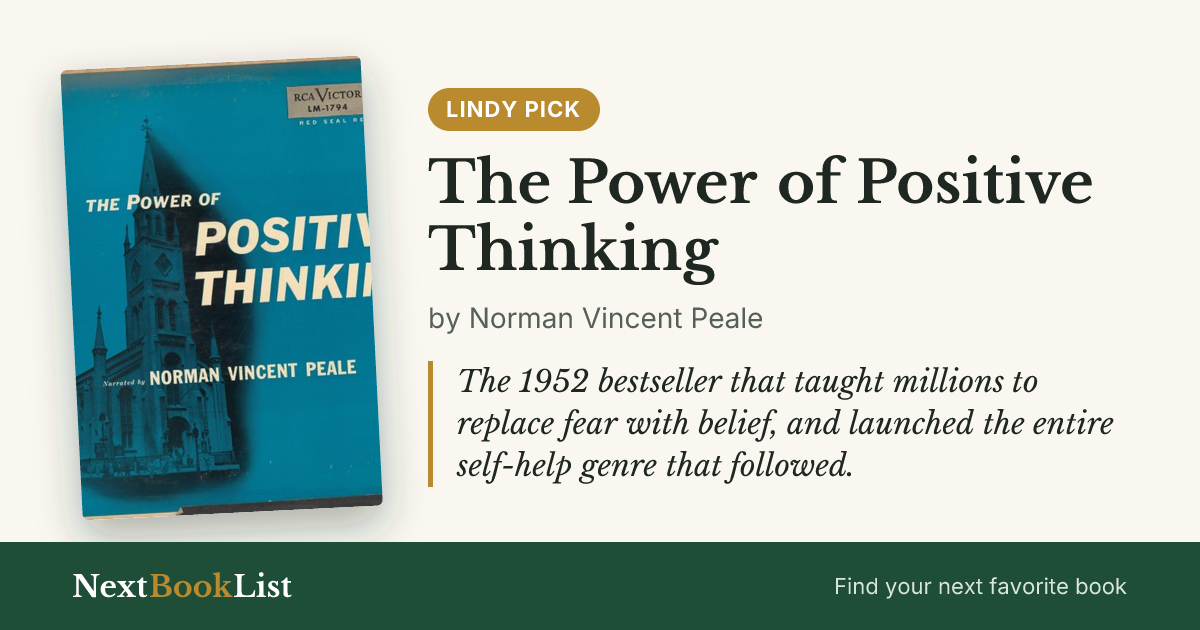
The 1952 bestseller that taught millions to replace fear with belief, and launched the entire self-help genre that followed.
Worth reading? Love it or roll your eyes at it, this 1952 book is the trunk of the entire self-help tree. Every 'change your mindset' book since is a secular descendant of Peale, and most are worse at it because they dropped the thing that made his version stick: a real practice, not just a slogan. It's dated and explicitly Christian, so read it for what it is, the popular origin of the idea that your inner monologue is a habit you can change. Cognitive behavioral therapy later proved the mechanism; Peale just got there first with a preacher's warmth. It's on the Lindy list because it's been continuously in print for 70+ years and spawned a genre. The idea, that you can rewire your default thinking, was radical in 1952 and is now mainstream. That's exactly the kind of survival this list rewards.
| Full Title | The Power of Positive Thinking |
|---|---|
| Author | Norman Vincent Peale |
| Published | 1952 |
| Publisher | Prentice Hall |
| Category | Self-Improvement & Psychology |
| Favorite quote | “Change your thoughts and you change your world.” |
The Verdict
Peale’s 1952 bestseller is the trunk of the entire self-help tree, the original popular case that your inner monologue is a habit you can change. 70 years of reprints and a whole genre descended from it.
Read it if you're held back by anxiety and want the original, gentle, faith-and-mind version of 'change your thinking, change your life.'
Skip it if you're allergic to religious framing or want evidence-based cognitive science. Peale predates the science and leans on faith.
Book Summary
Peale's central claim: your thoughts shape your life, and you can deliberately train your mind away from fear and toward confidence and belief. The book is a set of practices, not an argument, pray, visualize success, speak positively, assume the best.
It's explicitly faith-based; Peale was a minister and treats belief in God as the engine of the positive mind. That religious layer is why it landed so hard in 1950s America and stayed a perennial bestseller.
Modern cognitive therapy and the 'self-talk' industry are direct descendants. Peale was popularizing the idea that your inner monologue is a controllable habit decades before psychologists formalized it.
Top 10 Lessons from The Power of Positive Thinking
- Your thoughts shape your results. Train your mind deliberately instead of letting fear run the broadcast.
- Replace 'I can't' with a practiced assumption of capability. Repetition rewires the default.
- Belief, including faith, is presented as the engine of confidence. Peale's version is explicitly religious.
- Visualize the successful outcome before the event, not as magic but as rehearsal.
- Speak positively out loud. How you talk to yourself and others sets the emotional weather.
- Most of what we fear never happens. Anxiety is a poor predictor; act anyway.
- Assume the best of people and situations; expectancy changes how you show up, which changes the outcome.
- Daily habits of mind matter more than occasional effort. Peale's are devotional, prayer, affirmation, gratitude.
- Confidence is learnable. The book's whole premise is that you're not stuck with your current mindset.
- This is the root of the modern self-help tree. Almost every later 'think positive' book is a secular remake of Peale.
Top 5 Quotes from The Power of Positive Thinking
"Change your thoughts and you change your world."
Norman Vincent Peale, The Power of Positive Thinking
"Formulate and stamp indelibly on your mind a mental picture of yourself as succeeding. Hold this picture tenaciously. Never permit it to fade. Your mind will seek to develop the picture."
Norman Vincent Peale, The Power of Positive Thinking
"Stand up to an obstacle. Just stand up to it, that's all, and don't give way under it, and it will finally break. You will break it. Something has to break, and it won't be you, it will be the obstacle."
Norman Vincent Peale, The Power of Positive Thinking
"The way to happiness: Keep your heart free from hate, your mind from worry. Live simply, expect little, give much. Scatter sunshine, forget self, think of others. Try this for a week and you will be surprised."
Norman Vincent Peale, The Power of Positive Thinking
"People become really quite remarkable when they start thinking that they can do things. When they believe in themselves they have the first secret of success."
Norman Vincent Peale, The Power of Positive Thinking
Frequently Asked Questions
Is The Power of Positive Thinking religious?
Yes, explicitly. Peale was a minister and the book is built on faith and prayer as the engine of a positive mind. If you're not religious, take the mental-training framework and leave the theology.
Is it scientifically valid?
Not as written, Peale predates CBT. But the core, that practiced, repeated positive self-talk changes behavior, was later validated by cognitive science. The book is the popular ancestor of that research, not the research itself.
Why is it Lindy-qualified?
Seventy-plus years of continuous sales and a direct lineage to the entire modern self-help industry. It's the root text of a genre, which is about as durable as an idea gets.
Ready to read it?
Get The Power of Positive Thinking on Amazon