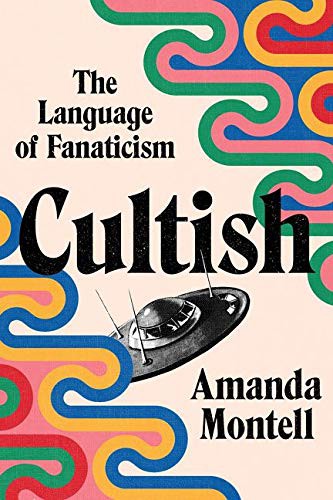
Cultish
by Amanda Montell · 2021
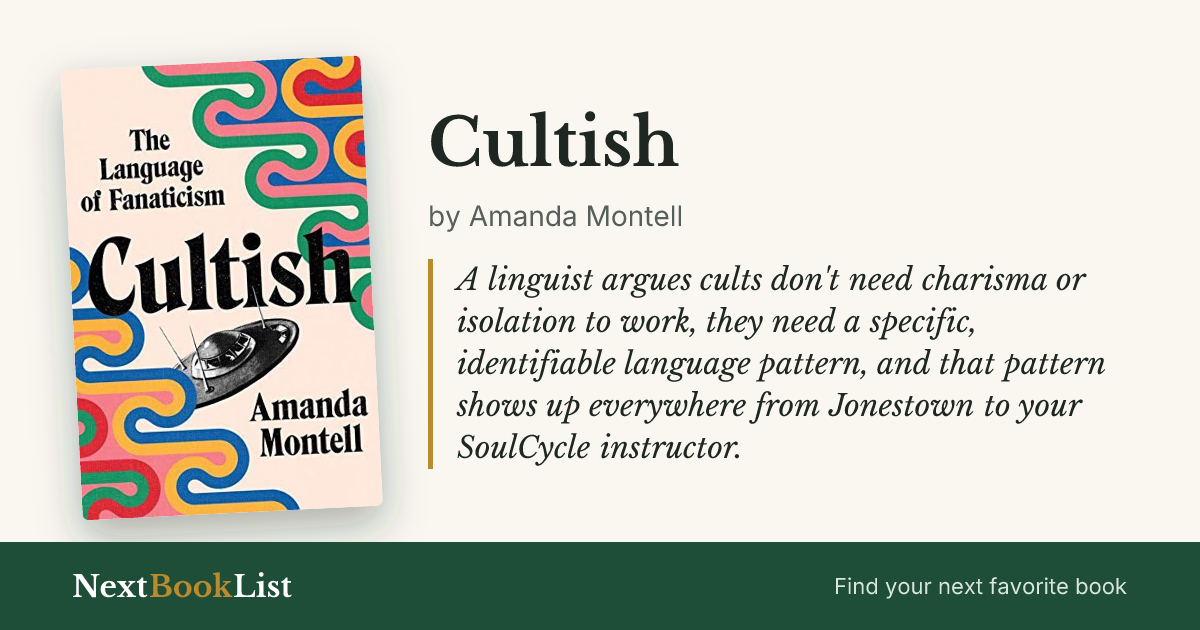
A linguist argues cults don't need charisma or isolation to work, they need a specific, identifiable language pattern, and that pattern shows up everywhere from Jonestown to your SoulCycle instructor.
Worth reading? Montell's linguistics background is the book's real differentiator -- rather than another true-crime cult retrospective, she analyzes the specific language patterns (loaded language, thought-terminating cliches, us-versus-them framing, love-bombing rhetoric) that recur across groups as different as Jonestown, Scientology, and modern 'cultish' fitness brands and multi-level marketing companies, arguing the mechanism is linguistic and psychological, not primarily about isolated compounds or singular charismatic leaders. It was named a best book of 2021 by NPR and captures a genuinely underexamined angle on why persuasive high-commitment groups work.
| Full Title | Cultish: The Language of Fanaticism |
|---|---|
| Author | Amanda Montell |
| Published | 2021 |
| Category | Sociology & Culture |
| Favorite quote | “Language is the key means by which cult leaders create an us-versus-them mentality, alter their followers' perceptions of the world, and keep them tethered to the group.” |
The Verdict
Montell’s linguistics training gives this a mechanism-level specificity most cult writing lacks – rather than asking why people join cults psychologically, she’s showing exactly which words and phrases do the actual persuasive work, which makes the patterns genuinely recognizable once you know what to listen for.
you want a linguistics-grounded look at how persuasive, high-commitment groups actually use language, spanning from historical cults to modern fitness brands and multi-level marketing
you want a purely historical or true-crime account of specific cults -- Montell's focus is the linguistic mechanism across many groups, not a deep single-cult narrative
Book Summary
Cult-like influence, per Montell's linguistic analysis, operates substantially through identifiable language patterns rather than requiring physical isolation or an obviously charismatic leader -- loaded language (jargon that reframes ordinary concepts in group-specific terms), thought-terminating cliches (stock phrases that shut down further questioning), and us-versus-them framing recur across groups regardless of their specific ideology or physical structure.
She extends this analysis well past historical religious cults into modern contexts most readers wouldn't initially categorize as "cultish" -- multi-level marketing companies, certain fitness brands and their instructor-follower dynamics, and even some online communities -- arguing that milder versions of the same linguistic techniques that built Jonestown's total control also show up, in diluted form, in far more ordinary, everyday high-commitment groups.
Top 7 Lessons from Cultish
- Cult-like influence operates substantially through identifiable language patterns, not just physical isolation or a singularly charismatic leader.
- Thought-terminating cliches -- stock phrases that shut down further questioning -- recur across ideologically different high-commitment groups.
- Us-versus-them framing and loaded, group-specific jargon are recurring linguistic techniques across cults and cult-adjacent organizations.
- Milder versions of cult linguistic techniques show up in more ordinary contexts: multi-level marketing, certain fitness brands, some online communities.
- Recognizing specific language patterns can help identify manipulative group dynamics before they escalate to more extreme control.
- A group doesn't need an isolated physical compound to exert cult-like psychological control -- language alone can build significant commitment and conformity.
- Analyzing persuasion through a linguistics lens, rather than psychology or true-crime narrative alone, surfaces mechanisms other approaches miss.
Top 4 Quotes from Cultish
"Language is the key means by which cult leaders create an us-versus-them mentality, alter their followers' perceptions of the world, and keep them tethered to the group."
Amanda Montell, Cultish
"Words are the medium through which belief systems are manufactured, nurtured, and reinforced, their fanaticism fundamentally could not exist without them."
Amanda Montell, Cultish
"Language doesn't work to manipulate people into believing things they don't want to believe; instead, it gives them license to believe ideas they're already open to."
Amanda Montell, Cultish
"For good or for ill, there is now a cult for everyone."
Amanda Montell, Cultish
Frequently Asked Questions
Is Cultish worth reading?
Yes -- it's a genuinely distinct angle on cult and high-commitment group dynamics, grounded in linguistics rather than true-crime narrative, and was named a best book of 2021 by NPR.
What is Cultish about?
Amanda Montell's linguistic analysis of the specific language patterns -- loaded jargon, thought-terminating cliches, us-versus-them framing -- that recur across cults and cult-adjacent groups, from Jonestown to modern fitness brands and multi-level marketing.
Is Cultish only about religious cults?
No -- Montell extends her analysis to modern contexts including multi-level marketing companies, fitness brand instructor-follower dynamics, and some online communities, arguing similar linguistic techniques operate in diluted form well beyond historical religious cults.
Who is Amanda Montell?
A linguist and author who also hosts the podcast Sounds Like a Cult, which won 'Best Emerging Podcast' at the 2023 iHeartRadio Podcast Awards, extending the book's core thesis into ongoing case studies.
Ready to read it?
Get Cultish on Amazon