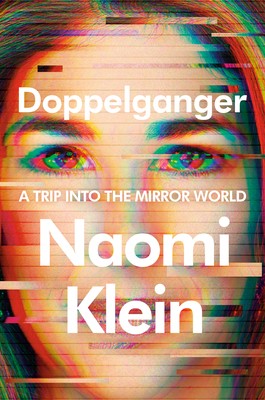
Doppelganger
by Naomi Klein · 2023
Naomi Klein keeps getting mistaken online for Naomi Wolf -- and uses the confusion to map how real grievances get hijacked into conspiracy theory.
Worth reading? Doppelganger is the most interesting explanation of how the political left and the conspiracy-minded right end up circling the same real problems -- surveillance capitalism, pharma power, inequality -- while blaming completely different villains. It runs long and gets personal in ways not every reader will want, but the 'diagonalism' framework alone is worth the read. Pair it with Anne Applebaum's Autocracy, Inc. for the international angle Klein doesn't cover.
| Full Title | Doppelganger: A Trip Into the Mirror World |
|---|---|
| Author | Naomi Klein |
| Published | 2023 |
| Publisher | Farrar, Straus and Giroux |
| Category | Sociology & Culture |
| Favorite quote | “No one makes themselves; we all make and unmake one another.” |
The Verdict
Klein’s smartest move is refusing to simply mock the conspiracy-minded people she’s writing about. She takes their underlying grievances seriously – corporate power, surveillance, pharma influence – and spends the book asking why that legitimate anger keeps getting funneled toward the wrong targets instead of the right ones.
It runs long, and the sections on her own family history and identity won’t be what every reader came for. But “diagonalism” is a genuinely useful term for something you’ve probably noticed and didn’t have a name for, and that alone makes the digressions worth sitting through.
you want to understand how legitimate distrust of Big Tech, pharma, and elites curdles into conspiracy culture without getting talked out of caring about the underlying problems
you want a straightforward media-criticism book -- this one is personal, digressive, and built around Klein's own identity as much as it is a systemic analysis
Book Summary
Klein was repeatedly mistaken online for Naomi Wolf, the former feminist writer who moved from mainstream commentary into COVID conspiracy theory. She uses the mix-up as a lens for exploring what she calls the "Mirror World" -- a political space where real grievances about corporate power, surveillance, and inequality get refracted into conspiracy narratives that misdirect blame away from the actual culprits. Central to the book is "diagonalism": the phenomenon of wellness and New Age communities merging with far-right politics around a shared distrust of institutions, even when their stated values would seem to place them at odds. Klein argues conspiracy theories often correctly sense that something is wrong -- corporate capture, algorithmic manipulation, pharma influence -- but consistently point the finger at the wrong villains, diverting rage into culture-war fights instead of structural ones. She connects her own Jewish family history and identity to a broader argument about "Shadow Lands" -- the people and places treated as disposable so that others can live comfortably -- and turns a critical eye on her own past blind spots as a way of modeling the self-examination she's asking of readers. The book's proposed answer isn't to mock conspiracy thinkers, but to out-organize the conditions that produce them.
Top 9 Lessons from Doppelganger
- Klein was repeatedly mistaken online for Naomi Wolf, who moved from feminist writer to COVID conspiracy figure.
- She uses the mix-up to explore a 'Mirror World' where legitimate grievances get refracted into conspiracy theories.
- 'Diagonalism' names the merger of wellness/New Age communities with far-right politics around shared distrust of institutions.
- Conspiracy theories often correctly identify real problems, like corporate capture and surveillance, but misdirect blame toward the wrong villains.
- Klein argues the political 'double' is a useful lens for understanding polarization -- people define themselves against their perceived opposite.
- Algorithmic social media is shown to reward personal brand-building over political nuance, pushing people toward more extreme positions.
- Klein connects her family's Jewish history to a broader argument about 'Shadow Lands' -- populations treated as disposable so others can live comfortably.
- She turns a critical eye on her own past work and blind spots, modeling the self-examination she asks of readers.
- The book's proposed response to conspiracy culture is not mockery, but addressing the real conditions that produce it.
Top 4 Quotes from Doppelganger
"No one makes themselves; we all make and unmake one another."
Naomi Klein, Doppelganger
"This is the perennial appeal of doppelgangers in novels and films: the idea that two strangers can be indistinguishable from each other taps into the precariousness at the core of identity—the painful truth that, no matter how deliberately we tend to our personal lives and public personas, the person we think we are is fundamentally vulnerable to forces outside of our control."
Naomi Klein, Doppelganger
"In the Mirror World, conspiracy theories detract attention from the billionaires who fund the networks of misinformation and away from the economic policies—deregulation, privatization, austerity—that have stratified wealth so cataclysmically in the neoliberal era. They rile up anger about the Davos elites, at Big Tech and Big Pharma—but the rage never seems to reach those targets. Instead it gets diverted into culture wars about anti-racist education, all-gender bathrooms, and Great Replacement panic directed at Black people, nonwhite immigrants, and Jews."
Naomi Klein, Doppelganger
"We must attempt, with great urgency, to imagine a world that does not require Shadow Lands, that is not predicated on sacrificial people and sacrificial ecologies and sacrificial continents. More than imagine it, we must begin, at once, to build it."
Naomi Klein, Doppelganger
Frequently Asked Questions
Is Doppelganger worth reading?
Yes, if you want a genuinely original framework for why conspiracy culture keeps recruiting people who started out with legitimate grievances. It's long and personal, but the core argument is sharp.
What is Doppelganger about?
Naomi Klein's exploration of the 'Mirror World' of conspiracy culture, using her own online mix-up with Naomi Wolf as a lens for how real grievances about power and inequality get diverted into misdirected outrage.
What is 'diagonalism' in Doppelganger?
Klein's term for the merger of wellness and New Age communities with far-right politics, bonded by shared distrust of mainstream institutions rather than shared ideology.
Who should read Doppelganger?
Readers interested in media criticism, polarization, and conspiracy culture. Skip it if you want a tightly structured, impersonal analysis rather than a discursive, memoir-inflected one.
Ready to read it?
Get Doppelganger on Amazon