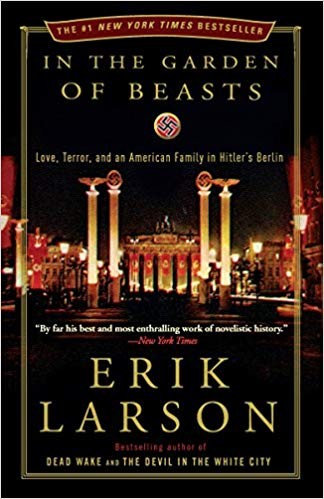
In the Garden of Beasts
by Erik Larson · 2011
America's first ambassador to Hitler's Germany brought his family to Berlin in 1933, including a daughter who dated Nazi officials before slowly realizing what she was actually witnessing.
Worth reading? Larson's central subjects, Ambassador William Dodd and especially his daughter Martha, offer a genuinely unusual vantage on 1933 Berlin: Americans living inside the machinery of Hitler's consolidation of power without the benefit of hindsight, initially skeptical that the Nazi regime was as dangerous as some warned, with Martha herself dating Nazi officials and Soviet intelligence officers before her views shifted. The book's tension comes from watching people slowly, imperfectly recognize a catastrophe unfolding around them in real time, rather than from a narrator who already knows how the story ends.
| Full Title | In the Garden of Beasts: Love, Terror, and an American Family in Hitler's Berlin |
|---|---|
| Author | Erik Larson |
| Published | 2011 |
| Category | History |
| Favorite quote | “Only mystics believe that they can see the future... but sometimes the past can predict it.” |
The Verdict
Larson’s choice to center a single family, rather than attempting comprehensive political history, is what gives the book its real tension – you’re watching people you’ve come to know personally slowly, imperfectly grasp what they’re actually witnessing, which lands harder than an omniscient historical narrator ever could.
you want a ground-level account of how ordinary Americans in Berlin watched Nazi Germany's rise, told through people who didn't yet know how the story would end
you want a comprehensive political or military history of the Nazi rise to power -- this stays close to one family's specific, limited vantage point in Berlin
Book Summary
William Dodd, a relatively unassuming history professor appointed ambassador somewhat by accident of circumstance, initially believed diplomatic engagement and patience could moderate the Nazi regime's behavior -- a view Larson shows eroding gradually and unevenly as Dodd witnessed escalating violence and repression firsthand, offering a case study in how reasonable people can underestimate an unfolding catastrophe when it doesn't match their existing assumptions.
His daughter Martha's arc is the book's more startling thread: she arrived in Berlin genuinely charmed by Nazi officials and the social scene around them, romantically involved with several regime figures and later a Soviet intelligence officer, before her own views shifted, illustrating how social and romantic proximity to a regime's individual representatives can obscure or delay recognition of its systemic danger.
Top 7 Lessons from In the Garden of Beasts
- Reasonable people, absent hindsight, can significantly underestimate an unfolding catastrophe when it contradicts their existing assumptions.
- Diplomatic patience and engagement can be a rational initial strategy that becomes dangerously inadequate as a situation escalates.
- Personal and romantic proximity to individual representatives of a regime can obscure recognition of that regime's systemic danger.
- Institutional caution (the State Department's reluctance to act) can delay appropriate response even when firsthand witnesses report escalating danger.
- Watching historical events unfold without the benefit of hindsight reveals how uncertain and gradual real-time recognition of catastrophe actually is.
- An ambassador's personal relationships and social standing can shape diplomatic assessment as much as formal intelligence reporting.
- Family members can arrive at radically different assessments of the same unfolding situation based on their specific social position within it.
Top 2 Quotes from In the Garden of Beasts
"Only mystics believe that they can see the future... but sometimes the past can predict it."
Erik Larson, In the Garden of Beasts
"There are no heroes here, at least not of the Schindler's List variety, but there are glimmers of heroism and people who behave with unexpected grace."
Erik Larson, In the Garden of Beasts
Frequently Asked Questions
Is In the Garden of Beasts worth reading?
Yes, especially for its ground-level, real-time perspective on the Nazi rise to power, told through an American family without the benefit of hindsight. It's narrower in scope than a comprehensive political history, and stronger for it.
What is In the Garden of Beasts about?
Erik Larson's account of William E. Dodd, America's first ambassador to Hitler's Germany in 1933, and his daughter Martha, who initially found Nazi Berlin's social scene charming before gradually recognizing the regime's danger.
Is In the Garden of Beasts a full history of Nazi Germany's rise?
No -- it stays close to the Dodd family's specific, limited vantage point in Berlin during 1933-1934, rather than providing a comprehensive political or military history of the broader period.
Who was Martha Dodd?
William Dodd's daughter, who arrived in Berlin genuinely charmed by the Nazi social scene, dated several regime officials and later a Soviet intelligence officer, before her views on the regime shifted -- one of the book's central, most startling threads.
Ready to read it?
Get In the Garden of Beasts on Amazon