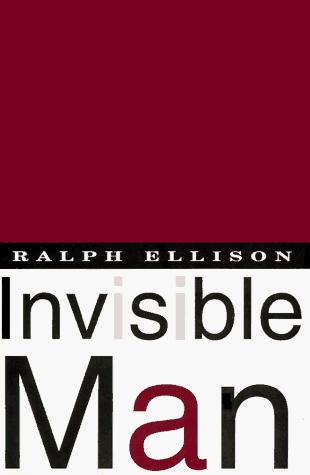
Invisible Man
by Ralph Ellison · 1952
An unnamed Black narrator claws his way through a series of institutions built to use him, and slowly realizes none of them ever intended to actually see him.
Worth reading? Invisible Man is the best novel about American identity and race written in the 20th century, and it earns that by refusing every easy answer -- Booker T. Washington-style accommodation, Marxist collectivism, Black nationalism, none of it survives contact with the narrator's actual experience. It's a harder read than Native Son but a deeper one; where Wright indicts a system, Ellison indicts every system, including the ones that claim to be on your side. Skip it if you want resolution -- the ending is a man in a hole, thinking, not a man who's won.
| Author | Ralph Ellison |
|---|---|
| Published | 1952 |
| Publisher | Vintage International |
| Category | Fiction |
| Favorite quote | “I am an invisible man.” |
The Verdict
The battle royal scene alone justifies the book’s reputation: blindfolded Black boys made to fight each other for a room full of drunk white men, then paid in coins that turn out to be fake. Ellison sets that template in the first chapter and spends five hundred pages proving it repeats in every “respectable” institution the narrator tries next – the college, the factory, the party.
What makes it better than most protest fiction of its era is that it doesn’t let any side off the hook, including the political left. If Native Son made you angry at a system, this one will make you suspicious of every group that claims to be the solution to it.
you want the defining American novel about identity, race, and being used by every system you try to join -- and you're willing to sit with a narrator who takes 500 pages to stop apologizing for himself
you want a tight, fast plot -- this is a sprawling, essayistic, sometimes surreal novel of ideas, closer to a series of escalating set pieces than a conventional arc
Book Summary
The narrator is 'invisible' not literally but socially -- every group he encounters (the college, the paint factory, the Brotherhood, Black nationalists) sees him only as what they need him to be: a symbol, a token, a tool, a threat. Nobody sees the actual person. Ellison's point is that this isn't a personal failing to overcome, it's structural, and it happens to him inside institutions that claim to be helping him just as much as ones that are openly hostile.
Every organization in the book that promises the narrator belonging and purpose (the Brotherhood most of all, a stand-in for the Communist Party) turns out to want him only as an instrument for its own agenda, discarding him the moment he stops being useful. Ellison, a former Communist Party sympathizer himself, is settling a real score: collectivist politics that claim to fight for Black Americans can still use them as props.
The novel ends with the narrator underground, literally and figuratively off the grid, having shed every identity assigned to him by every group. That isolation isn't presented as victory, but it's also not defeat -- it's the only space he's found where he can think without being used, and the closing question ('who knows but that, on the lower frequencies, I speak for you?') turns his private retreat into an address to the reader directly.
Top 9 Lessons from Invisible Man
- Every institution the narrator joins wants to use him as a symbol, not know him as a person -- visibility and instrumentalization aren't the same thing.
- The college that expels him for showing a white trustee the 'wrong' side of Black life is run by a Black man (Dr. Bledsoe) who has fully internalized the system's terms to survive it.
- The Brotherhood (Ellison's Communist Party stand-in) treats the narrator's individuality as a liability to be managed, not an asset to be respected.
- The battle royal scene sets the template early: Black men are made to fight each other for white amusement, then paid in counterfeit coin -- literal and symbolic.
- Ras the Exhorter's Black nationalism offers pride but demands the same conformity the narrator has been fleeing all along.
- The narrator's grandfather's deathbed advice ('overcome 'em with yeses, undermine 'em with grins') haunts the book as a strategy of subversive compliance the narrator never fully masters or rejects.
- Going underground and stealing electricity from the city to light 1,369 lightbulbs is the narrator's only act of unmediated self-assertion in the whole novel.
- The novel refuses every ideology it stages (accommodation, Communism, nationalism) as a complete answer to the problem of being unseen.
- Names and identities are repeatedly taken from the narrator (he's never given one) or assigned to him (Rinehart, the Brotherhood's chosen persona) -- selfhood has to be built in spite of that, not handed to him.
Top 5 Quotes from Invisible Man
"I am an invisible man."
Ralph Ellison, Invisible Man
"I am invisible, understand, simply because people refuse to see me."
Ralph Ellison, Invisible Man
"When I discover who I am, I'll be free."
Ralph Ellison, Invisible Man
"Life is to be lived, not controlled; and humanity is won by continuing to play in face of certain defeat."
Ralph Ellison, Invisible Man
"Who knows but that, on the lower frequencies, I speak for you?"
Ralph Ellison, Invisible Man
Frequently Asked Questions
Is Invisible Man worth reading?
Yes -- it's the deepest American novel of its era on identity and race, and it holds up because it refuses every ideology it stages as a complete answer. Skip it only if you specifically want a fast, plot-driven read.
What is the main theme of Invisible Man?
That institutions, even ones claiming to help, tend to see people as symbols or tools rather than individuals -- and that real selfhood has to be built in spite of that, not granted by any group.
Is Invisible Man hard to read?
Yes, moderately -- it's long, essayistic in places, and shifts between realism and surreal set pieces (the battle royal, the paint factory explosion, the riot). The prose itself is clear and often very funny.
How does Invisible Man end?
The narrator is living underground, having shed the identities assigned to him by every institution, addressing the reader directly and asking whether his story speaks for them too.
Ready to read it?
Get Invisible Man on Amazon