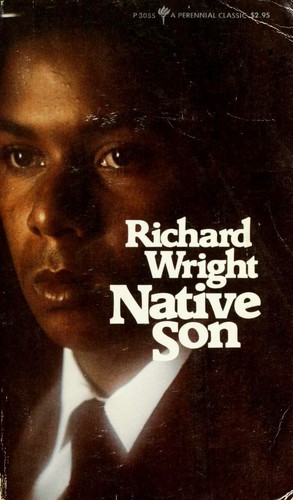
Native Son
by Richard Wright · 1940
A young Black man in 1930s Chicago accidentally kills a white woman -- and the novel forces you to watch a racist system produce exactly the monster it claimed to fear.
Worth reading? Native Son still hits harder than most later novels covering the same ground because Wright refuses the safety of a wrongly-accused hero -- Bigger is guilty, and the novel makes you understand how he got there anyway. That's a harder, more honest book than a comfortable injustice narrative.
| Author | Richard Wright |
|---|---|
| Published | 1940 |
| Publisher | Harper Perennial |
| Category | Fiction |
| Favorite quote | “Maybe it was crime, murder, that made this new picture of himself, this new pride.” |
The Verdict
The courtroom section is where the book turns from novel to argument, and it works because Wright lets the legal defense’s sociological framing feel both true and still somehow insufficient – explaining Bigger doesn’t excuse him, and the book never pretends otherwise.
you want the novel that broke ground for showing systemic racism's psychological damage from inside a character society had already decided to condemn
you want a sympathetic protagonist in the conventional sense -- Bigger Thomas is written to be genuinely hard to like, which is the point, not a flaw
Book Summary
Bigger Thomas's fear, rage, and eventual violence are presented not as inherent traits but as the predictable product of poverty, segregation, and constant surveillance -- Wright's argument is that society manufactures the very danger it claims to be protecting itself from.
The novel's three-part structure (Fear, Flight, Fate) tracks how little control Bigger actually has over his own narrative once the machinery of the legal system and media takes over -- he becomes a symbol to everyone (his lawyer included) before he's ever treated as a person.
Wright deliberately makes Bigger unsympathetic in conventional terms -- not a wrongly accused innocent, but someone whose crime is real and whose interior life is still worth examining honestly, which was a radical choice for its time.
Top 7 Lessons from Native Son
- Systemic conditions (poverty, segregation, constant threat) can produce the exact behavior a society claims to fear and condemn.
- Fear operating over a long enough time becomes indistinguishable from rage.
- Being turned into a symbol (by the press, the courts, even well-meaning allies) strips a person of their actual individuality.
- A legal defense built on sociology can still fail to see the defendant as a full person.
- Constant surveillance and suspicion shape behavior long before any actual crime occurs.
- Wright refuses easy sympathy for his protagonist on purpose, forcing readers to examine root causes instead of just rooting for an innocent victim.
- Economic desperation and racial terror are shown as compounding, not separate, forces.
Top 4 Quotes from Native Son
"Maybe it was crime, murder, that made this new picture of himself, this new pride."
Richard Wright, Native Son
"He was living, truly and deeply, no matter what others might think, looking at him with their blind eyes."
Richard Wright, Native Son
"The moment a man's mind and body is oriented toward violence, or planned or wished-for violence, its impossible ever fully to gauge the depth of the smoldering hate."
Richard Wright, Native Son
"What I killed for, I am!"
Richard Wright, Native Son
Frequently Asked Questions
Is Native Son worth reading?
Yes -- it's a foundational American novel on systemic racism's psychological toll, and it doesn't take the easier path of an innocent protagonist.
Is Native Son hard to read?
Emotionally, yes -- the violence and Bigger's interior rage are unflinching. The prose itself is straightforward and propulsive.
What is the main theme of Native Son?
That racist, poverty-driven conditions produce the very violence society claims to fear -- Bigger's crime is presented as manufactured by his environment, not an inherent trait.
Who should read Native Son?
Readers who want an unflinching, foundational look at how systemic racism shapes behavior, without a conventionally sympathetic protagonist to soften it.
Ready to read it?
Get Native Son on Amazon