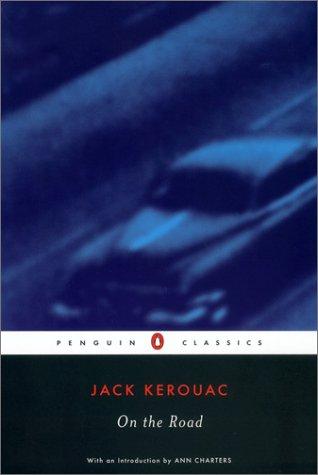
On the Road
by Jack Kerouac · 1957
A restless writer and his chaotic, magnetic friend Dean Moriarty crisscross postwar America chasing jazz, women, and a feeling neither of them can quite name.
Worth reading? On the Road is the best road-trip novel ever written because Kerouac's prose actually moves like the trips it describes -- long, breathless, rhythmic sentences that mimic driving all night on no sleep. It beats every road novel that came after it on sheer sentence-level energy. Skip it if you find Dean Moriarty's charisma-as-excuse-for-selfishness grating rather than magnetic -- a lot of readers do, and the book doesn't fully disagree with them by the end.
| Author | Jack Kerouac |
|---|---|
| Published | 1957 |
| Publisher | Penguin Classics |
| Category | Fiction |
| Favorite quote | “The only people for me are the mad ones, the ones who are mad to live, mad to talk, mad to be saved, desirous of everything at the same time, the ones who never yawn or say a commonplace thing, but burn, burn, burn, like fabulous yellow roman candles exploding like spiders across the stars.” |
The Verdict
What holds up best isn’t the road trips themselves, it’s the sentence-level style – Kerouac writes movement the way jazz musicians play it, in long unbroken runs that build momentum instead of stopping for breath. That’s the real reason this became a Beat Generation bible instead of just a travelogue.
What holds up worst is Dean Moriarty, and the book knows it by the final pages. If you can hold both of those at once (the electric prose and the guy who’s genuinely bad news for everyone around him), this is essential. If Dean grates on you from page one, it won’t get better.
you want the book that defined the Beat Generation and basically invented the modern road-trip novel -- restless, rhythmic, in love with motion for its own sake
you need a plot with stakes -- this is a mood and a voice more than a story, it's episodic by design, and Dean Moriarty's charm wears thin fast if you're not on his wavelength
Book Summary
The novel isn't really about destinations, it's about the state of being in motion -- Sal Paradise and Dean Moriarty cross the country repeatedly not to arrive anywhere meaningful but because movement itself is the point, a rejection of postwar American stability and settledness.
Dean Moriarty is presented as magnetic and vital early on, someone who lives entirely in the present without guilt or planning, but the novel gradually reveals the cost of that -- abandoned wives, children, and friends left stranded, including Sal himself in the book's final, quietly devastating scene. Kerouac lets you fall for Dean the way Sal does, then lets you watch the bill come due.
The prose style itself, based on what Kerouac called 'spontaneous prose,' is the argument as much as the plot is -- long unbroken sentences meant to capture consciousness and momentum in real time, influenced by jazz improvisation, prioritizing rhythm and feeling over careful structure.
Top 8 Lessons from On the Road
- The trips aren't really about the destinations -- movement itself is the point, a rejection of postwar settledness and stability.
- Dean Moriarty's charisma is presented uncritically at first, then the novel slowly shows its cost: abandoned wives, children, and friends.
- Sal Paradise is a writer figure observing Dean as much as living alongside him -- the book is partly about the difference between living a wild life and narrating one.
- The 'spontaneous prose' style (long, unbroken, rhythmic sentences) is meant to mimic real-time consciousness and jazz improvisation, not careful plotting.
- Jazz clubs and Black musical culture are treated by Sal with a romanticizing, outsider's admiration that reads as more complicated (and more dated) with modern eyes.
- The road itself becomes almost a character -- specific landscapes, diners, and hitchhiking stretches are rendered with more loving detail than most of the human relationships.
- The novel's ending, where Dean is left standing in the cold after finally being abandoned in turn, undercuts the romance of his lifestyle without fully condemning it.
- Sal's search for 'IT' -- a peak, ecstatic moment of pure experience -- never fully resolves, which is arguably the book's most honest point about the Beat pursuit of meaning.
Top 4 Quotes from On the Road
"The only people for me are the mad ones, the ones who are mad to live, mad to talk, mad to be saved, desirous of everything at the same time, the ones who never yawn or say a commonplace thing, but burn, burn, burn, like fabulous yellow roman candles exploding like spiders across the stars."
Jack Kerouac, On the Road
"Nothing behind me, everything ahead of me, as is ever so on the road."
Jack Kerouac, On the Road
"The road is life."
Jack Kerouac, On the Road
"Somewhere along the line I knew there'd be girls, visions, everything; somewhere along the line the pearl would be handed to me."
Jack Kerouac, On the Road
Frequently Asked Questions
Is On the Road worth reading?
Yes, if you want the book that defined the Beat Generation and the modern road-trip novel. Skip it if you need a strong plot -- it's episodic and mood-driven by design.
What is the main theme of On the Road?
The pursuit of freedom and pure experience through constant motion, and the real cost that lifestyle has on the people left behind.
Is On the Road based on a true story?
Yes, closely. Sal Paradise is Kerouac himself and Dean Moriarty is based on his real friend Neal Cassady; most of the trips described actually happened.
Is On the Road hard to read?
Not difficult exactly, but the long, unbroken 'spontaneous prose' sentences take some adjusting to, and the lack of conventional plot can feel meandering if you're not tuned to the rhythm.
Ready to read it?
Get On the Road on Amazon