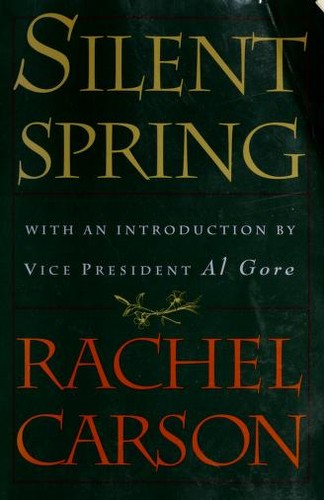
Silent Spring
by Rachel Carson · 1962
Rachel Carson's case against pesticides didn't just warn about dead birds and poisoned rivers -- it got DDT banned and effectively created the modern environmental movement.
Worth reading? Silent Spring earns its place as one of the most consequential nonfiction books of the 20th century for a simple reason: it worked. Carson documented, in plain and often lyrical prose, how indiscriminate pesticide use (especially DDT) was moving up the food chain and devastating bird populations, and the public and political response led directly to the U.S. DDT ban and the creation of the EPA. It's dated in its specific chemistry, but the underlying argument -- that we routinely deploy powerful technologies faster than we understand their consequences -- hasn't aged a day.
| Author | Rachel Carson |
|---|---|
| Published | 1962 |
| Category | Science & Nature |
| Favorite quote | “The 'control of nature' is a phrase conceived in arrogance, born of the Neanderthal age of biology and philosophy, when it was supposed that nature exists for the convenience of man.” |
The Verdict
Carson was already a well-known nature writer before this book, and that literary skill is why Silent Spring reads more like narrative nonfiction than a policy paper – part of why it reached a mass audience instead of staying in scientific journals. It’s been in continuous print for over 60 years, which on this site’s Lindy filter alone makes it a foundational pick for the category.
you want the book credited with launching the modern environmental movement and getting DDT banned in the U.S. -- still readable, still relevant, six decades later
you want current, up-to-date pesticide science -- this is a 1962 book, and while its core argument (unchecked chemical use has ecological costs) holds up, the specific chemistry and regulatory landscape have moved on substantially since
Book Summary
Carson's argument is that pesticides like DDT don't stay where they're sprayed -- they move through soil, water, and the food chain, concentrating as they go (a process now called bioaccumulation), so that birds of prey and other animals far from any farm accumulate lethal or reproduction-damaging doses. The book's title refers to a spring gone silent because the birds that should be singing in it have been poisoned out of existence, a deliberately evocative image for what was, at the time, an obscure chemistry problem.
Beyond the specific science, Carson's deeper argument is about hubris: that humans had begun deploying immensely powerful synthetic chemicals across entire ecosystems with almost no understanding of the downstream consequences, driven by an agricultural industry with every incentive not to look too closely. She wasn't arguing for banning pesticides outright, but for genuine scientific accountability before mass deployment -- a much harder sell to a chemical industry that fought the book aggressively on publication.
Top 8 Lessons from Silent Spring
- Pesticides like DDT don't stay localized -- they move through soil, water, and the food chain, concentrating in predators at the top (bioaccumulation).
- DDT specifically thinned the eggshells of birds of prey, nearly wiping out species like the bald eagle and peregrine falcon before the ban.
- The agricultural and chemical industries in the 1950s and 60s deployed new pesticides at massive scale with very little independent, long-term safety research.
- Carson wasn't arguing pesticides should never be used -- she argued for scientific scrutiny and targeted use over indiscriminate mass spraying.
- The chemical industry mounted a coordinated, well-funded campaign to discredit Carson personally rather than engage with the science, a pattern that's recurred in later environmental and public-health controversies.
- Silent Spring's public reception directly contributed to the creation of the U.S. Environmental Protection Agency in 1970.
- The 1972 U.S. ban on DDT for agricultural use is traced directly to the political momentum this book generated.
- Carson's core warning -- that powerful technologies can be deployed faster than their ecological consequences are understood -- has been repeatedly reapplied to later chemical, industrial, and technological debates.
Top 4 Quotes from Silent Spring
"There was once a town in the heart of America where all life seemed to live in harmony with its surroundings."
Rachel Carson, Silent Spring
"In nature nothing exists alone."
Rachel Carson, Silent Spring
"The 'control of nature' is a phrase conceived in arrogance, born of the Neanderthal age of biology and philosophy, when it was supposed that nature exists for the convenience of man."
Rachel Carson, Silent Spring
"Man is a part of nature, and his war against nature is inevitably a war against himself."
Rachel Carson, Silent Spring
Frequently Asked Questions
Did Silent Spring get DDT banned?
Yes, indirectly but directly traceably -- the book's public and political impact led to the U.S. banning DDT for agricultural use in 1972, a decade after publication, and to the creation of the EPA in 1970.
Is Silent Spring still accurate today?
The core ecological argument (pesticides bioaccumulate and cause unintended downstream harm) holds up well; the specific 1962 chemistry and regulatory context are of course dated, so read it as the foundational argument, not a current pesticide guide.
Was Silent Spring controversial when it was published?
Extremely -- the chemical industry ran an aggressive campaign to discredit Carson personally, including attacking her credentials as a woman scientist, rather than substantively rebutting her research.
Is Silent Spring anti-pesticide entirely?
No. Carson explicitly argued for more careful, targeted use and independent safety research, not a total ban on all pesticides -- a nuance that's often lost in how the book gets summarized.
Ready to read it?
Get Silent Spring on Amazon