Best Medical and Biology Books: 4 That Explain the Body

Updated July 15, 2026 · 4 books

Best Medical and Biology Books: 4 That Explain the Body: ranked list of 4 books

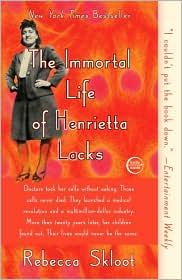
Start with The Immortal Life of Henrietta Lacks. In 1951, doctors took cancer cells from a Black woman named Henrietta Lacks without her knowledge or consent, and those cells — nicknamed HeLa — became the foundation of modern cell biology, used to develop the polio vaccine, cancer treatments, and IVF, while her own family lived in poverty for decades without knowing any of it happened. Rebecca Skloot tells the science and the injustice together, and neither half works without the other.

Everything Is Tuberculosis pairs with it as the disease-history entry, except the disease in question isn’t history — TB still kills more people worldwide than almost any other infectious disease, concentrated almost entirely in countries without reliable access to a cure that’s existed for decades. John Green writes it as both a 19th-century cultural history (TB as the “romantic” disease of poets) and a present-tense argument about who gets treated and who doesn’t.

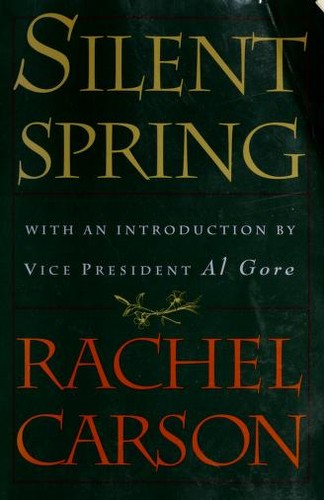
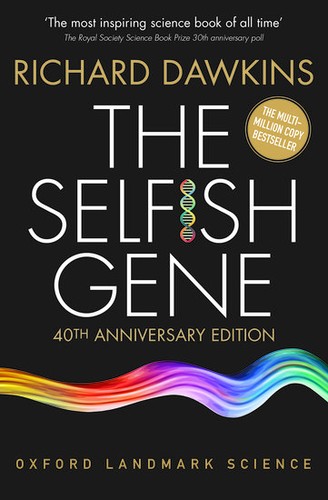
The Selfish Gene and Silent Spring are the two older books here, and both are still the standard reference rather than a historical curiosity. Dawkins reframed the gene, not the organism, as the actual unit that evolution selects for — a shift in framing biologists still work from. Rachel Carson documented pesticide damage carefully enough in 1962 to launch the modern environmental movement, and the book still reads as an argument rather than a museum piece.

A small list on purpose. Medical and biology books that try to cover everything usually end up covering nothing well — these four earn their place by being precise about one thing each.

Quick Comparison

#BookBest for
1The Immortal Life of Henrietta LacksRebecca Sklootyou want the full, human story behind the HeLa cells used in nearly every major medical breakthrough since 1951, and the racial and ethical exploitation baked into how they were obtainedAmazon
2Everything Is TuberculosisJohn Greenyou want a short, humane book on why a solved medical problem still kills over a million people a yearAmazon
3The Selfish GeneRichard Dawkinsyou want the book that popularized gene-centered evolution and coined the word 'meme' -- nearly 50 years old and still the standard popular introduction to how natural selection actually works at the genetic levelAmazon
4Silent SpringRachel Carsonyou want the book credited with launching the modern environmental movement and getting DDT banned in the U.S. -- still readable, still relevant, six decades laterAmazon

The Books

The Immortal Life of Henrietta Lacks by Rebecca Skloot book cover

1. The Immortal Life of Henrietta Lacks

Rebecca Skloot · 2010

In 1951, doctors took cells from a poor Black woman's cervix without asking -- those cells never died, built modern medicine, and her family didn't find out for twenty years.

The book directly contributed to public pressure that led to real policy discussion around informed consent for tissue research, and to a later settlement between the Lacks family and a company profiting off HeLa-derived products. That’s a rare case of a book actually changing the situation it documents, not just describing it.

Read it if: you want the full, human story behind the HeLa cells used in nearly every major medical breakthrough since 1951, and the racial and ethical exploitation baked into how they were obtained

Skip it if: you're looking for a clean science book about cell biology -- this is a journalist's decade-long investigation into a family and a medical-ethics scandal, with the science as backdrop, not the main event
Full verdict: The Immortal Life of Henrietta Lacks →

Everything Is Tuberculosis by John Green book cover

2. Everything Is Tuberculosis

John Green · 2025

The world's oldest, deadliest infectious disease is curable, and we've simply decided not to cure everyone.

Green does the thing good narrative nonfiction is supposed to do: he takes a statistic (over a million TB deaths a year, from a curable disease) and makes it impossible to look away from by attaching it to one kid, Henry, whose survival became a fight against a system, not just a bacterium.

It’s a short book that argues bigger than its page count. Green isn’t neutral about who’s responsible for TB still killing people in 2025, and he shouldn’t be – the case he builds for drug pricing and access as the real disease is hard to argue with once you’ve read it.

Read it if: you want a short, humane book on why a solved medical problem still kills over a million people a year

Skip it if: you want a purely clinical history of TB with no argument attached -- Green is making a moral case, not just telling a story

Full verdict: Everything Is Tuberculosis →

The Selfish Gene by Richard Dawkins book cover

3. The Selfish Gene

Richard Dawkins · 1976

Richard Dawkins reframes evolution around the gene, not the individual or the species -- and argues you're best understood as a survival machine your genes built to copy themselves.

Dawkins wrote this as a synthesizer of existing research (particularly W.D. Hamilton’s work on kin selection), not as the originator of gene-centered evolution – his real contribution was making a genuinely technical argument readable and durably popular. Nearly 50 years in print with no serious competitor for “best popular introduction to the topic” says the synthesis worked.

Read it if: you want the book that popularized gene-centered evolution and coined the word 'meme' -- nearly 50 years old and still the standard popular introduction to how natural selection actually works at the genetic level

Skip it if: you're looking for a book about individual free will or moral philosophy -- Dawkins is making a narrow, technical argument about the unit of selection in evolutionary biology, and readers sometimes mistake his 'selfish gene' metaphor for a claim about human moral character, which he explicitly says it isn't

Full verdict: The Selfish Gene →

Silent Spring by Rachel Carson book cover

4. Silent Spring

Rachel Carson · 1962

Rachel Carson's case against pesticides didn't just warn about dead birds and poisoned rivers -- it got DDT banned and effectively created the modern environmental movement.

Carson was already a well-known nature writer before this book, and that literary skill is why Silent Spring reads more like narrative nonfiction than a policy paper – part of why it reached a mass audience instead of staying in scientific journals. It’s been in continuous print for over 60 years, which on this site’s Lindy filter alone makes it a foundational pick for the category.

Read it if: you want the book credited with launching the modern environmental movement and getting DDT banned in the U.S. -- still readable, still relevant, six decades later

Skip it if: you want current, up-to-date pesticide science -- this is a 1962 book, and while its core argument (unchecked chemical use has ecological costs) holds up, the specific chemistry and regulatory landscape have moved on substantially since

Full verdict: Silent Spring →

Frequently Asked Questions

What is the best medical ethics book?

The Immortal Life of Henrietta Lacks. Rebecca Skloot tells the story of a Black woman whose cancer cells were taken without her knowledge in 1951 and used to build modern cell biology — vaccines, cancer research, IVF — while her family remained poor and uninformed for decades. It's the clearest case study in medical consent you'll read.

Is Everything Is Tuberculosis about a disease that's actually over?

No, which is the entire point. John Green traces tuberculosis from a 19th-century romantic killer to a disease that still kills over a million people a year today, almost all in countries with the least access to the cure that already exists. It's history and current-events journalism at once.

What is the most important book on this list?

The Selfish Gene, if you're measuring by influence. Richard Dawkins reframed evolution around the gene as the actual unit of selection rather than the individual or species, and that reframe still shapes how biologists think fifty years later.

Are Silent Spring and The Selfish Gene too old to still be useful?

No — they're the standard reference for a reason. Silent Spring (1962) launched the modern environmental movement by documenting pesticide damage to ecosystems, and The Selfish Gene (1976) still holds up as the clearest explanation of gene-level evolution. Both have outlasted most books written about them since.

Keep Reading