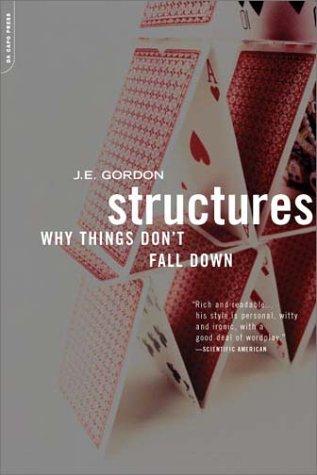
Structures
by J.E. Gordon · 1978
A structural engineer explains, in plain and often funny English, why bridges stand, why bones don't shatter, and why some materials are strong in ways that have nothing to do with how 'strong' they sound.
Worth reading? Gordon, a structural engineer with a knack for plain-English explanation, covers why some materials that sound weak (like bone, or wood) outperform materials that sound strong, why cracks propagate the way they do, and how ancient builders solved structural problems without modern physics, all without requiring math beyond basic algebra. Musk has called it 'a really, really good primer on structural design,' and it's easy to see why an engineer-minded founder would love a book that makes real physical intuition this accessible. Read it as the best plain-language primer on why physical structures work the way they do. Skip it only if you already have this material from formal training.
| Full Title | Structures: Or Why Things Don't Fall Down |
|---|---|
| Author | J.E. Gordon |
| Published | 1978 |
| Category | Science & Nature |
The Verdict
This is the rare technical book that a total beginner and a working engineer can both learn from, because Gordon builds real intuition instead of hiding behind equations. If you’ve ever wondered why a bridge doesn’t just fall down, this is the book that actually answers it.
readers who want a genuinely accessible introduction to structural engineering and materials science
you already have formal engineering training, this is written for total beginners
Book Summary
Gordon's core teaching method is building genuine physical intuition rather than formula-memorization: he explains why a material's strength depends heavily on how it handles cracks and stress concentration, not just raw tensile strength, using examples from bone density to bridge collapses to explain concepts most engineering textbooks bury in equations.
He also weaves in the history of structural failure and discovery, arguing that much of what we know about why structures work came from carefully studying why they failed, and that pre-modern builders (cathedral architects, shipwrights) often developed sound structural intuitions through trial and error long before formal engineering science existed to explain why their solutions worked.
Top 7 Lessons from Structures
- A material's real strength depends heavily on crack resistance and stress distribution, not just raw tensile strength.
- Studying structural failures teaches more about engineering principles than studying successes alone.
- Pre-modern builders often solved structural problems correctly through trial and error before formal theory explained why.
- Physical intuition, built through clear examples, can convey engineering concepts more effectively than equations alone.
- Bone and wood outperform materials that 'sound' stronger because of how they handle stress, not raw hardness.
- Understanding why something breaks is often more instructive than understanding why it holds.
- Accessible technical writing (no advanced math required) can still convey genuinely rigorous engineering concepts.
Frequently Asked Questions
Is Structures worth reading?
Yes, it's widely regarded as the most accessible entry point into structural engineering and materials science, requiring no advanced math background.
What is Structures: Or Why Things Don't Fall Down about?
J.E. Gordon's plain-English explanation of why bridges, bones, and buildings hold up (or fail), covering material strength, crack propagation, and the history of structural discovery through failure.
Why does Elon Musk recommend Structures?
Musk has called it a genuinely good primer on structural design, useful for building real physical intuition about why things hold together, relevant to his engineering-heavy work at SpaceX and Tesla.
Ready to read it?
Get Structures on Amazon