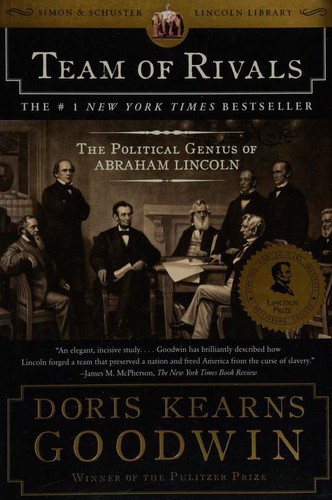
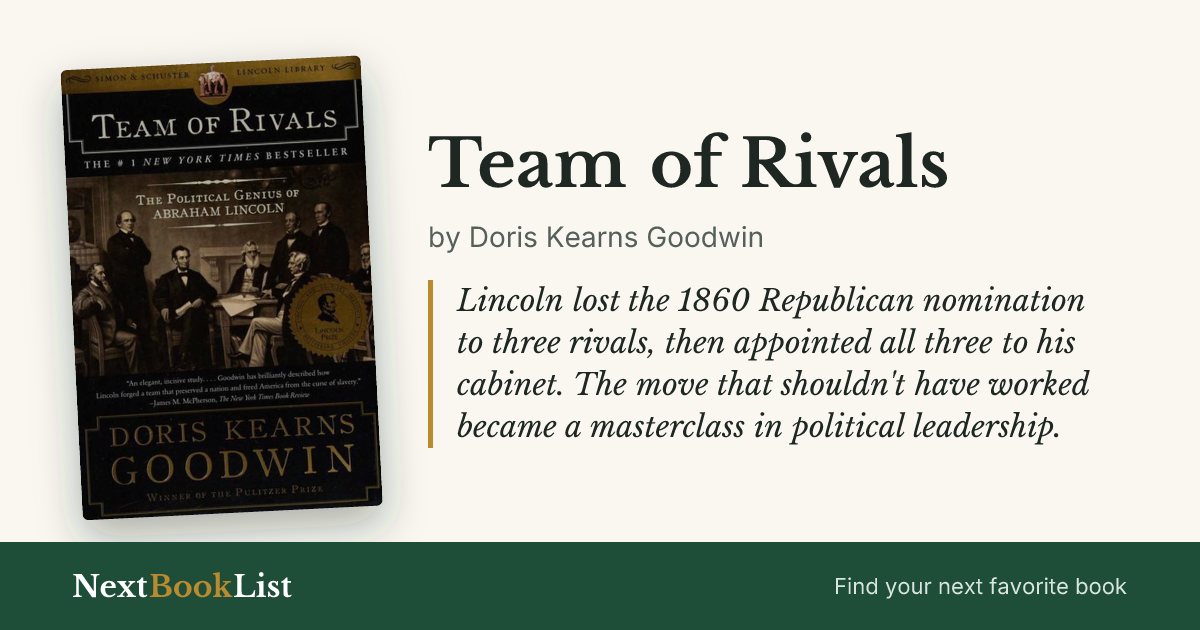
Team of Rivals
by Doris Kearns Goodwin · 2005
Lincoln lost the 1860 Republican nomination to three rivals, then appointed all three to his cabinet. The move that shouldn't have worked became a masterclass in political leadership.
Worth reading? Team of Rivals is built around one genuinely unusual decision: after winning the 1860 Republican nomination over three better-known, more experienced rivals -- William Seward, Salmon Chase, and Edward Bates -- Lincoln appointed all three to his cabinet, turning former opponents into direct subordinates managing a nation heading into civil war. Goodwin's account, which inspired Spielberg's film Lincoln, treats this as Lincoln's defining political genius: an unusual capacity for absorbing rivals' talent and criticism without ego, building loyalty through genuine respect rather than political obligation.
| Full Title | Team of Rivals: The Political Genius of Abraham Lincoln |
|---|---|
| Author | Doris Kearns Goodwin |
| Published | 2005 |
| Category | History |
| Favorite quote | “Lincoln's political genius was revealed through his extraordinary array of personal qualities that enabled him to form friendships with men who had previously opposed him.” |
The Verdict
Goodwin’s real contribution is reframing a leadership story that could easily read as pure magnanimity into something more specific and replicable: a documented pattern of how Lincoln actually managed difficult, talented people over years, not just the singular decision to appoint them. That’s what gives the book its lasting relevance beyond Civil War history specifically.
you want a leadership-focused political biography built around one specific, counterintuitive decision and its consequences
you want a compact, single-volume overview of Lincoln's life -- this is dense and comparably focused on the cabinet dynamic specifically, not a full cradle-to-grave biography
Book Summary
Lincoln's decision to appoint his three main rivals for the Republican nomination to his cabinet ran directly against conventional political instinct, which typically rewards loyalists and sidelines defeated competitors -- Goodwin argues this reflects a specific, unusual form of political genius: enough self-confidence to surround himself with people more experienced and more credentialed than himself, without feeling threatened by their talent or their initial skepticism of him.
The book traces how Lincoln managed these genuinely difficult relationships over years of civil war -- Seward's initial condescension turning into genuine loyalty, Chase's persistent ambition and eventual resignation, Bates's more measured support -- showing leadership less as command-and-control authority and more as sustained relational work: patience, strategic concession, and an ability to absorb personal insult without losing the larger relationship.
Top 7 Lessons from Team of Rivals
- Surrounding yourself with more experienced, credentialed rivals -- rather than loyalists -- can be a form of political and leadership strength, not weakness.
- Managing difficult, talented subordinates over years requires sustained relational work, not just command authority.
- Initial skepticism or condescension from talented people can convert into genuine loyalty through consistent, respectful leadership.
- Absorbing personal criticism or insult without retaliating preserves working relationships that pure ego would sacrifice.
- A leader secure enough to be surrounded by more experienced people can accomplish more than one who requires deference.
- Political rivalries don't have to be permanent -- former opponents can become genuinely effective collaborators under the right conditions.
- Patience and strategic concession, sustained over years, are underrated leadership tools compared to decisive command.
Top 1 Quotes from Team of Rivals
"Lincoln's political genius was revealed through his extraordinary array of personal qualities that enabled him to form friendships with men who had previously opposed him."
Doris Kearns Goodwin, Team of Rivals
Frequently Asked Questions
Is Team of Rivals worth reading?
Yes, especially for readers interested in leadership through the specific lens of managing talented rivals rather than loyalists. It's dense but rewards the investment, and inspired Steven Spielberg's film Lincoln.
What is Team of Rivals about?
Doris Kearns Goodwin's account of Abraham Lincoln's decision to appoint his three main rivals for the 1860 Republican nomination -- Seward, Chase, and Bates -- to his cabinet, and how he managed those relationships through the Civil War.
Is Team of Rivals a full biography of Lincoln?
It covers his full political career but with particular focus on the cabinet dynamic and the Civil War years, rather than an evenly-weighted cradle-to-grave account of his entire life.
What movie was based on Team of Rivals?
Steven Spielberg's 2012 film Lincoln, starring Daniel Day-Lewis, drew significant inspiration from Goodwin's book, particularly its portrayal of Lincoln's political relationships and leadership style.
Ready to read it?
Get Team of Rivals on Amazon