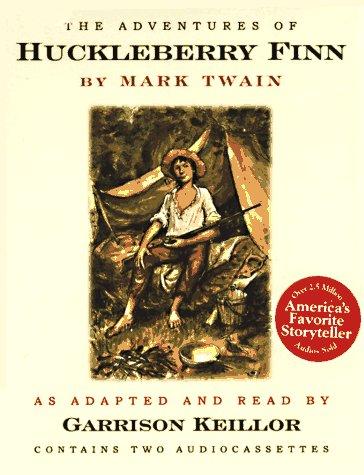
The Adventures of Huckleberry Finn
by Mark Twain · 1884
A poor, uneducated boy fakes his own death and rafts down the Mississippi with an escaped enslaved man -- and has to unlearn everything his society taught him about right and wrong along the way.
Worth reading? Huckleberry Finn earns its foundational status because Twain lets Huck's growth be genuinely difficult -- he doesn't magically become enlightened, he wrestles his way there against everything he's been taught. Read it as the moral argument it is, not just a boyhood adventure.
| Author | Mark Twain |
|---|---|
| Published | 1884 |
| Publisher | Dover |
| Category | Fiction |
| Favorite quote | “All right, then, I'll go to hell.” |
The Verdict
The famous “I’ll go to hell” moment works because Twain has spent the whole book showing you exactly how deep Huck’s false moral training runs – so watching him override it anyway, believing he’s damning himself, is the real climax of the book.
you want the novel Hemingway called the source of all modern American literature -- vernacular voice, moral reckoning, and a river as the engine of both
you're not prepared to sit with its use of period-accurate racist language and stereotyping in service of an anti-slavery argument -- it's genuinely uncomfortable, on purpose, and worth knowing that going in
Book Summary
Huck's central moral crisis -- deciding to help Jim escape slavery even though he believes (per everything his society taught him) that doing so will send him to hell -- is Twain's argument that a person's inherited moral 'training' can be flatly wrong, and real conscience requires overriding it.
Twain wrote the entire novel in Huck's uneducated vernacular voice, a radical choice for its time that gave American fiction permission to sound like actual Americans talking instead of imitating formal British prose.
The river functions as a temporary escape from 'sivilized' society's hypocrisy and violence (feuds, con men, slavery itself), but every time Huck and Jim step onto shore, that same corrupt society reasserts itself -- Twain never lets the river be a permanent solution.
Top 7 Lessons from The Adventures of Huckleberry Finn
- Inherited social and religious 'morality' can be flatly wrong, and genuine conscience sometimes requires rejecting it.
- A character can do the right thing while still believing, incorrectly, that it's the wrong one -- the action matters more than the flawed self-justification.
- Vernacular, first-person narration can carry as much literary weight as formal prose, and can better capture a specific American voice.
- Freedom is shown as fragile and temporary (the river) when the surrounding society remains unchanged.
- 'Civilized' society is repeatedly shown as more hypocritical and violent than the 'uncivilized' outsiders it looks down on.
- A friendship across a massive social and legal divide (Huck and Jim) can expose the arbitrary cruelty of the rules separating them.
- Satire of religious hypocrisy and small-town violence runs underneath the adventure plot throughout.
Top 5 Quotes from The Adventures of Huckleberry Finn
"All right, then, I'll go to hell."
Mark Twain, The Adventures of Huckleberry Finn
"You don't know about me without you have read a book by the name of The Adventures of Tom Sawyer."
Mark Twain, The Adventures of Huckleberry Finn
"It's lovely to live on a raft."
Mark Twain, The Adventures of Huckleberry Finn
"A sound heart is a surer guide than an ill-trained conscience."
Mark Twain, The Adventures of Huckleberry Finn
"Persons attempting to find a motive in this narrative will be prosecuted; persons attempting to find a moral in it will be banished; persons attempting to find a plot in it will be shot."
Mark Twain, The Adventures of Huckleberry Finn
Frequently Asked Questions
Is The Adventures of Huckleberry Finn worth reading?
Yes -- it's a foundational American novel, both for its vernacular narrative voice and its direct moral argument against slavery-era 'civilized' hypocrisy.
Is Huckleberry Finn hard to read?
The vernacular dialect and period-accurate racist language make some passages genuinely difficult and uncomfortable, which is part of the point, not incidental to it.
What is the main theme of Huckleberry Finn?
That inherited social morality can be wrong, and real conscience sometimes means acting against what you've been taught is right.
Who should read Huckleberry Finn?
Readers ready to engage seriously with its use of period racism in service of an anti-slavery argument, not just a boyhood adventure story.
Ready to read it?
Get The Adventures of Huckleberry Finn on Amazon