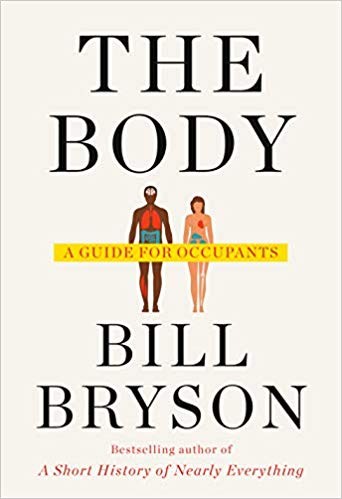
The Body
by Bill Bryson · 2019
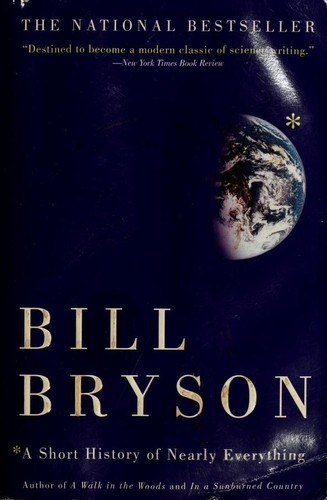
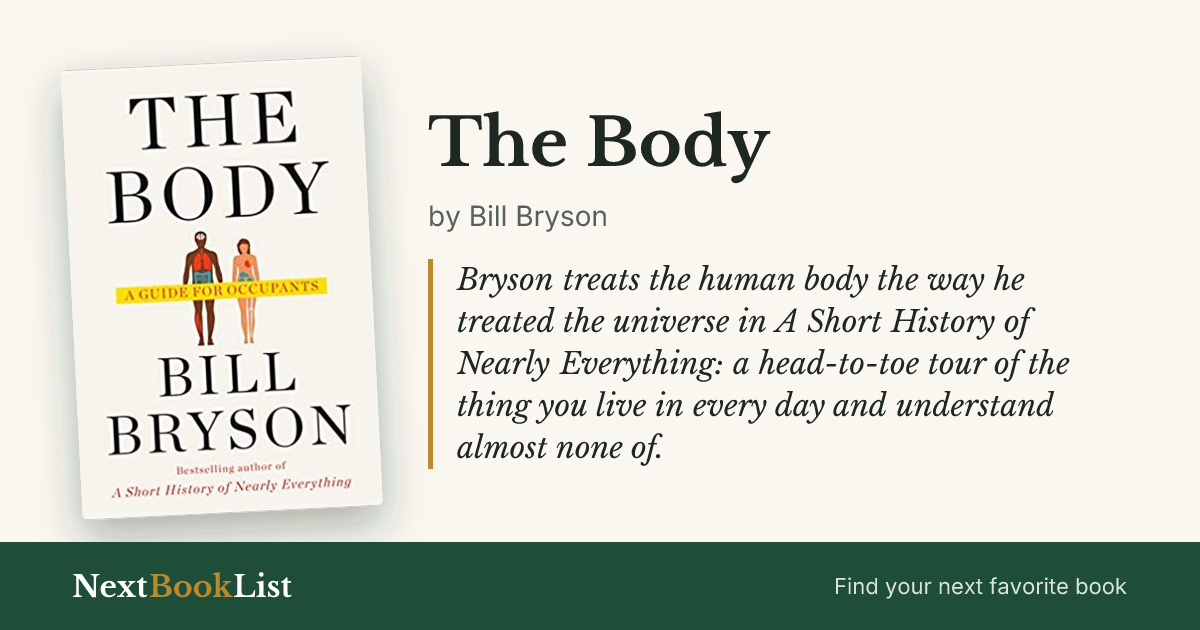
Bryson treats the human body the way he treated the universe in A Short History of Nearly Everything: a head-to-toe tour of the thing you live in every day and understand almost none of.
Worth reading? Bryson's real skill is making a genuinely enormous subject, everything from DNA to the immune system to why we sleep, feel like an entertaining conversation rather than a biology course. It's not the book for deep expertise on any one system, but as a broad, well-written primer on the machine you're living in, it's hard to beat.
| Full Title | The Body: A Guide for Occupants |
|---|---|
| Author | Bill Bryson |
| Published | 2019 |
| Publisher | Doubleday |
| Category | Science & Nature |
| Favorite quote | “You have a metre of it packed into every cell, and so many cells that if you formed all the DNA in your body into a single fine strand it would stretch ten billion miles, to beyond Pluto.” |
The Verdict
Bryson’s trick, the same one that made A Short History of Nearly Everything work, is refusing to let a dense subject stay dense. He finds the absurd detail (your DNA stretched out would reach past Pluto) and the human story behind a discovery (a career-ending finding that turned out to be right) and uses both to keep you reading a book that could easily have been a slog.
It trades depth for breadth by design. If you want a deep dive into just the immune system or just the brain, there are narrower books that will serve you better. This one’s value is in giving you a genuinely well-written map of the whole body, front to back.
Read it if you want an entertaining, wide-ranging primer on the thing you live in every day. Skip it if you already want expert-level depth on one specific system – this book won’t get you there, and isn’t trying to.
you want an accessible, wide-ranging tour of human biology written with genuine wit, not a textbook
you want depth on one specific system (say, just the brain, or just the immune system) -- this book trades depth for breadth, covering the entire body in one volume
Book Summary
The human body runs an almost unbelievable amount of continuous, largely invisible maintenance -- from cellular repair to immune surveillance to the sheer scale of your own DNA (stretched out, it would reach far beyond Pluto) -- most of which you never notice specifically because it's working correctly.
Bryson moves through the body system by system (skin, brain, heart, immune system, reproduction, disease, aging, death), using each stop to unpack both the underlying science and a colorful history of how we came to understand it, often via researchers whose discoveries were accidental, contested, or outright ignored for years before being accepted.
The book's throughline is a kind of grounded wonder: for all of modern medicine's advances, huge amounts of ordinary bodily function still aren't fully understood, and the gap between how well the body works and how little we actually know about why is treated as the book's real subject, more than any single organ or system.
Top 8 Lessons from The Body
- Your body performs a staggering amount of invisible, continuous maintenance (cellular repair, immune surveillance) that you only notice when something goes wrong.
- Major scientific discoveries about the body were frequently accidental, contested for years, or made by researchers working outside the mainstream of their field at the time.
- The sheer physical scale of basic biology (the length of your body's total DNA, the surface area of your lungs) is far larger than casual intuition suggests.
- Modern medicine's real gaps are often not exotic diseases but a surprising lack of settled understanding about ordinary bodily functions like sleep or pain.
- The immune system's complexity rivals or exceeds the brain's, and its failures (autoimmune disease, cancer) are often failures of an otherwise remarkably precise system.
- History of science stories (a rejected theory later vindicated, a career ruined by a correct but unpopular finding) recur across almost every branch of body science covered in the book.
- The body's systems are far more interdependent than a system-by-system textbook structure implies -- skin, immune function, and mental health interact more than most people assume.
- Aging and death are treated by the book as biological processes with specific, partially understood mechanisms, not simply an inevitable mystery.
Top 4 Quotes from The Body
"It is a strange, nonintuitive fact of existence that photons of light have no color, sound waves no sound, olfactory molecules no odors."
Bill Bryson, The Body
"You have a metre of it packed into every cell, and so many cells that if you formed all the DNA in your body into a single fine strand it would stretch ten billion miles, to beyond Pluto."
Bill Bryson, The Body
"We spend our whole lives, in other words, living in a world that doesn't quite exist yet."
Bill Bryson, The Body
"Altogether, according to RSC calculations, fifty-nine elements are needed to construct a human being."
Bill Bryson, The Body
Frequently Asked Questions
Is The Body worth reading?
Yes -- Bryson makes an enormous subject genuinely entertaining, covering the whole human body in one accessible volume without losing scientific substance.
What is The Body about?
Bill Bryson's tour of human biology and anatomy, moving system by system through the body -- skin, brain, heart, immune system, reproduction, aging, and death -- combining the science with the history of how we came to understand it.
Is The Body scientifically accurate?
Yes, broadly -- Bryson researched extensively and consulted experts, though as a science journalist rather than a research scientist, treat it as a well-sourced primer rather than a clinical reference.
Do I need a science background to read The Body?
No -- it's written for a general audience, with Bryson's usual wit doing the work of making dense material accessible.
How does The Body compare to A Short History of Nearly Everything?
Same approach, narrower subject -- instead of the whole universe, it's just the human body, covered with the same mix of hard science and entertaining historical detours.
Ready to read it?
Get The Body on Amazon