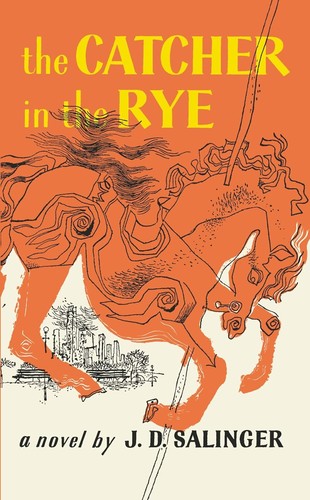
The Catcher in the Rye
by J.D. Salinger · 1951
A sixteen-year-old gets kicked out of prep school and wanders New York for three days, narrating the whole thing in a voice so specific it either becomes your favorite book or genuinely annoys you -- rarely anything in between.
Worth reading? Catcher in the Rye is one of those books whose reputation precedes it so thoroughly that people forget how narrow it actually is -- three days, one voice, almost no plot. Its influence on every first-person alienated-teen novel since is undeniable, but whether you enjoy reading it depends entirely on whether Holden's voice charms you or grates on you. There isn't much middle ground, and that's honest to say up front rather than oversell it.
| Author | J.D. Salinger |
|---|---|
| Published | 1951 |
| Publisher | Little, Brown and Company |
| Category | Fiction |
| Favorite quote | “If you really want to hear about it, the first thing you'll probably want to know is where I was born.” |
The Verdict
The book lives or dies on whether Holden’s voice works for you, and there’s no way to know in advance – it’s short enough that the honest move is just to read it and find out rather than take someone else’s verdict on faith. Skip Phoebe’s scenes and you’ve missed the actual heart of the book; they’re where Holden’s armor comes off.
you want the book that basically invented the modern voice-driven teenage narrator, phoniness-detector and all
Holden Caulfield's cynicism and repetitive complaining wear on you fast -- some readers find him insightful, others find him insufferable, and both reactions are reasonable
Book Summary
Holden's obsession with "phoniness" is really a defense mechanism against his own grief over his brother Allie's death and his fear of growing up into the compromised adult world he sees everywhere. Calling everyone else fake lets him avoid examining his own pain directly.
The title image (Holden fantasizing about catching children before they fall off a cliff into adulthood) crystallizes the novel's real subject: Holden wants to protect innocence, including his sister Phoebe's, because he can't protect his own anymore.
Salinger's first-person voice, full of digression, repetition, and slang, was itself the innovation -- the novel is less about what happens (very little does) and entirely about how completely Holden's voice colonizes the reader's attention for the whole book.
Top 7 Lessons from The Catcher in the Rye
- Holden's contempt for 'phonies' functions as a shield against his own unprocessed grief over his brother Allie.
- The catcher-in-the-rye fantasy reveals Holden's real wish -- to preserve innocence he feels he's already lost.
- Holden's unreliable, digressive narration is itself the novel's main technical achievement, not the thin plot.
- Phoebe is the one person Holden can be honest and vulnerable with, revealing the tenderness under his cynicism.
- Holden's repeated failures to connect with adults and peers show how isolating grief and depression can be at that age.
- The novel resists a tidy resolution -- Holden ends the book in a psychiatric facility, still working through what happened, not healed.
- Salinger critiques the superficiality and conformity Holden sees in the adult world without fully endorsing Holden's judgment of it either.
Top 5 Quotes from The Catcher in the Rye
"If you really want to hear about it, the first thing you'll probably want to know is where I was born."
J.D. Salinger, The Catcher in the Rye
"I'm the most terrific liar you ever saw in your life."
J.D. Salinger, The Catcher in the Rye
"Anyway, I keep picturing all these little kids playing some game in this big field of rye and all. Thousands of little kids, and nobody's around -- nobody big, I mean -- except me."
J.D. Salinger, The Catcher in the Rye
"People never notice anything."
J.D. Salinger, The Catcher in the Rye
"Don't ever tell anybody anything. If you do, you start missing everybody."
J.D. Salinger, The Catcher in the Rye
Frequently Asked Questions
Is The Catcher in the Rye worth reading?
It depends on your tolerance for Holden Caulfield's voice -- readers either connect deeply with his alienation or find him grating, and both are common, reasonable reactions.
Is The Catcher in the Rye hard to read?
No, it's short and conversational, though its lack of traditional plot can feel slow if you're expecting more incident.
What is the main theme of The Catcher in the Rye?
A teenager's grief and fear of growing up, disguised as contempt for the 'phoniness' of the adult world around him.
Why is The Catcher in the Rye controversial or frequently banned?
It's been challenged in schools over its language, references to sex, and cynical tone, but it remains one of the most widely taught novels of alienation in American literature.
Ready to read it?
Get The Catcher in the Rye on Amazon