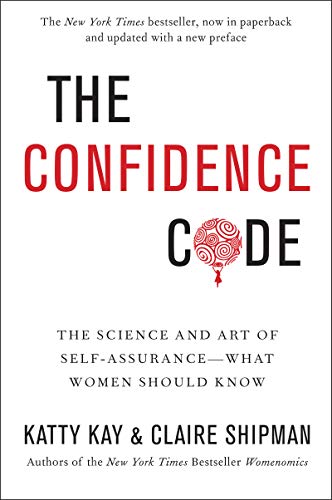
The Confidence Code
by Katty Kay & Claire Shipman · 2014
The book that treats confidence as a skill you build, not a trait you're born with.
Worth reading? Lean In told women to sit at the table and negotiate harder. The Confidence Code asks a more useful question first: why is that so much harder for women to do in the first place, and what actually builds the confidence to do it. Kay and Shipman interview neuroscientists and businesswomen instead of just making the case from Sandberg's own career, which gives the argument a broader base. Skip it if you want a workbook with exercises -- this is written more like a long-form magazine investigation than a step-by-step guide. It'll change how you think about confidence; it won't hand you a 30-day plan to build it.
| Full Title | The Confidence Code: The Science and Art of Self-Assurance. What Women Should Know |
|---|---|
| Author | Katty Kay & Claire Shipman |
| Published | 2014 |
| Publisher | Harper Business |
| Category | Self-Improvement & Psychology |
| Favorite quote | “Success, it turns out, correlates just as closely with confidence as it does with competence.” |
The Verdict
Katty Kay and Claire Shipman set out to answer why competent women still hold back, and came back with a research-backed case that confidence is a separate, trainable skill from competence itself. The Confidence Code is less about mindset tricks than about proving the gap is real and showing what actually closes it. Read it if being right isn’t translating into being heard.
you're more competent than you give yourself credit for and it's costing you opportunities
you want a step-by-step action plan -- this is closer to a research-backed explainer than a workbook
Book Summary
Confidence correlates with success just as strongly as competence does, which means the gap in who gets promoted, negotiates, and takes risks isn't just a skills gap -- it's a confidence gap, and it's measurably wider for women. Kay and Shipman build the book around closing that gap with evidence instead of platitudes.
Confidence has a real biological and behavioral basis: it's built through action and failure, not through thinking positively or waiting to feel ready. The authors argue that overthinking and perfectionism, more common in women due to both nature and how girls are raised, actively suppress the risk-taking that builds confidence in the first place.
Closing the confidence gap is possible at any age, and the fix looks like deliberate practice: taking action despite uncertainty, tolerating failure without spiraling into self-criticism, and stopping the habit of over-preparing before doing anything that matters. Confidence is built the same way muscle is -- through repeated use, not through insight alone.
Top 8 Lessons from The Confidence Code
- Confidence predicts success about as strongly as competence does.
- The confidence gap between men and women is measurable, not just anecdotal.
- Confidence is built through action and failure, not positive thinking.
- Overthinking and perfectionism actively suppress the risk-taking that builds confidence.
- Waiting to feel fully ready before acting keeps the confidence gap open.
- Confidence can be built at any age through deliberate practice, not just early conditioning.
- Tolerating failure without spiraling into self-criticism is a trainable skill.
- Over-preparing before low-stakes situations is often confidence avoidance in disguise.
Top 5 Quotes from The Confidence Code
"Success, it turns out, correlates just as closely with confidence as it does with competence."
Katty Kay & Claire Shipman, The Confidence Code
"Confidence is the stuff that turns thoughts into action."
Katty Kay & Claire Shipman, The Confidence Code
"Underqualified and unprepared men don't think twice about leaning in. Overqualified and overprepared, too many women still hold back."
Katty Kay & Claire Shipman, The Confidence Code
"What matters is that mastering one thing gives you the confidence to try something else."
Katty Kay & Claire Shipman, The Confidence Code
"Confidence, ultimately, is the characteristic that distinguishes those who imagine from those who do."
Katty Kay & Claire Shipman, The Confidence Code
Frequently Asked Questions
Is The Confidence Code worth reading?
Yes, especially if you suspect you're more capable than your confidence lets on. It's research-driven rather than anecdotal, which sets it apart from most confidence-building books.
What is the main idea of The Confidence Code?
Confidence predicts success almost as strongly as competence, women face a measurable confidence gap, and confidence is built through action and tolerating failure, not through positive thinking.
Is The Confidence Code only for women?
It's written specifically about the gap in women's confidence, but the underlying mechanics -- action builds confidence, overthinking suppresses it -- apply to anyone.
Does The Confidence Code have practical exercises?
Some, but it's closer to a research-backed explainer than a workbook. Pair it with a more tactical book if you want a structured plan.
Ready to read it?
Get The Confidence Code on Amazon