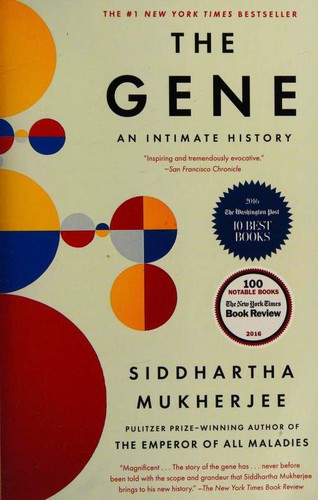
The Gene
by Siddhartha Mukherjee · 2016
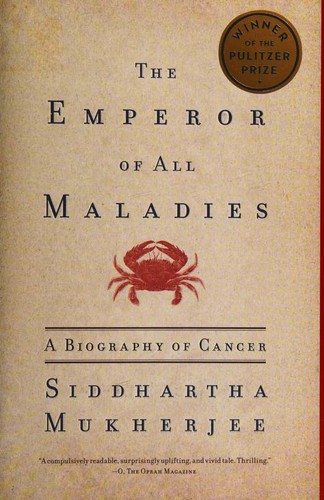
The Pulitzer-winning oncologist behind The Emperor of All Maladies traces heredity from Mendel's pea plants to CRISPR, weaving in his own family's history of mental illness to ask how much of us is actually written in advance.
Worth reading? Mukherjee follows The Emperor of All Maladies with a companion history of genetics itself -- from Gregor Mendel's pea-plant experiments, largely ignored in his own lifetime, through the discovery of DNA's structure, to the CRISPR gene-editing revolution currently underway. He weaves in his own family's multi-generational history of mental illness (several relatives diagnosed with schizophrenia and bipolar disorder) as a personal thread running through the science, using it to ask genuinely difficult questions about heredity, identity, and how much of a person's fate genetics actually determines -- questions that get sharper, not more abstract, as gene-editing technology becomes real.
| Full Title | The Gene: An Intimate History |
|---|---|
| Author | Siddhartha Mukherjee |
| Published | 2016 |
| Category | Science & Nature |
| Favorite quote | “Genes are not sentient beings, but they too respond to selection.” |
The Verdict
Mukherjee’s willingness to sit inside his own family’s genetic history, rather than keeping the personal and scientific threads separate, is what gives the book’s hardest questions their weight – when he asks how much of identity is written in advance, he’s not asking hypothetically.
you want the history of genetics told with real narrative structure, plus an honest reckoning with what gene-editing technology means for the future
you want a purely technical genetics textbook -- Mukherjee blends personal memoir with the science, which some readers looking for pure technical density may find diffuse

Book Summary
The history of genetics moves from Mendel's largely ignored 19th-century pea-plant experiments establishing basic inheritance patterns, through Watson and Crick's discovery of DNA's double-helix structure, to the Human Genome Project and finally CRISPR gene-editing technology -- each stage progressively giving humans more precise understanding of, and eventually direct editing control over, the genetic code that shapes inherited traits and disease risk.
Mukherjee's family history of mental illness across multiple generations gives the book's more abstract questions -- how much of identity and fate is genetically determined versus environmentally shaped, and what it means that gene-editing technology could soon let humans directly alter inherited traits -- genuine personal stakes, and he's careful not to resolve the nature-versus-nurture question too cleanly, presenting genetics as one significant factor among several rather than deterministic fate.
Top 7 Lessons from The Gene
- Gregor Mendel's foundational genetics research was largely ignored during his own lifetime, only recognized decades later.
- CRISPR gene-editing technology represents a fundamentally new capability: not just understanding genetic inheritance, but directly editing it.
- Genetics is one significant factor shaping identity and disease risk among several, not a fully deterministic blueprint for a person's fate.
- Family history of hereditary conditions (like Mukherjee's own family's mental illness) can make abstract genetic questions personally urgent.
- Major scientific breakthroughs are often initially ignored or dismissed before their significance is recognized, sometimes decades later.
- The ethical questions raised by gene-editing technology (which traits should be editable, and who decides) are becoming immediate rather than theoretical.
- Personal memoir and rigorous science history can be woven together without either one diminishing the other's credibility.
Top 2 Quotes from The Gene
"Genes are not sentient beings, but they too respond to selection."
Siddhartha Mukherjee, The Gene
"Identity, even in the most repressive of societies, is an act of resistance and self-assertion."
Siddhartha Mukherjee, The Gene
Frequently Asked Questions
Is The Gene worth reading?
Yes, especially if you want the history of genetics told with real narrative structure and personal stakes rather than as a purely technical account. Mukherjee's family history of mental illness gives the science genuine emotional weight.
What is The Gene about?
Siddhartha Mukherjee's history of genetics, from Mendel's pea-plant experiments through the discovery of DNA to CRISPR gene-editing technology, woven together with his own family's multi-generational history of mental illness.
Is The Gene a sequel to The Emperor of All Maladies?
It's a companion work by the same author rather than a direct sequel -- The Emperor of All Maladies is a history of cancer specifically, while The Gene covers the broader history of genetics and heredity.
Does The Gene cover CRISPR and gene editing?
Yes -- the book covers the CRISPR gene-editing revolution and raises genuine ethical questions about which traits should be editable and who should make that decision, as the technology becomes increasingly real rather than theoretical.
Ready to read it?
Get The Gene on Amazon