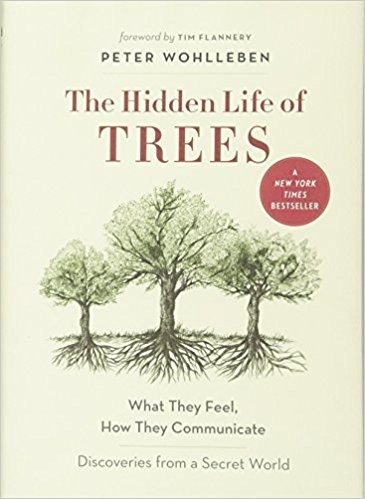
The Hidden Life of Trees
by Peter Wohlleben · 2016
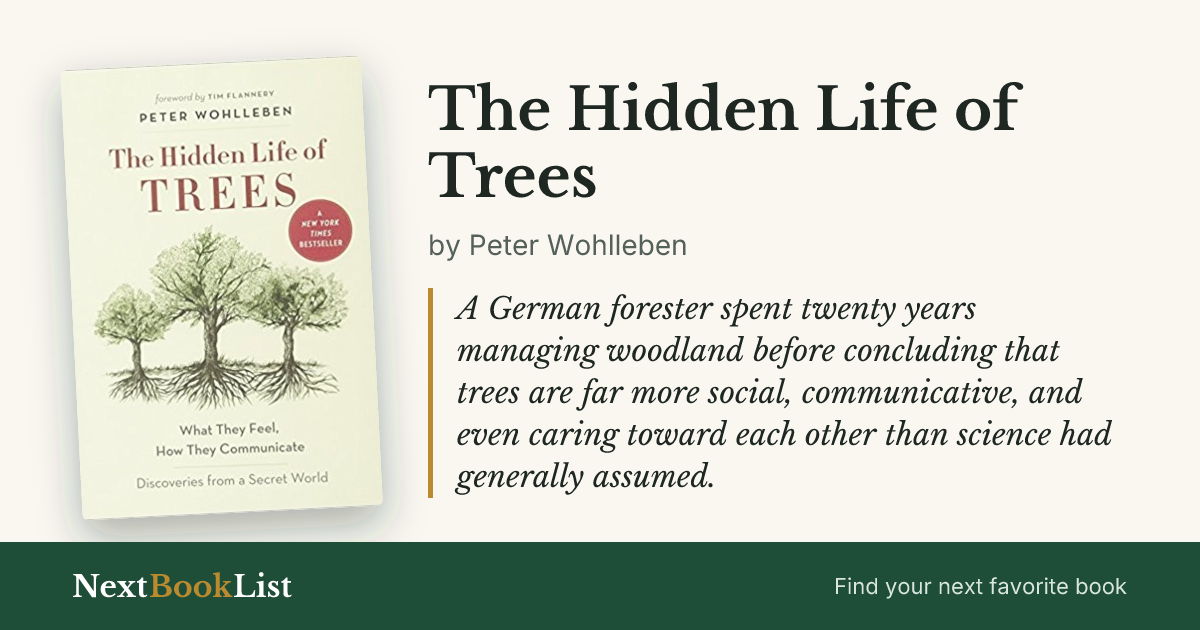
A German forester spent twenty years managing woodland before concluding that trees are far more social, communicative, and even caring toward each other than science had generally assumed.
Worth reading? Wohlleben spent over twenty years managing a woodland for Germany's forestry commission before leaving to run an environmentally-focused forest of his own, and that practical, sustained field experience is the book's real foundation -- he draws on emerging research (including mycorrhizal fungal networks connecting tree root systems) to argue forests function as genuinely interconnected social systems, with trees sharing nutrients with sick or struggling neighbors and warning each other of threats through chemical signals. It's a bestseller precisely because it's accessible and emotionally engaging, though some working botanists have pushed back on how far Wohlleben's language (trees 'feeling,' 'caring,' 'warning') pushes beyond what the underlying research strictly supports.
| Full Title | The Hidden Life of Trees: What They Feel, How They Communicate. Discoveries from a Secret World |
|---|---|
| Author | Peter Wohlleben |
| Published | 2016 |
| Category | Science & Nature |
| Favorite quote | “A tree can be just as important to another tree as another person is to us humans.” |
The Verdict
Wohlleben’s real authority comes from decades spent physically managing forests, not a lab or a lecture hall, which gives the book a lived-in credibility even where his language runs ahead of strict scientific consensus. Read it for the genuinely fascinating mycorrhizal-network research, and hold the more emotionally-loaded framing a little more loosely.
you want an accessible, field-experience-grounded case for forests as interconnected social networks, not just collections of individual trees
you want peer-reviewed technical botany -- Wohlleben writes from decades of forestry practice and popularizes emerging research, and some of his more anthropomorphic framing (trees 'caring' for each other) draws real scientific pushback
Book Summary
Trees within the same forest, especially the same species, are connected through underground mycorrhizal fungal networks that allow them to share nutrients, water, and chemical warning signals -- a struggling or diseased tree can receive resources from healthier neighbors through this network, and a tree under insect attack can chemically signal nearby trees to begin producing defensive compounds before the threat reaches them.
Wohlleben extends this research into a broader argument that forests function less like collections of competing individual organisms and more like genuinely interconnected communities, with older "mother trees" playing an outsized role supporting younger saplings -- a reframing that pushes against a purely competitive, survival-of-the-fittest model of forest ecology in favor of one that includes cooperation and mutual support as equally real ecological forces.
Top 7 Lessons from The Hidden Life of Trees
- Trees within a forest are connected through underground mycorrhizal fungal networks that allow nutrient and information sharing.
- A tree under insect attack can chemically signal nearby trees to begin producing defensive compounds before the threat spreads.
- Forests function partly as interconnected communities, not purely as collections of individually competing organisms.
- Older 'mother trees' can play an outsized supportive role for younger saplings within the same forest network.
- Sustained, direct field experience (Wohlleben's twenty years in forestry) can generate genuine ecological insight alongside formal research.
- Popular science writing that uses emotionally resonant language (trees 'caring,' 'feeling') can build public interest while also drawing legitimate scientific pushback for overreach.
- A purely competitive model of ecology misses real cooperative and mutual-support dynamics that also shape ecosystems.
Top 1 Quotes from The Hidden Life of Trees
"A tree can be just as important to another tree as another person is to us humans."
Peter Wohlleben, The Hidden Life of Trees
Frequently Asked Questions
Is The Hidden Life of Trees worth reading?
Yes, as an accessible, field-experience-grounded introduction to forest ecology and mycorrhizal networks. Read it alongside awareness that some of Wohlleben's more emotionally-framed language draws pushback from working botanists.
What is The Hidden Life of Trees about?
Peter Wohlleben, a German forester, argues trees function as interconnected social systems, sharing nutrients and chemical warning signals through underground fungal networks, based on his own decades of forestry experience and emerging research.
Is The Hidden Life of Trees scientifically accurate?
The underlying research on mycorrhizal networks and chemical signaling is real and increasingly well-studied, but some scientists have criticized Wohlleben's more anthropomorphic language (trees 'feeling' or 'caring') as overstating what the research directly supports.
Who is Peter Wohlleben?
A German forester who spent over two decades working for Germany's forestry commission before leaving to manage an environmentally-focused woodland of his own, applying the ecological principles he writes about directly in practice.
Ready to read it?
Get The Hidden Life of Trees on Amazon