Best Science & Nature Books: 8 Ranked by What They Explain

Updated July 13, 2026 · 8 books

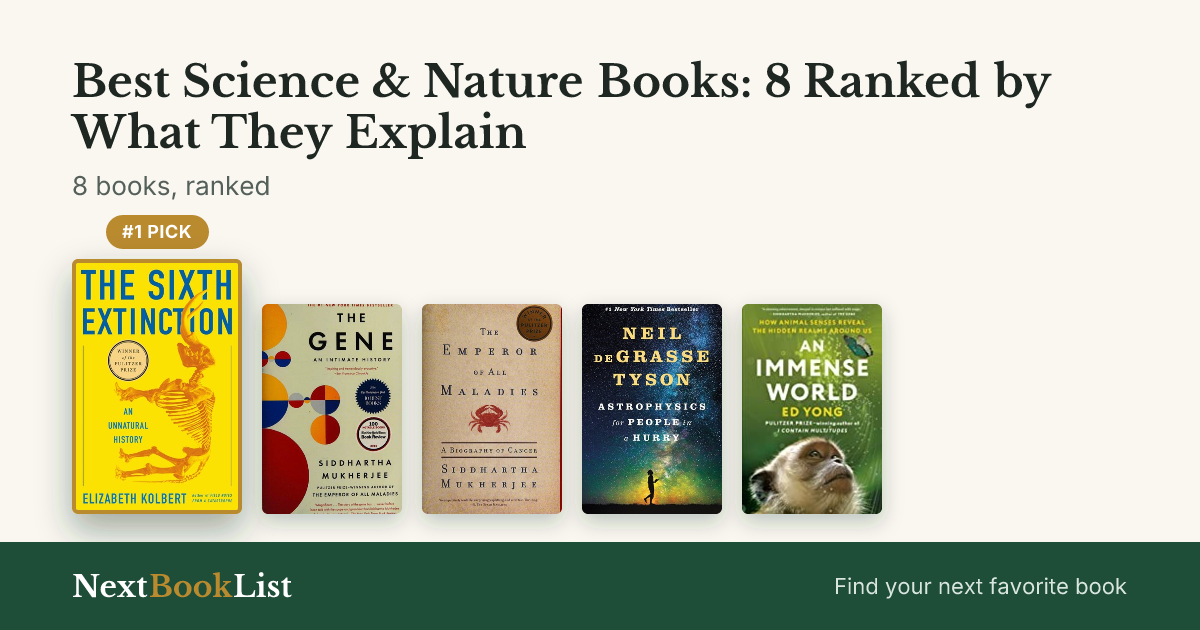
Best Science & Nature Books: 8 Ranked by What They Explain: ranked list of 8 books

The best science book depends on how much time you want to spend. Astrophysics for People in a Hurry is built for zero background and short chapters, the universe compressed into a commute. The Sixth Extinction asks more of you and gives more back: Pulitzer-winning field reporting on the mass extinction currently underway, with the same historical weight as the five that came before it.

The body, from two angles: The Emperor of All Maladies traces cancer’s full history by a practicing oncologist; The Gene follows the same author through heredity itself, from Mendel’s ignored pea-plant experiments to CRISPR, with his own family’s history of mental illness woven through. An Immense World closes the biology thread by touring how radically different other animals’ sensory worlds actually are from the human one.

Nature writing built from direct field experience: Braiding Sweetgrass blends rigorous botany with Indigenous ecological teaching; The Hidden Life of Trees comes from twenty years actually managing a forest; Entangled Life makes the case that fungi, an entire underappreciated kingdom of life, deserve as much attention as plants and animals get.

One warning: popular science writing compresses for readability, which means some claims here (particularly in the more essayistic entries) draw real pushback from working scientists. Read for the wonder and the framework, and hold the most emotionally-loaded claims a little more loosely than the peer-reviewed research underneath them.

Quick Comparison

#BookBest for
1The Sixth ExtinctionElizabeth Kolbertyou want rigorous science journalism on the current extinction crisis, reported firsthand from the field rather than summarized secondhandAmazon
2The GeneSiddhartha Mukherjeeyou want the history of genetics told with real narrative structure, plus an honest reckoning with what gene-editing technology means for the futureAmazon
3The Emperor of All MaladiesSiddhartha Mukherjeeyou want the definitive, Pulitzer-winning history of cancer research and treatment, written by a physician who treats the disease directlyAmazon
4Astrophysics for People in a HurryNeil deGrasse Tysonyou want the fastest, most accessible entry point into astrophysics, with zero prior science background requiredAmazon
5An Immense WorldEd Yongyou want rigorous, wonder-inducing science journalism about how radically different other animals' perceived reality actually is from oursAmazon
6Braiding SweetgrassRobin Wall Kimmereryou want nature writing that treats Indigenous knowledge and Western science as complementary lenses, not competing ones, from someone trained rigorously in bothAmazon
7The Hidden Life of TreesPeter Wohllebenyou want an accessible, field-experience-grounded case for forests as interconnected social networks, not just collections of individual treesAmazon
8Entangled LifeMerlin Sheldrakeyou want rigorous, genuinely strange science writing about an organism kingdom most nature books skip entirelyAmazon

The Books

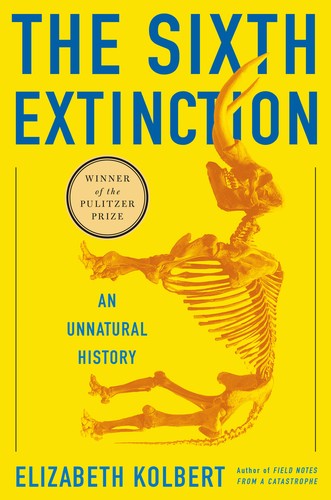
The Sixth Extinction by Elizabeth Kolbert book cover

1. The Sixth Extinction

Elizabeth Kolbert · 2014

Five mass extinctions have reshaped life on Earth over 500 million years, a Pulitzer-winning journalist argues we're causing the sixth, and this time the asteroid is us.

Kolbert’s willingness to actually travel to the field sites where extinction is happening, rather than synthesizing secondhand research from a desk, gives this a reporting credibility that most books on the topic don’t have. It’s not comfortable reading, and it isn’t trying to be – it’s trying to be accurate.

Read it if: you want rigorous science journalism on the current extinction crisis, reported firsthand from the field rather than summarized secondhand

Skip it if: you want a purely optimistic or solutions-focused environmental book -- Kolbert's reporting is clear-eyed and doesn't soften the scale of what's already underway
Full verdict: The Sixth Extinction →

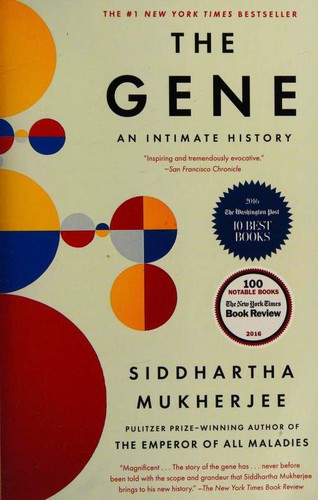
The Gene by Siddhartha Mukherjee book cover

2. The Gene

Siddhartha Mukherjee · 2016

The Pulitzer-winning oncologist behind The Emperor of All Maladies traces heredity from Mendel's pea plants to CRISPR, weaving in his own family's history of mental illness to ask how much of us is actually written in advance.

Mukherjee’s willingness to sit inside his own family’s genetic history, rather than keeping the personal and scientific threads separate, is what gives the book’s hardest questions their weight – when he asks how much of identity is written in advance, he’s not asking hypothetically.

Read it if: you want the history of genetics told with real narrative structure, plus an honest reckoning with what gene-editing technology means for the future

Skip it if: you want a purely technical genetics textbook -- Mukherjee blends personal memoir with the science, which some readers looking for pure technical density may find diffuse

Full verdict: The Gene →

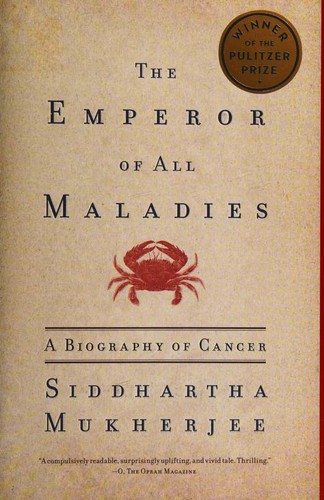
The Emperor of All Maladies by Siddhartha Mukherjee book cover

3. The Emperor of All Maladies

Siddhartha Mukherjee · 2010

A practicing oncologist writes cancer's full history as a biography, not a textbook, from ancient Egyptian descriptions of untreatable tumors to the gene-targeted therapies of the present.

Mukherjee’s clinical practice is what separates this from a purely academic medical history – he’s writing about patients he’s actually treated, decisions he’s actually had to make, which gives even the most distant historical chapters a sense of genuine stakes. It’s a long read that rewards patience.

Read it if: you want the definitive, Pulitzer-winning history of cancer research and treatment, written by a physician who treats the disease directly

Skip it if: you want a quick, light read -- this is a genuinely substantial book covering thousands of years of medical history, best approached with real time to sit with it

Full verdict: The Emperor of All Maladies →

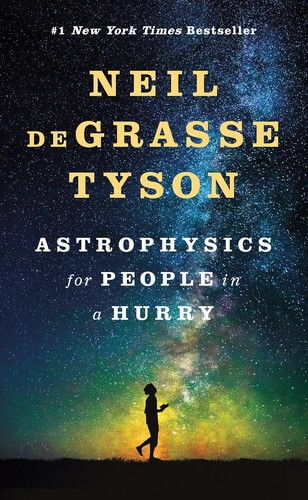
Astrophysics for People in a Hurry by Neil deGrasse Tyson book cover

4. Astrophysics for People in a Hurry

Neil deGrasse Tyson · 2017

The astrophysicist who's become America's most recognizable science communicator compresses the entire universe, the Big Bang, black holes, dark matter, into chapters short enough to read on a commute.

Tyson’s real skill here is knowing exactly how much to compress without losing accuracy – these are genuinely short chapters covering genuinely enormous topics, and the fact that they hold together at all is a function of decades spent explaining this material to general audiences. Read it as the on-ramp it’s built to be, not the full education.

Read it if: you want the fastest, most accessible entry point into astrophysics, with zero prior science background required

Skip it if: you want depth and technical rigor -- this is deliberately compressed and introductory by design, built for readers with no background, not for advancing existing knowledge

Full verdict: Astrophysics for People in a Hurry →

An Immense World by Ed Yong book cover

5. An Immense World

Ed Yong · 2022

A Pulitzer-winning science journalist tours the sensory worlds other animals actually inhabit, the ones surrounding us constantly that human senses simply can't detect.

Yong’s reporting rigor (built from direct interviews with the actual researchers studying these senses, not secondhand summary) is what keeps the book’s genuine sense of wonder from tipping into vague mysticism. Each chapter systematically dismantles the assumption that human perception is a reasonable default against which other species should be measured.

Read it if: you want rigorous, wonder-inducing science journalism about how radically different other animals' perceived reality actually is from ours

Skip it if: you want a book primarily about animal behavior or conservation -- this stays specifically focused on sensory biology, not broader ecology or animal welfare

Full verdict: An Immense World →

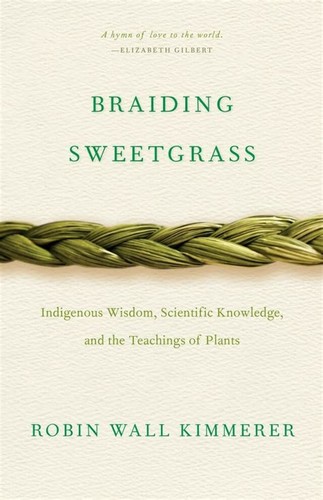
Braiding Sweetgrass by Robin Wall Kimmerer book cover

6. Braiding Sweetgrass

Robin Wall Kimmerer · 2013

A botanist and enrolled member of the Citizen Potawatomi Nation braids Indigenous ecological knowledge together with Western scientific training, and argues plants have been trying to teach us something we stopped listening for.

Kimmerer’s rare dual fluency (rigorous botany and Indigenous teaching, held without contradiction) is what makes the book’s central argument land as genuinely productive rather than just a nice sentiment. It’s slow, essayistic reading best taken a chapter at a time, not raced through.

Read it if: you want nature writing that treats Indigenous knowledge and Western science as complementary lenses, not competing ones, from someone trained rigorously in both

Skip it if: you want a purely data-driven scientific text -- this is essayistic and personal, closer to nature writing and memoir than a science textbook

Full verdict: Braiding Sweetgrass →

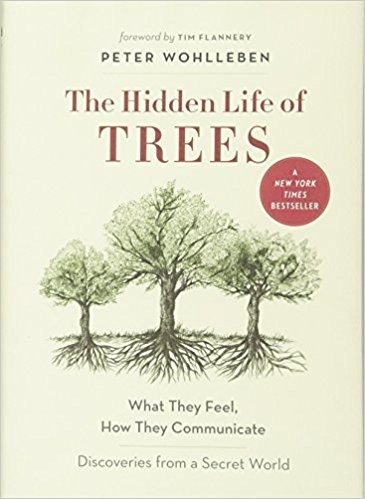
The Hidden Life of Trees by Peter Wohlleben book cover

7. The Hidden Life of Trees

Peter Wohlleben · 2016

A German forester spent twenty years managing woodland before concluding that trees are far more social, communicative, and even caring toward each other than science had generally assumed.

Wohlleben’s real authority comes from decades spent physically managing forests, not a lab or a lecture hall, which gives the book a lived-in credibility even where his language runs ahead of strict scientific consensus. Read it for the genuinely fascinating mycorrhizal-network research, and hold the more emotionally-loaded framing a little more loosely.

Read it if: you want an accessible, field-experience-grounded case for forests as interconnected social networks, not just collections of individual trees

Skip it if: you want peer-reviewed technical botany -- Wohlleben writes from decades of forestry practice and popularizes emerging research, and some of his more anthropomorphic framing (trees 'caring' for each other) draws real scientific pushback

Full verdict: The Hidden Life of Trees →

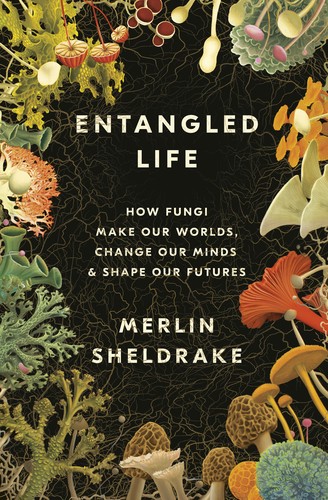
Entangled Life by Merlin Sheldrake book cover

8. Entangled Life

Merlin Sheldrake · 2020

A biologist who's eaten his own research subjects (and grown mushrooms out of an old book) makes the case that fungi are the most underappreciated organisms on the planet, and possibly the most important.

Sheldrake’s willingness to get genuinely hands-on with his subject – growing mushrooms out of an old book, eating what he studies, experimenting directly with psilocybin – gives the book an immersive quality most organism-focused nature writing lacks. It’s playful without losing scientific rigor, and it makes a genuinely convincing case that fungi deserve far more attention than they usually get.

Read it if: you want rigorous, genuinely strange science writing about an organism kingdom most nature books skip entirely

Skip it if: you want a narrow, single-topic book -- Sheldrake covers an unusually wide range of fungal biology, ecology, and even psychedelic research, which some readers may find sprawling rather than tightly focused

Full verdict: Entangled Life →

Frequently Asked Questions

What is the best science book to start with?

Astrophysics for People in a Hurry, if you want the fastest possible entry point with zero science background required. If you want something more consequential and immediate, start with The Sixth Extinction instead.

What's the best book on genetics and heredity?

The Gene, by the same Pulitzer-winning oncologist who wrote The Emperor of All Maladies. He traces genetics from Mendel's pea plants to CRISPR while weaving in his own family's history of mental illness.

I want nature writing, not hard science. What fits?

Braiding Sweetgrass and The Hidden Life of Trees. Kimmerer blends botany with Indigenous ecological knowledge; Wohlleben writes from twenty years of hands-on forestry practice. Both are essayistic rather than textbook-dense.

What's the strangest, most surprising book on this list?

Entangled Life, about fungi, an entire kingdom of life most nature books skip entirely. Merlin Sheldrake grows mushrooms out of old books and eats what he studies, and the book is as playful as that suggests without losing scientific rigor.

Keep Reading