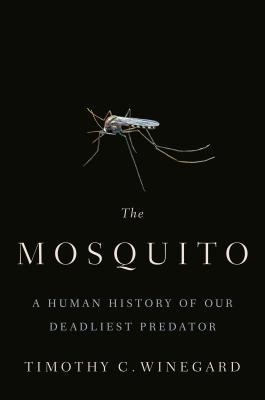
The Mosquito
by Timothy C. Winegard · 2019
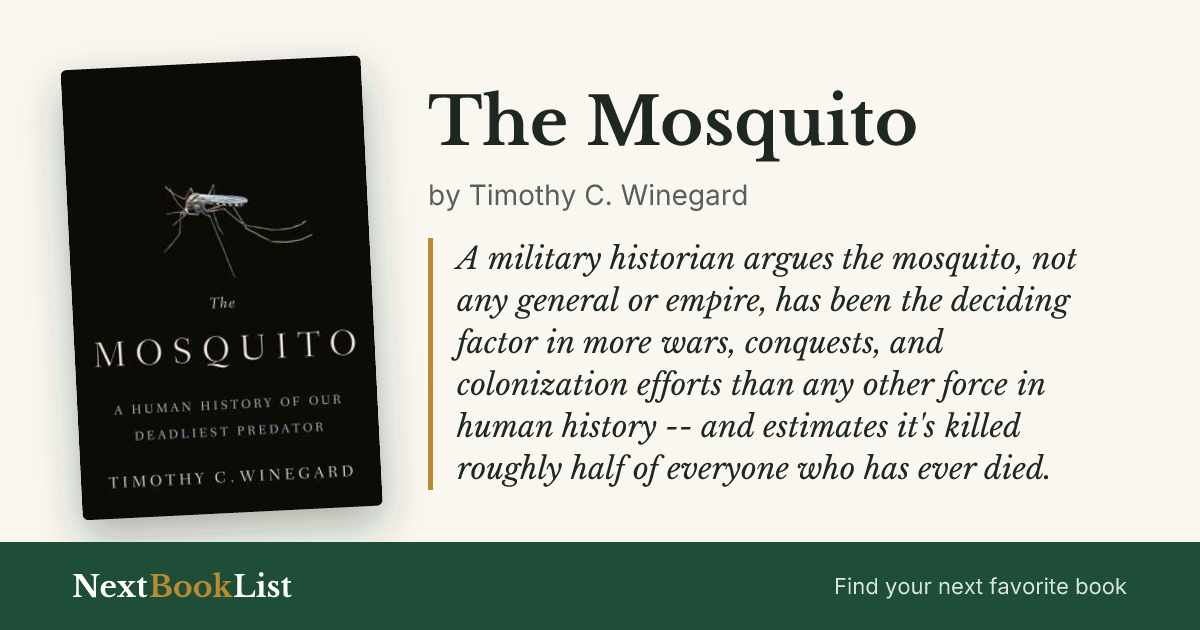
A military historian argues the mosquito, not any general or empire, has been the deciding factor in more wars, conquests, and colonization efforts than any other force in human history -- and estimates it's killed roughly half of everyone who has ever died.
Worth reading? The Mosquito earns its sprawl by staying disciplined about its thesis: wherever malaria or yellow fever shows up in the historical record, Winegard traces how it shaped the outcome, from Alexander's campaigns to the failed French effort at the Panama Canal to the American Revolution. The claim that mosquito-borne disease has killed roughly half of all humans who ever lived is the kind of number that sounds like hyperbole until you see how consistently the book backs it with specific campaigns and death tolls.
| Full Title | The Mosquito: A Human History of Our Deadliest Predator |
|---|---|
| Author | Timothy C. Winegard |
| Published | 2019 |
| Publisher | Dutton |
| Category | Science & Nature |
| Favorite quote | “The mosquito has killed more people than any other cause of death in human history.” |
The Verdict
Winegard’s trick is picking a lens narrow enough to be a real thesis (mosquito-borne disease) and wide enough to touch almost every major historical event you already know something about. Once he’s shown you malaria deciding one campaign, you start looking for it in every war story you thought you understood.
The Panama Canal chapter is the strongest single case study: a specific, well-documented failure, entirely attributable to disease the French engineers didn’t understand, followed by an American success built on the same terrain once mosquito control was taken seriously.
Read it if you want familiar history rewritten around an unglamorous, overlooked cause, backed with specific campaigns and numbers. Skip it if you want a book centered on mosquito biology itself rather than the history it enabled.
you want sweeping popular history that reframes familiar wars and empires (Rome, the American Revolution, colonial Africa) around a single, unglamorous cause: disease carried by mosquitoes
you want a tightly focused entomology or public-health book -- this is history first, using the mosquito as an organizing lens across thousands of years and dozens of conflicts, not a book centered on the insect's biology alone
Book Summary
Winegard's central claim is that mosquito-borne diseases, chiefly malaria and yellow fever, have killed more humans throughout history than any war, famine, or other single cause -- his often-cited estimate is that roughly half of all people who have ever lived died from a mosquito-borne illness.
The book reframes major historical events as disease outcomes rather than purely strategic or political ones: Alexander the Great's campaigns, the fall of Rome, European colonization of Africa and the Americas, the American Revolution, and the failed French attempt at the Panama Canal are all shown bending around malaria and yellow fever outbreaks.
A recurring argument is that differential immunity (populations with generations of exposure to malaria versus populations with none) shaped colonization patterns and the transatlantic slave trade, since enslaved West Africans were forced into labor partly because of assumptions, sometimes accurate, about relative disease resistance compared to European colonizers and Indigenous populations.
Top 8 Lessons from The Mosquito
- Winegard's central, widely cited estimate is that mosquito-borne diseases have killed roughly half of all humans who have ever lived, more than any war or other single cause.
- Malaria repeatedly decided military campaigns before modern medicine, including weakening Alexander the Great's army and contributing to the fall of Rome's later campaigns.
- The French effort to build the Panama Canal failed in large part due to yellow fever and malaria deaths among workers, decades before the American-led project succeeded using mosquito-control measures.
- Differential disease immunity between populations influenced colonization patterns -- Europeans without acquired immunity to tropical diseases suffered catastrophic death rates in parts of Africa, earning the region the nickname 'the white man's grave.'
- Assumptions (partly accurate) about relative malaria resistance among West Africans versus European colonizers and Indigenous Americans were used to justify enslaving and transporting West Africans across the Atlantic for labor in disease-prone regions.
- Mosquito-borne disease affected the American Revolution, with malaria outbreaks weakening British forces in southern campaigns in ways that helped tip engagements toward the Continental Army.
- The eventual understanding that mosquitoes, not 'bad air' (miasma), transmitted malaria and yellow fever was a relatively late scientific discovery, delaying effective prevention for centuries.
- Modern mosquito-control efforts (drainage, netting, insecticides, and later vaccines) only meaningfully reduced mosquito-borne death tolls in the last century or so of a multi-thousand-year historical pattern.
Top 1 Quotes from The Mosquito
"The mosquito has killed more people than any other cause of death in human history."
Timothy C. Winegard, The Mosquito
Frequently Asked Questions
Is The Mosquito worth reading?
Yes -- it's a sweeping, well-sourced reframing of major historical events around a single, underrated cause: mosquito-borne disease.
What is The Mosquito about?
Timothy C. Winegard's argument that mosquito-borne diseases like malaria and yellow fever have shaped the outcomes of wars, colonization, and empire-building throughout human history, killing more people than any other single cause.
Is The Mosquito a science book or a history book?
Primarily history -- it uses the mosquito and the diseases it carries as an organizing lens across thousands of years of human conflict and colonization, rather than focusing on insect biology.
Does The Mosquito require a science or medical background?
No -- Winegard explains the relevant disease science briefly and clearly as it comes up in the historical narrative.
How far back does The Mosquito's history go?
It spans from early human evolution and ancient civilizations through the 20th century, covering campaigns from Alexander the Great to World War II and the ongoing fight against malaria today.
Ready to read it?
Get The Mosquito on Amazon