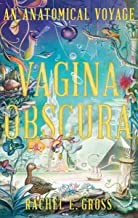
Vagina Obscura
by Rachel E. Gross · 2022
A science journalist tours the female reproductive anatomy through the researchers currently rewriting its textbook understanding -- the clitoris, the cervix, the ovaries, endometriosis -- showing how much of women's basic anatomy was mapped late, badly, or not at all.
Worth reading? Vagina Obscura earns its premise by staying specific -- Gross profiles actual researchers correcting actual textbook errors, rather than making a vague case that medicine has 'ignored women.' The chapters on clitoral anatomy and endometriosis land hardest because the errors being corrected are recent and startling: full understanding of clitoral structure wasn't well mapped until surprisingly late in the 20th century. It reads like solid magazine science writing stretched to book length, not a manifesto.
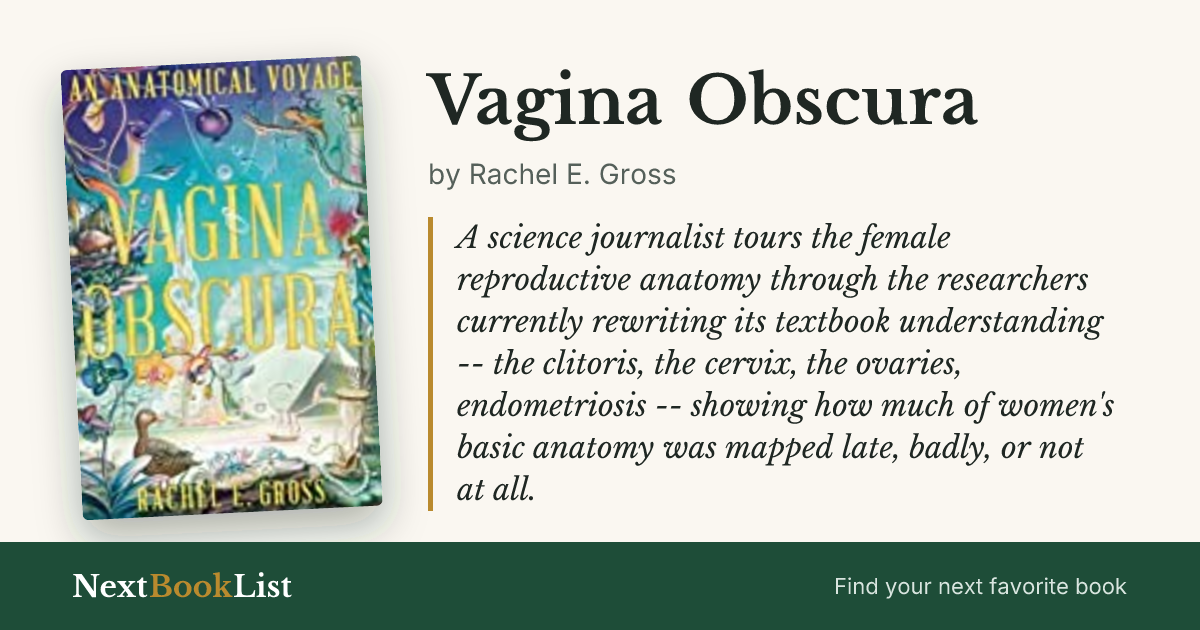
| Full Title | Vagina Obscura: An Anatomical Voyage |
|---|---|
| Author | Rachel E. Gross |
| Published | 2022 |
| Publisher | W. W. Norton & Company |
| Category | Science & Nature |
| Favorite quote | “Darwin's attitudes toward women were a direct outgrowth of his ideas about other animals -- or, rather, each reinforced the other.” |
The Verdict
Gross’s best move is staying narrow and specific instead of writing a broad polemic about medicine ignoring women. Each chapter has a name attached to it – a specific researcher, a specific correction to a specific textbook error – which makes the larger pattern land harder than a general argument would.
The clitoral anatomy chapter is the one that’ll stick with most readers, mainly because of how recent the correction is. This isn’t ancient history being revisited; it’s contemporary research fixing gaps that current medical students were still being taught around.
Read it if you want specific, well-reported science journalism on an underexamined area of anatomy. Skip it if you’re looking for a clinical reference or a personal health guide – this is about the research, not a how-to.
you want a science journalism deep dive that treats women's anatomy as a genuinely under-researched subject, told through the scientists doing the current work rather than as pure history
you want a clinical anatomy reference or a self-help book about reproductive health -- this is science journalism built around researchers and discoveries, not a how-to guide
Book Summary
Gross structures the book as a tour through female anatomy organ by organ, pairing each with the scientists currently correcting outdated or incomplete textbook models -- the clitoris, the vagina, the uterus, the ovaries, and conditions like endometriosis.
A recurring theme is how recently basic anatomical facts were established or corrected: full mapping of clitoral internal structure is a relatively recent achievement, and conditions like endometriosis were long dismissed or misunderstood by a medical establishment that historically treated the male body as the default subject of study.
The book argues that closing these research gaps isn't just about correcting old textbooks -- it changes real clinical outcomes, from diagnosing endometriosis faster to understanding intersex anatomy and gender-affirming surgery with more accuracy.
Top 8 Lessons from Vagina Obscura
- Full anatomical understanding of the clitoris's internal structure wasn't well established in mainstream medical texts until surprisingly late, despite the organ's obvious external presence for millennia.
- Historical anatomy research defaulted to studying male bodies as the norm, leaving gaps in basic understanding of female anatomy that are only now being systematically corrected.
- Endometriosis was long dismissed, minimized, or misdiagnosed by a medical establishment slow to take female pain seriously, contributing to years-long average diagnosis delays for many patients.
- Current research into ovarian aging and menopause is beginning to challenge assumptions about reproductive decline being purely biological rather than partly a product of understudied science.
- The vagina's microbiome is an active area of research with implications for infection prevention and reproductive health that were largely unexplored until recently.
- Cervical anatomy and function have direct implications for pregnancy and childbirth research that remains less funded and less studied than comparable male reproductive anatomy research.
- Intersex anatomy and variation have historically been treated as a problem to surgically correct rather than a subject to understand, a framing current researchers are pushing back against.
- Gross frames each anatomical gap as a research funding and attention problem, not a biological mystery -- the anatomy existed all along, but the sustained scientific interest in mapping it did not.
Top 2 Quotes from Vagina Obscura
"When Freud chose the vagina as his symbol of proper womanhood, he was drawing on what we knew from biology."
Rachel E. Gross, Vagina Obscura
"Darwin's attitudes toward women were a direct outgrowth of his ideas about other animals -- or, rather, each reinforced the other."
Rachel E. Gross, Vagina Obscura
Frequently Asked Questions
Is Vagina Obscura worth reading?
Yes -- it's solid science journalism that shows, organ by organ, how recently and incompletely female anatomy has actually been studied.
What is Vagina Obscura about?
Rachel E. Gross profiles the scientists currently correcting outdated or missing textbook knowledge about female reproductive anatomy, including the clitoris, uterus, ovaries, and endometriosis.
Is Vagina Obscura a clinical or medical reference book?
No -- it's narrative science journalism built around researchers and their discoveries, not a clinical guide or self-help book.
Does Vagina Obscura require a science background?
No -- Gross writes for a general audience and explains anatomical and medical concepts as they come up.
Does the book cover endometriosis?
Yes -- it's one of the book's central chapters, covering both the science and the long medical history of dismissing the condition.
Ready to read it?
Get Vagina Obscura on Amazon