Best Sleep and Recovery Books: 4 Ranked by What's Actually Wrong

Updated July 16, 2026 · 4 books

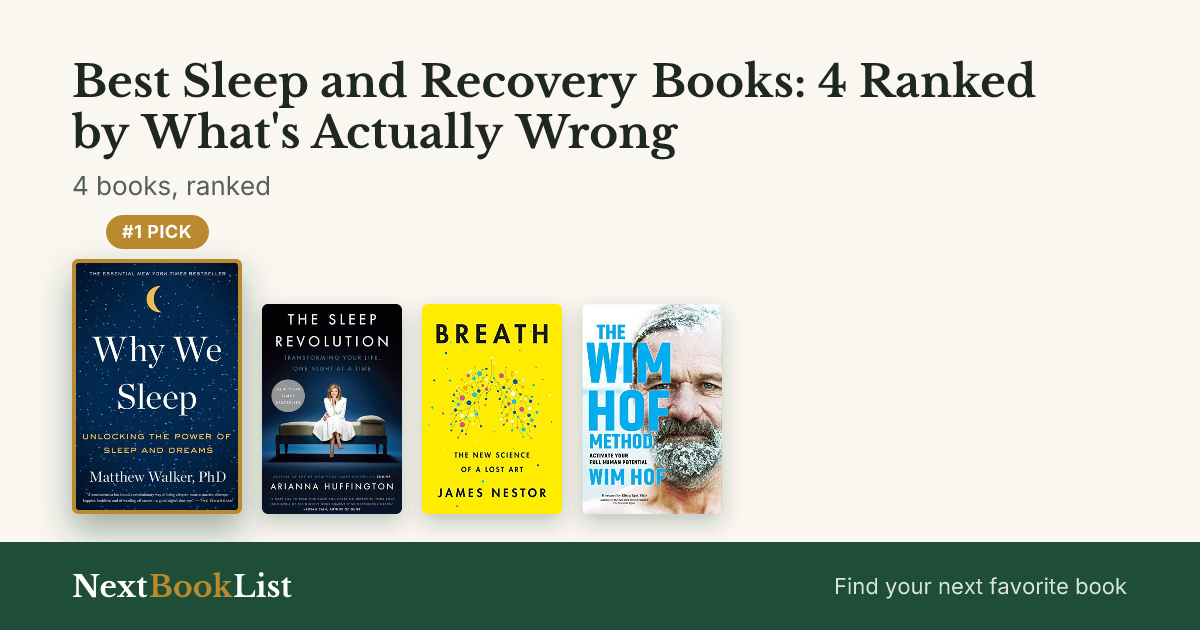
Best Sleep and Recovery Books: 4 Ranked by What's Actually Wrong: ranked list of 4 books

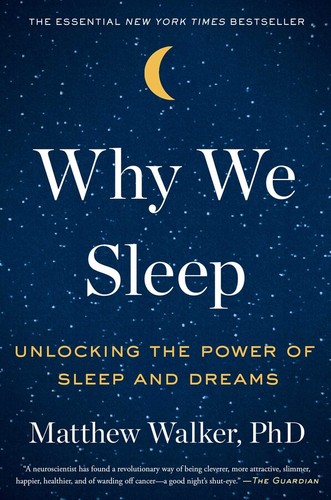
Why We Sleep is the default starting point, and it earns that spot on comprehensiveness alone. Matthew Walker covers what sleep does to your brain and body with more rigor and range than anything else on this list. The honest caveat: since publication, other researchers have publicly challenged specific claims and citations in the book. The big picture holds up. Don’t treat every number in it as gospel.

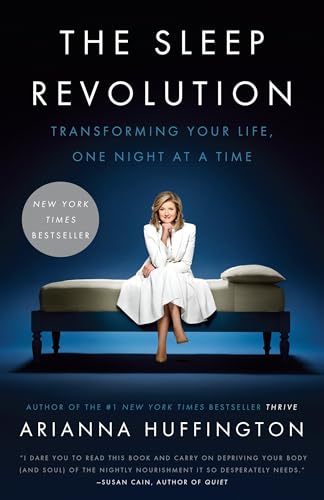
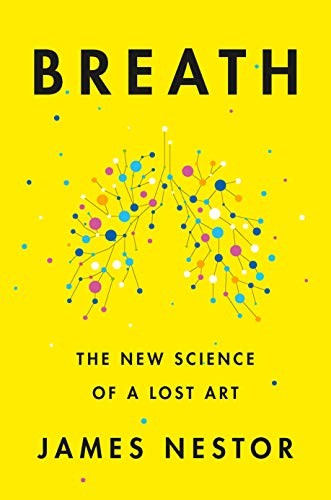
The Sleep Revolution is a different kind of book entirely, Arianna Huffington’s case against a culture that treats sleep deprivation as a flex. It’s narrative and cultural critique more than clinical science, useful for the argument, not the data. Breath sits next to it as the adjacent subject, James Nestor on breathing mechanics specifically, which shapes sleep quality without being a sleep book itself.

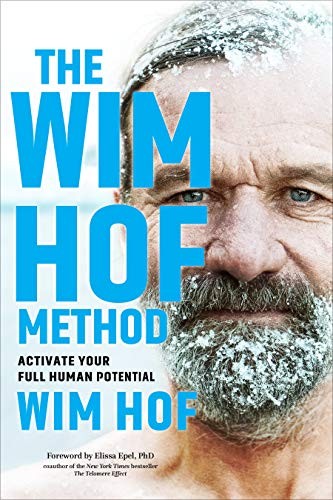
The Wim Hof Method closes the list as the most fringe entry, cold exposure and specific breathing patterns, and it’s the least mainstream-scientifically-validated of the four. That doesn’t make it worthless, some of the underlying physiology has real research behind it, but go in knowing it’s further from consensus than Why We Sleep.

One warning across all four: sleep and stress problems that are chronic or severe deserve a doctor, not just a book. These are useful frameworks, not a substitute for actual care.

Quick Comparison

#BookBest for
1Why We SleepMatthew Walkeryou treat sleep as optional and wonder why your focus, mood, and health are offAmazon
2The Sleep RevolutionArianna Huffingtonyou want the cultural-history-plus-science case for sleep as non-negotiable, backed by research on everything from car accidents to cognitive decline, and you respond better to argument than to a pure how-to checklistAmazon
3BreathJames Nestoryou mouth-breathe, snore, or want a plain-English tour of why breathing technique actually mattersAmazon
4The Wim Hof MethodWim Hofyou want a physical, body-first practice for stress and resilience and don't mind discomfortAmazon

The Books

Why We Sleep by Matthew Walker book cover

1. Why We Sleep

Matthew Walker · 2017

The book that will make you treat sleep like the drug you've been skipping.

Walker doesn’t need to oversell this one – the studies do the persuading. Once you understand what six hours a night actually does to your memory and immune system, “I’ll sleep when I’m dead” stops sounding like a flex.

Read it if: you treat sleep as optional and wonder why your focus, mood, and health are off

Skip it if: you already protect 8 hours and practice good sleep hygiene -- you don't need convincing

Full verdict: Why We Sleep →

The Sleep Revolution by Arianna Huffington book cover

2. The Sleep Revolution

Arianna Huffington · 2016

The Huffington Post founder collapsed from exhaustion and broke her cheekbone on her own desk, then wrote 400 pages making the case that sleep deprivation is a public health crisis we've all agreed to pretend is a productivity flex.

Huffington’s own collapse is doing a lot of the persuasive work here, and it works because it’s specific and embarrassing in a way most wellness books avoid. If you need the case made for why sleep matters before you’ll act on any tactics, start here; if you’re already convinced, skip straight to Matthew Walker’s Why We Sleep for the deeper science.

Read it if: you want the cultural-history-plus-science case for sleep as non-negotiable, backed by research on everything from car accidents to cognitive decline, and you respond better to argument than to a pure how-to checklist

Skip it if: you already believe sleep matters and just want tactics -- this leans heavier on the why (history, science, culture, Huffington's own collapse story) than the how; pair it with a more tactical book if you want a step-by-step protocol

Full verdict: The Sleep Revolution →
Breath by James Nestor book cover

3. Breath

James Nestor · 2020

Nestor's case that most people breathe wrong, chronically, and that fixing it (mostly: breathe through your nose) changes sleep, anxiety, and health more than any supplement.

Nestor’s pitch lands because it’s testable in a weekend: tape your mouth shut at night, breathe slower during the day, and see what changes. The science leans more journalistic than clinical, but the core claim, most people breathe wrong and it costs them more than they realize, holds up.

Read it if: you mouth-breathe, snore, or want a plain-English tour of why breathing technique actually matters

Skip it if: you want a rigorous clinical trial review -- this is journalism plus self-experimentation, not a meta-analysis

Full verdict: Breath →

The Wim Hof Method by Wim Hof book cover

4. The Wim Hof Method

Wim Hof · 2020

A Dutch daredevil's case for cold showers and weird breathing as a legitimate stress-resilience system, not a stunt.

The best-known claim in this book – that you can consciously override your immune response – isn’t hype. Researchers at Radboud University actually tested it, injected Hof-trained volunteers with a bacterial endotoxin, and watched their inflammatory markers stay lower than a control group’s. That’s rare company for a self-help book: a real study backing the money claim.

Where it wobbles is tone. Hof narrates the method as much as he teaches it, and parts read more like a memoir of a guy who really likes being cold than a manual. If you want the protocol without the mythology, skip to the instructional sections on breathing and cold exposure and treat the rest as background. Do not try the breathing drills in a pool or bathtub – that warning is not decoration.

Read it if: you want a physical, body-first practice for stress and resilience and don't mind discomfort

Skip it if: you want peer-reviewed certainty -- the science here is real but early, and Hof's tone runs more guru than clinician

Full verdict: The Wim Hof Method →

Frequently Asked Questions

What is the best book on sleep science?

Why We Sleep, still the most comprehensive and science-heavy entry on the subject. One honest caveat: Matthew Walker has faced public academic criticism over specific claims and citations since the book's release, so treat the big-picture argument as sound but don't treat every individual statistic as unimpeachable.

Is The Sleep Revolution more scientific or more personal?

More personal. Arianna Huffington's book leans on narrative and cultural critique, the case that we've built a culture that treats exhaustion as a badge of honor, rather than clinical sleep research. Read it for the argument, not the data.

Does Breath belong on a sleep list?

It's adjacent, not identical. James Nestor's book is about breathing mechanics, which affects sleep quality but is its own subject. If nasal breathing and mouth-taping are what you're curious about, start there directly.

Is the Wim Hof Method scientifically validated?

Less than the other three, and we'd rather say that upfront than let you find out later. Cold exposure and specific breathing techniques have some legitimate research behind them, but the method as packaged is more fringe and less mainstream-validated than sleep science proper.

Keep Reading