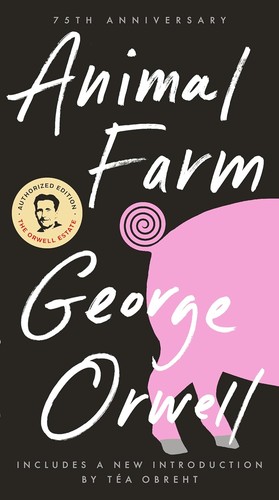
Animal Farm
by George Orwell · 1945
Farm animals overthrow their farmer to build an equal society, and within a hundred pages the pigs running it are indistinguishable from the humans they replaced.
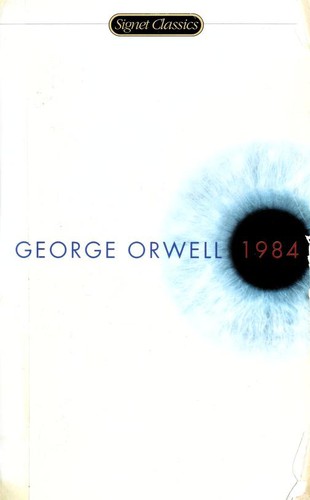
Worth reading? Animal Farm is the best political allegory in print because Orwell makes the corruption of the revolution feel inevitable rather than accidental -- each betrayal is small enough to explain away until they've added up to full tyranny. It's a faster, punchier read than 1984 and works as an entry point to Orwell generally. Skip it only if you want more than an allegory -- for a fuller picture of totalitarian control, go read 1984 next.
| Author | George Orwell |
|---|---|
| Published | 1945 |
| Publisher | Signet Classics |
| Category | Fiction |
| Favorite quote | “All animals are equal, but some animals are more equal than others.” |
The Verdict
Orwell’s real trick here isn’t the Soviet allegory (though it’s precise enough to double as a history lesson if you know where to look). It’s the pacing of the betrayal – every single compromise is small enough that you understand why no pig or horse objects in the moment, and that’s what makes the ending land instead of feeling like a twist.
At under 150 pages, there’s no excuse not to have read this one. If you liked it, 1984 is the longer, colder version of the same argument.
you want the fastest, sharpest political allegory ever written -- a full argument about how revolutions curdle into tyranny, delivered in barely 140 pages
you already know the Soviet allegory beat for beat and want deeper, more granulated political theory -- this is deliberately simple by design, not a substitute for a longer history
Book Summary
The animals' revolution against Farmer Jones starts with a genuinely appealing idea -- all animals are equal, all animals work for the common good -- and Orwell spends the rest of the book showing exactly how that idea gets hollowed out one small compromise at a time. Nobody announces the betrayal; it accumulates through small rule changes nobody has the memory or standing to challenge.
The pigs win not through force alone but by controlling information: rewriting the Seven Commandments overnight, blaming problems on external enemies (Snowball), and keeping the other animals too exhausted and illiterate to notice the changes. Squealer's propaganda does more work than Napoleon's dogs.
The final image, pigs and humans indistinguishable at the poker table, is Orwell's thesis stated as plainly as fiction can: the specific ideology matters less than the concentration of unchecked power, and a revolution against tyranny can simply produce a new tyranny wearing the old one's face.
Top 8 Lessons from Animal Farm
- The revolution starts with a genuinely appealing principle (all animals equal) that gets hollowed out through small, unchallenged rule changes.
- Squealer's propaganda, not Napoleon's dogs, does most of the work of controlling the other animals -- information control beats brute force.
- The Seven Commandments get quietly rewritten over time (most famously into 'all animals are equal, but some animals are more equal than others'), and no one keeps a copy to check against.
- Boxer the cart-horse's loyalty ('I will work harder!') is exploited until he's sold to a glue factory the moment he's no longer useful.
- Snowball is turned into a permanent scapegoat, blamed for every setback after his expulsion, which lets Napoleon avoid accountability indefinitely.
- The pigs justify every new privilege (the farmhouse, the whisky, walking on two legs) as necessary for 'leadership,' the same justification tyrants have always used.
- The other animals' illiteracy and short memory are what let the pigs get away with rewriting history -- education, or the lack of it, is a control mechanism.
- By the final scene, the pigs and the human farmers they overthrew are literally indistinguishable, undercutting the idea that regime change alone fixes anything.
Top 5 Quotes from Animal Farm
"All animals are equal, but some animals are more equal than others."
George Orwell, Animal Farm
"Four legs good, two legs bad."
George Orwell, Animal Farm
"I will work harder!"
George Orwell, Animal Farm
"Napoleon is always right."
George Orwell, Animal Farm
"The creatures outside looked from pig to man, and from man to pig, and from pig to man again; but already it was impossible to say which was which."
George Orwell, Animal Farm
Frequently Asked Questions
Is Animal Farm worth reading?
Yes -- at under 150 pages it's the fastest, sharpest political allegory available, and it holds up as a warning about how revolutions get co-opted.
What is the main theme of Animal Farm?
That revolutions against tyranny can produce new tyrannies, especially when the people in charge control information, rewrite history, and exploit the loyalty of the less powerful.
Is Animal Farm based on a true story?
It's an allegory for the Russian Revolution and the rise of Stalinism -- Napoleon stands in for Stalin, Snowball for Trotsky, and Squealer for Soviet state propaganda.
Should I read Animal Farm or 1984 first?
Animal Farm, if you want a short, accessible entry point. It sets up the themes 1984 goes on to explore in far more depth and length.
Ready to read it?
Get Animal Farm on Amazon